

Anna Dorothea Therbusch (1721-1782) was a distinguished German painter whose career unfolded during an era when the art world was dominated almost exclusively by men. Born Anna Dorothea Lisiewska in Berlin, she was the daughter of the Polish-born painter Georg Lisiewski, who trained her in the art of painting from a young age. Despite the societal constraints placed upon women in the eighteenth century, Therbusch rose to become one of the most celebrated female artists of her time, recognised for her mastery in portraiture and historical subjects.
Therbusch married Ernst Friedrich Therbusch, an innkeeper, in 1742, and for a time, her artistic pursuits took a back seat to family obligations. Nevertheless, she continued to paint, and after her children were grown, she pursued her career with renewed vigour. Her talent soon attracted the attention of the Prussian court, and she became known for her portraits of royalty, nobility, and members of the bourgeoisie. Her works are characterised by their psychological insight, attention to detail, and technical finesse. She was adept at capturing the character and status of her sitters, infusing her paintings with both sensitivity and grandeur.
In 1767, Therbusch travelled to Paris, seeking admission to the prestigious Académie Royale de Peinture et de Sculpture. At a time when only a handful of women were accepted into the institution, her admission in 1768 marked a significant achievement, both personally and for female artists more broadly. Her self-portrait, submitted as her reception piece, is celebrated for its confident and direct gaze, a testament to her self-assurance and artistic prowess. While in Paris, she mingled with leading Enlightenment figures, including Denis Diderot, who praised her work.
Therbusch’s style reflects the transition from Rococo to Neoclassicism, blending the elegance and lightness of the former with the more sober, structured qualities of the latter. Beyond her technical skill, her work is notable for challenging prevailing attitudes towards women’s capabilities in the arts. She returned to Berlin in the 1770s, where she continued to enjoy considerable success, producing portraits and religious works for prominent patrons.
Anna Dorothea Therbusch’s legacy endures as a pioneer for women in art. Her perseverance, talent, and distinguished body of work not only earned her widespread acclaim during her lifetime, but also paved the way for future generations of female artists.
Images to download
-

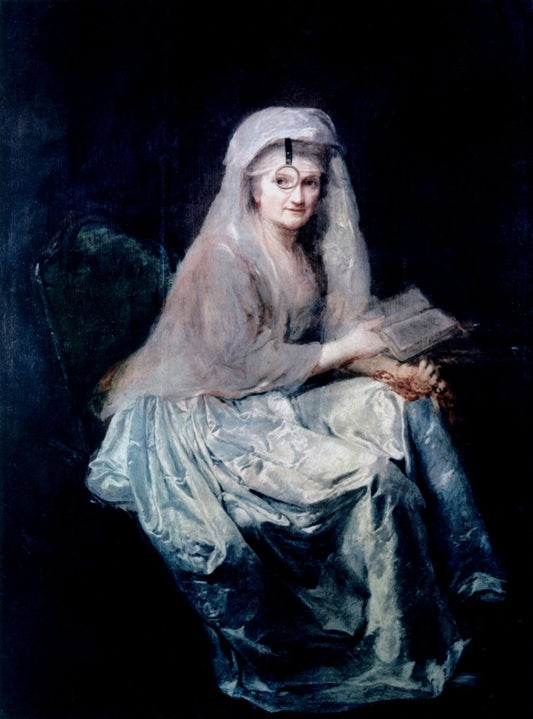
Therbusch, Anna Dorothea (1721-1782) - Self-portrait 1776-7
Vendor:Digital Download - 1 imageRegular price £0.80Regular priceUnit price per -

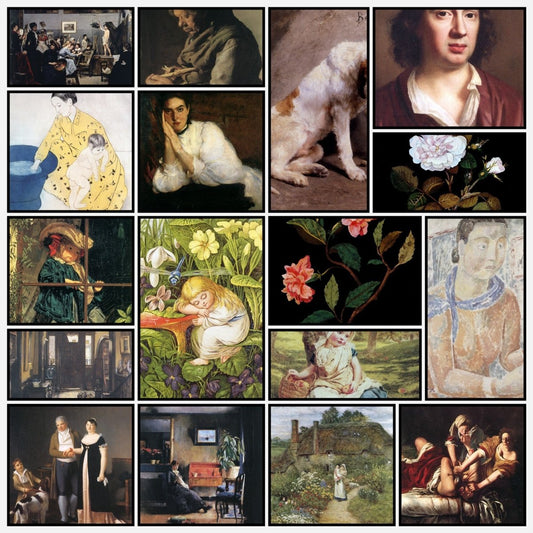
Women Artists - 180 High Resolution Images
Vendor:Digital Download - 180 imagesRegular price £7.00Regular priceUnit price per


Latest Picture Trove Blog Posts
View all-

William Morris’s Strawberry Thief: The Story Behind a Classic Arts and Crafts Pattern
Few William Morris designs are as instantly recognisable as Strawberry Thief. With its richly patterned foliage, small red strawberries and watchful birds hidden among curling leaves, it has become one of the most loved designs of the Arts and Crafts movement.
William Morris’s Strawberry Thief: The Story Behind a Classic Arts and Crafts Pattern
Few William Morris designs are as instantly recognisable as Strawberry Thief. With its richly patterned foliage, small red strawberries and watchful birds hidden among curling leaves, it has become one of the most loved designs of the Arts and Crafts movement.
-

Glasgow and the Mackintosh Style
We recently took ourselves off to Scotland, and on our travels, we popped into the Mackintosh Tea Rooms in Glasgow for a bit of a nose around and a spot of lunch.
Glasgow and the Mackintosh Style
We recently took ourselves off to Scotland, and on our travels, we popped into the Mackintosh Tea Rooms in Glasgow for a bit of a nose around and a spot of lunch.
-

A Trip to Edinburgh & Glasgow, and Scottish Art
We have just returned from a well-deserved few days' break in Scotland, visiting both Edinburgh and Glasgow, taking in Scottish art and tea rooms!
A Trip to Edinburgh & Glasgow, and Scottish Art
We have just returned from a well-deserved few days' break in Scotland, visiting both Edinburgh and Glasgow, taking in Scottish art and tea rooms!


