

Joseph Stella (1877-1946), born Giuseppe Michele Stella, was an Italian-born American Futurist painter best known for his depictions of industrial America, especially his images of the Brooklyn Bridge. He is also associated with the American Precisionist movement of the 1910s-1940s.
Stella was born to a middle-class family in Italy, in Muro Lucano, a village in the province of Potenza. His grandfather Antonio and his father Michele were attorneys, but he came to New York City in 1896 to study medicine, following in the footsteps of his older brother Doctor Antonio Stella. At that time, Giuseppe changed his name to Joseph. However, he quickly abandoned his medical studies and turned instead to art, studying at the Art Students League and the New York School of Art under William Merritt Chase.
Stella's first paintings were Rembrandtesque depictions of city slum life. A remarkable draftsman, he made drawings throughout the various phases of his career, beginning as an academic realist with a particular interest in immigrant and ethnic life. From 1905 to 1909, he worked as an illustrator, publishing his realist drawings in magazines. In 1908, he was commissioned for a series on industrial Pittsburgh, later published in The Pittsburgh Survey.
Stella returned to Italy in 1909. He was unhappy in the United States, writing that he longed to be back in his native land. His return to Europe led to his first extensive contact with Modernism, which would ultimately mould his distinctive personal style, notable for its strong colour and sweeping and dynamic lines. By 1911, he had departed Italy, where the omnipresence of the Renaissance presented its own kind of obstacle for contemporary painters, and relocated to Paris. When he arrived, "Fauvism, Cubism, and Futurism were in full swing," he wrote, and "[there] was in the air the glamour of a battle." It was the right place to be, at just the right time, for a man of Stella's curiosity, openness to new trends, and ambition.
In Paris, Stella attended the salon of Gertrude Stein, where he met many other painters. Stein found the big and boisterous painter rather like [her friend, the poet] Apollinaire; they both had a fund of sarcastic wit that was frequently turned on their hosts." Stella's view of his hostess was indeed sarcastic: she sat, he wrote, "enthroned on a sofa in the middle of the room," surrounded by her Cézannes and Picassos, "with the forceful solemnity of a pythoness or a sibyl ... in a high and distant pose."
Having met Umberto Boccioni and befriended Gino Severini in Europe, he became associated with the Italian Futurists and began to incorporate Futurist principles into his art, though he was also interested in the structural experiments of the Cubists and the dynamic colour of the Fauves.
Returning to New York City in 1913, Stella wanted to give the United States a second try. It was a decision he did not regret, as he became a part of the Alfred Stieglitz and the Walter Arensberg circles in Manhattan and enjoyed close relationships with fellow expatriates Albert Gleizes and leader of the New York Dada movement Marcel Duchamp (Stella and Arensberg accompanied Duchamp to the plumbing supply store in 1917 to purchase the infamous urinal). As a result of these associations, he had almost as many opportunities as he had known in Europe to be among kindred spirits and to see advanced new art. In 1913-14, he painted Battle of Lights, Coney Island, one of the earliest and greatest American Futurist works. The legendary Armory Show of 1913, in which he participated, provided him with greater impetus to experiment with modernist styles.
Following the Armory Show, Stella also became a much-talked-about figure in the New York City art world, an object of virulent attacks from conservative critics who found Modernism threatening and inexplicable and an object of fascination to younger, more adventurous artists. In the view of art historian Sam Hunter, "Among the modern paintings at the Armory Show, Duchamp's Nude Descending a Staircase, Picabia's Procession at Seville, and Stella's Futurist Battle of Lights, Coney Island came to exert the most seminal influence on American painters.
In New York City during the 1920s, Stella became fascinated with the geometric quality of the architecture of Lower Manhattan. In these works he further assimilated elements of Cubism and Futurism. In Brooklyn Bridge (1919-20), he shows his fascination with the sweeping lines of the Roeblings' bridge, a motif he used several years before poet Hart Crane turned to this structure as a symbol of modernity. Stella's depictions of the bridge feature the diagonal cables that sweep downward forcefully, providing directional energy. While these dynamic renderings suggest the excitement and motion of modern life, in Stella's hands, the image of the bridge also becomes a powerful icon of stability and solidarity.
In the 1930s, Stella worked on the Federal Art Project and later travelled to Europe, North Africa, and the West Indies, locations that inspired him to work in various modes. He restlessly moved from one style to the next, from realism to abstraction to surrealism. He executed abstract city themes, religious images, botanical and nature studies, erotic and steamy Caribbean landscapes, and colourful still lifes of vegetables, fruits, and flowers.
Stella was diagnosed with cardiovascular disease in the early 1940s and became subject to increasing periods of morbid anxiety. On November 5, 1946, he died of heart failure at age 69. He is interred in a mausoleum at Woodlawn Cemetery in The Bronx, New York City.
Images to download
-

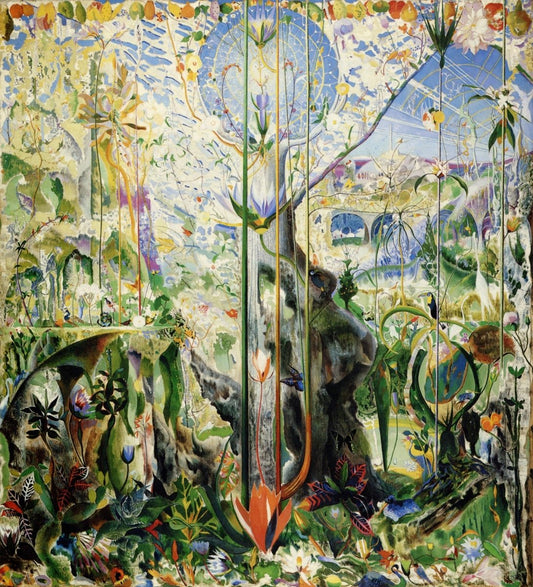
Stella, Joseph (1877-1946) - Tree of My Life 1919
Vendor:Digital Download - 1 imageRegular price £0.80Regular priceUnit price per -

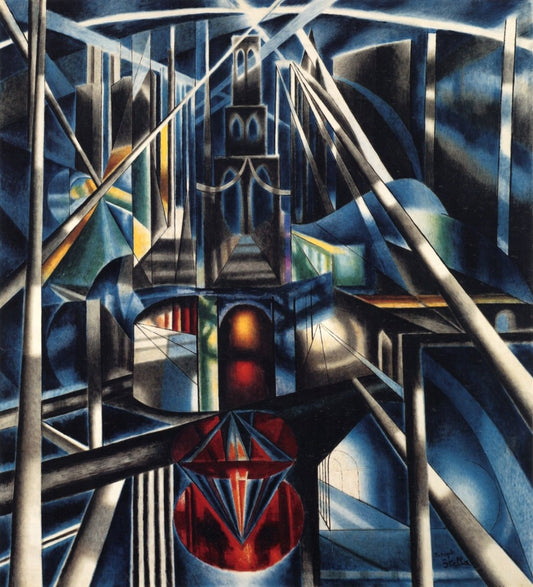
Stella, Joseph (1877-1946) - Old Brooklyn Bridge 1930s
Vendor:Digital Download - 1 imageRegular price £0.80Regular priceUnit price per -

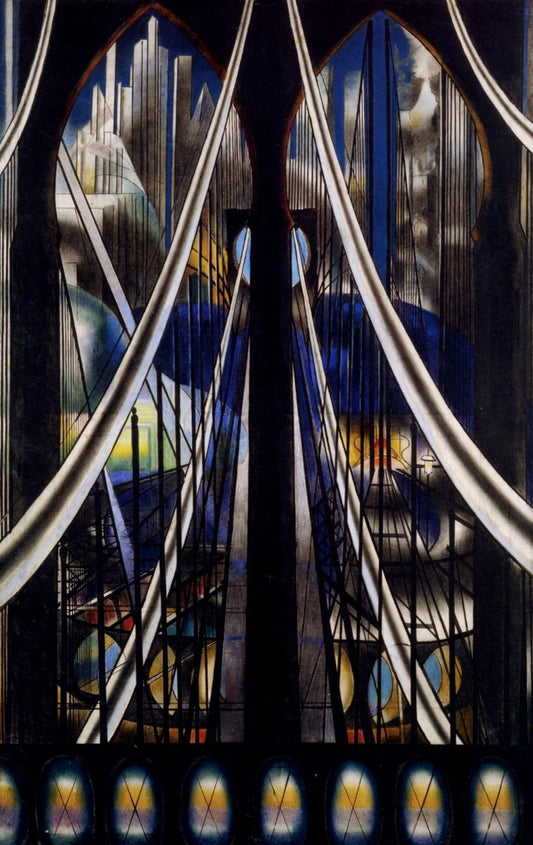
Stella, Joseph (1877-1946) - Voice of the City of New York Interpreted, Brooklyn Bridge 1920-22
Vendor:Digital Download - 1 imageRegular price £0.80Regular priceUnit price per


Latest Picture Trove Blog Posts
View all-

William Morris’s Strawberry Thief: The Story Behind a Classic Arts and Crafts Pattern
Few William Morris designs are as instantly recognisable as Strawberry Thief. With its richly patterned foliage, small red strawberries and watchful birds hidden among curling leaves, it has become one of the most loved designs of the Arts and Crafts movement.
William Morris’s Strawberry Thief: The Story Behind a Classic Arts and Crafts Pattern
Few William Morris designs are as instantly recognisable as Strawberry Thief. With its richly patterned foliage, small red strawberries and watchful birds hidden among curling leaves, it has become one of the most loved designs of the Arts and Crafts movement.
-

Glasgow and the Mackintosh Style
We recently took ourselves off to Scotland, and on our travels, we popped into the Mackintosh Tea Rooms in Glasgow for a bit of a nose around and a spot of lunch.
Glasgow and the Mackintosh Style
We recently took ourselves off to Scotland, and on our travels, we popped into the Mackintosh Tea Rooms in Glasgow for a bit of a nose around and a spot of lunch.
-

A Trip to Edinburgh & Glasgow, and Scottish Art
We have just returned from a well-deserved few days' break in Scotland, visiting both Edinburgh and Glasgow, taking in Scottish art and tea rooms!
A Trip to Edinburgh & Glasgow, and Scottish Art
We have just returned from a well-deserved few days' break in Scotland, visiting both Edinburgh and Glasgow, taking in Scottish art and tea rooms!


