

Everett Shinn (1876-1953) was an American artist and illustrator who played a significant role in the Ashcan School, a movement that sought to depict the gritty realities of urban life in the United States during the late nineteenth and early twentieth centuries. Although born in Woodstown, New Jersey, and most closely associated with the American art scene, Shinn’s artistic sensibilities were greatly influenced by European traditions, and his work is often discussed in the context of international developments in painting and illustration.
Shinn demonstrated artistic talent from an early age and enrolled at the Pennsylvania Academy of the Fine Arts when he was just fifteen. His early career was spent as an illustrator for newspapers and magazines in Philadelphia and later in New York. This journalistic background had a profound impact on his approach to art, as it encouraged a keen eye for fleeting moments and everyday life. Shinn’s facility with pastels and his loose, expressive style enabled him to capture the energy and movement of the modern city, particularly scenes of theatre, vaudeville, and nightlife.
Unlike some of his Ashcan contemporaries, such as Robert Henri and George Bellows, who focused on street scenes and the struggles of the working class, Shinn was especially drawn to the spectacle and glamour of urban entertainment. His paintings frequently feature performers, dancers, and audiences, often portrayed in dynamic compositions with dramatic lighting and vibrant colour. Shinn’s technique was influenced by French Impressionism and the works of Edgar Degas, whose depictions of ballet and theatre resonated with Shinn’s own interests.
Throughout his career, Shinn was a prolific illustrator, contributing regularly to publications such as Harper’s Weekly and Collier’s. In addition to easel painting and illustration, he worked as a muralist and theatrical designer. His murals, commissioned for theatres and public buildings, reflected his fascination with performance and spectacle, and his designs for stage sets brought a painterly sensibility to theatrical productions.
Shinn’s later years saw a decline in critical appreciation, as the art world shifted towards abstraction and modernism. Nevertheless, his ability to capture the vibrancy of city life and the excitement of performance remains highly regarded. Today, Everett Shinn is remembered as a master of urban realism and a chronicler of the theatrical world, whose work offers a vivid window into the cultural life of early twentieth-century America.
Images to download
-

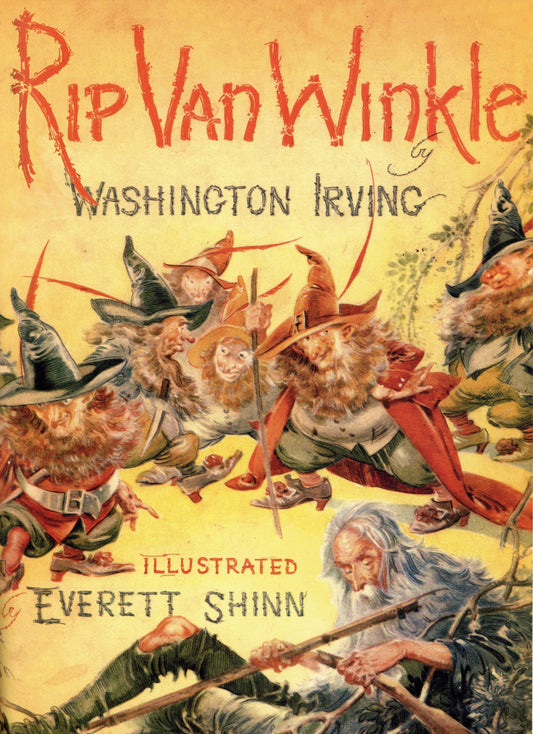
Shinn, Everett (1876-1953) - Rip Van Winkle 1939
Vendor:Digital Download - 1 imageRegular price £0.80Regular priceUnit price per -

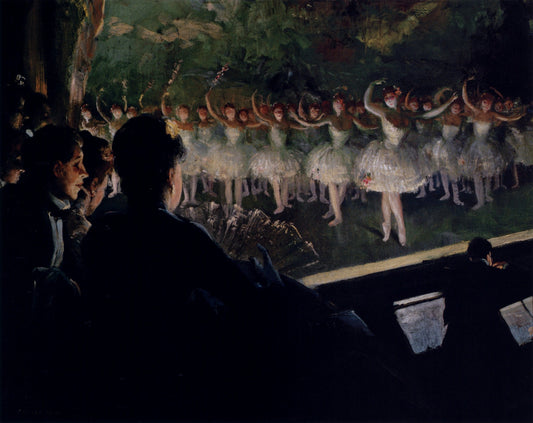
Shinn, Everett (1876-1953) - The White Ballet 1904
Vendor:Digital Download - 1 imageRegular price £0.80Regular priceUnit price per -

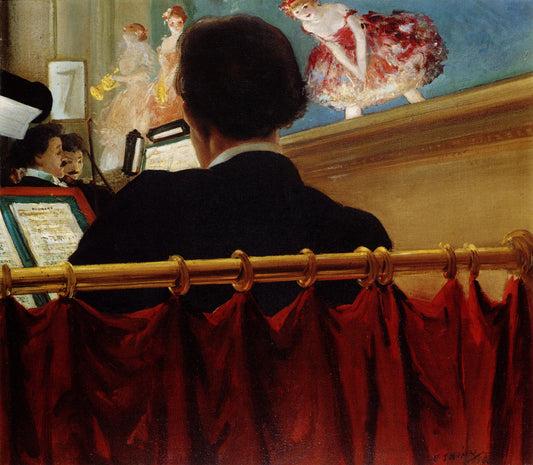
Shinn, Everett (1876-1953) - Orchestre Pit, Old Proctor's Theatre c.1906-7
Vendor:Digital Download - 1 imageRegular price £0.80Regular priceUnit price per


Latest Picture Trove Blog Posts
View all-

William Morris’s Strawberry Thief: The Story Behind a Classic Arts and Crafts Pattern
Few William Morris designs are as instantly recognisable as Strawberry Thief. With its richly patterned foliage, small red strawberries and watchful birds hidden among curling leaves, it has become one of the most loved designs of the Arts and Crafts movement.
William Morris’s Strawberry Thief: The Story Behind a Classic Arts and Crafts Pattern
Few William Morris designs are as instantly recognisable as Strawberry Thief. With its richly patterned foliage, small red strawberries and watchful birds hidden among curling leaves, it has become one of the most loved designs of the Arts and Crafts movement.
-

Glasgow and the Mackintosh Style
We recently took ourselves off to Scotland, and on our travels, we popped into the Mackintosh Tea Rooms in Glasgow for a bit of a nose around and a spot of lunch.
Glasgow and the Mackintosh Style
We recently took ourselves off to Scotland, and on our travels, we popped into the Mackintosh Tea Rooms in Glasgow for a bit of a nose around and a spot of lunch.
-

A Trip to Edinburgh & Glasgow, and Scottish Art
We have just returned from a well-deserved few days' break in Scotland, visiting both Edinburgh and Glasgow, taking in Scottish art and tea rooms!
A Trip to Edinburgh & Glasgow, and Scottish Art
We have just returned from a well-deserved few days' break in Scotland, visiting both Edinburgh and Glasgow, taking in Scottish art and tea rooms!


