

Giovanni Segantini (1858-1899) was an Italian painter renowned for his evocative landscapes and his pivotal role in the Symbolist movement. Born in Arco, then part of the Austro-Hungarian Empire, Segantini’s early life was marked by hardship and instability following the death of his mother and the abandonment by his father. Orphaned at a young age, he spent much of his childhood in Milan, where he developed an early interest in art while living in a reformatory. Despite these challenges, Segantini’s innate talent and determination allowed him to pursue formal training at the Brera Academy of Fine Arts.
Segantini’s work is distinguished by his innovative use of light and his unique application of Divisionism, a technique related to Pointillism, which involved the separation of colours into individual dots or strokes. This method created a luminous effect, particularly suited to his vast, alpine landscapes. His paintings often depicted the Swiss Alps, reflecting both his fascination with nature and his personal attachment to the mountainous region where he would later settle.
Segantini’s move to Savognin in the Swiss Engadine in the 1880s proved transformative. Surrounded by dramatic vistas and rural life, he produced a series of paintings that captured the spiritual essence of nature and the peasant experience. His most celebrated works, such as “The Punishment of Lust” and “The Bad Mothers”, are imbued with symbolism, exploring themes of life, death, and redemption. These paintings, part of his larger cycle on the stages of human existence, are testament to his deep philosophical engagement and his belief in the spiritual power of the natural world.
The artist’s style, blending realism with symbolic meaning, earned him widespread acclaim across Europe during his lifetime. He exhibited at major international exhibitions and was highly regarded by contemporaries for his technical mastery and visionary approach. Despite suffering from poor health, Segantini remained prolific throughout his career, working outdoors in challenging conditions to capture the ever-changing mountain light.
Giovanni Segantini died at the age of 41, succumbing to peritonitis while working on his monumental triptych “Life, Nature, and Death” for the 1900 Paris Exposition. His legacy endures, not only for his significant contributions to landscape painting and Symbolism, but also for his influence on later generations of artists inspired by his devotion to nature and innovative techniques. Today, his works are held in major museums and continue to be celebrated for their poetic vision and technical brilliance.
Images to download
-

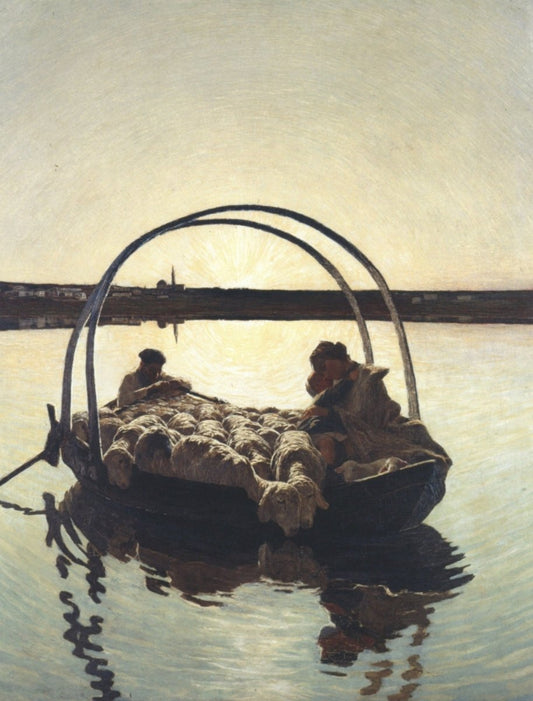
Segantini, Giovanni (1858-1899) - Ave Maria during the Crossing 1886
Vendor:Digital Download - 1 imageRegular price £0.80Regular priceUnit price per -

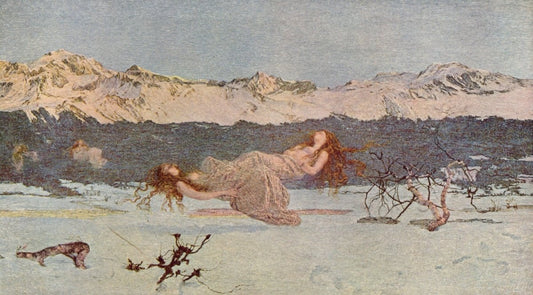
Segantini, Giovanni (1858-1899) - The Punishment of Luxury
Vendor:Digital Download - 1 imageRegular price £0.80Regular priceUnit price per -

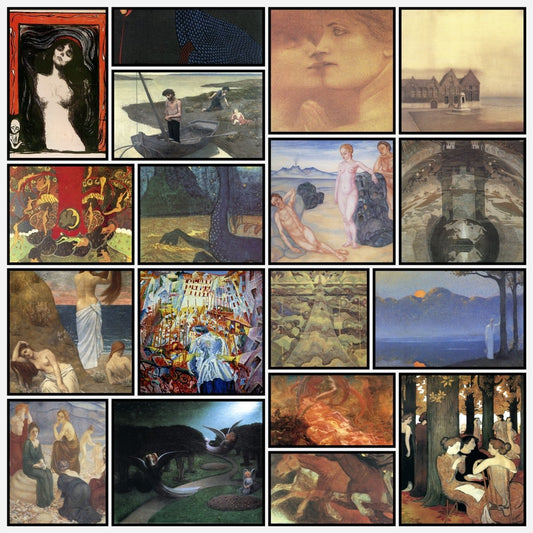
Symbolism Collection - 65 High Resolution Images
Vendor:Digital Download - 65 imagesRegular price £4.00Regular priceUnit price per


Latest Picture Trove Blog Posts
View all-

William Morris’s Strawberry Thief: The Story Behind a Classic Arts and Crafts Pattern
Few William Morris designs are as instantly recognisable as Strawberry Thief. With its richly patterned foliage, small red strawberries and watchful birds hidden among curling leaves, it has become one of the most loved designs of the Arts and Crafts movement.
William Morris’s Strawberry Thief: The Story Behind a Classic Arts and Crafts Pattern
Few William Morris designs are as instantly recognisable as Strawberry Thief. With its richly patterned foliage, small red strawberries and watchful birds hidden among curling leaves, it has become one of the most loved designs of the Arts and Crafts movement.
-

Glasgow and the Mackintosh Style
We recently took ourselves off to Scotland, and on our travels, we popped into the Mackintosh Tea Rooms in Glasgow for a bit of a nose around and a spot of lunch.
Glasgow and the Mackintosh Style
We recently took ourselves off to Scotland, and on our travels, we popped into the Mackintosh Tea Rooms in Glasgow for a bit of a nose around and a spot of lunch.
-

A Trip to Edinburgh & Glasgow, and Scottish Art
We have just returned from a well-deserved few days' break in Scotland, visiting both Edinburgh and Glasgow, taking in Scottish art and tea rooms!
A Trip to Edinburgh & Glasgow, and Scottish Art
We have just returned from a well-deserved few days' break in Scotland, visiting both Edinburgh and Glasgow, taking in Scottish art and tea rooms!


