

Parmigianino (1503-1540), born Girolamo Francesco Maria Mazzola in Parma, Italy, is celebrated as one of the most innovative painters of the Italian Mannerist movement. His career, though tragically brief due to his early death at the age of thirty-seven, left a profound impact on the development of European art, particularly through his refined elegance, elongated forms, and experimental techniques.
Parmigianino’s artistic journey began under the guidance of his uncles, Michele and Pier Ilario Mazzola, both accomplished painters. His early works already exhibited a precocious talent, and by his late teens, Parmigianino had completed significant commissions in Parma. Seeking greater inspiration, he travelled to Rome in 1524, where he encountered the masterpieces of Raphael and Michelangelo. These influences are evident in his celebrated works from this period, blending the grace of Raphael with the dynamism of Michelangelo, but infusing them with his own idiosyncratic style.
Perhaps Parmigianino’s most famous painting is the “Madonna with the Long Neck” (c.1534-1540), a striking example of Mannerism. The Virgin Mary is depicted with an exaggeratedly long neck and elegant, elongated limbs, lending the image a surreal, ethereal quality. This painting reflects Parmigianino’s fascination with beauty that transcends natural proportions, favouring stylisation over strict adherence to anatomical correctness. Such stylistic choices set his work apart from the harmonious realism of the High Renaissance.
Parmigianino was also an accomplished draughtsman and printmaker. His etching “Self-Portrait in a Convex Mirror” (c.1524) demonstrates his technical prowess and inventive spirit. By painting his own reflection as seen in a curved mirror, he created a distorted yet captivating self-image that fascinated later generations of artists, including the twentieth-century poet John Ashbery.
Despite early promise and remarkable achievements, Parmigianino’s career was fraught with difficulties. Political turmoil forced his departure from Rome, and later, personal struggles, including an obsession with alchemy, led to professional setbacks in Parma. He died in 1540, leaving many commissions unfinished.
Parmigianino’s legacy lies in his unique approach to form and beauty, which paved the way for later developments in European art. His elegant elongation of figures, experimental compositions, and technical innovations continue to inspire and intrigue both scholars and art lovers today.
Images to download
-

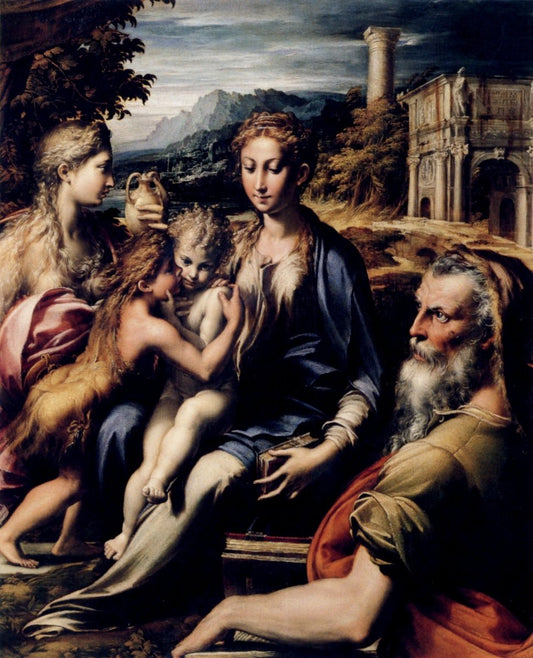
Parmigianino (1503-1540) - The St Zachariah Madonna c.1530-33
Vendor:Digital Download - 1 imageRegular price £0.80Regular priceUnit price per -

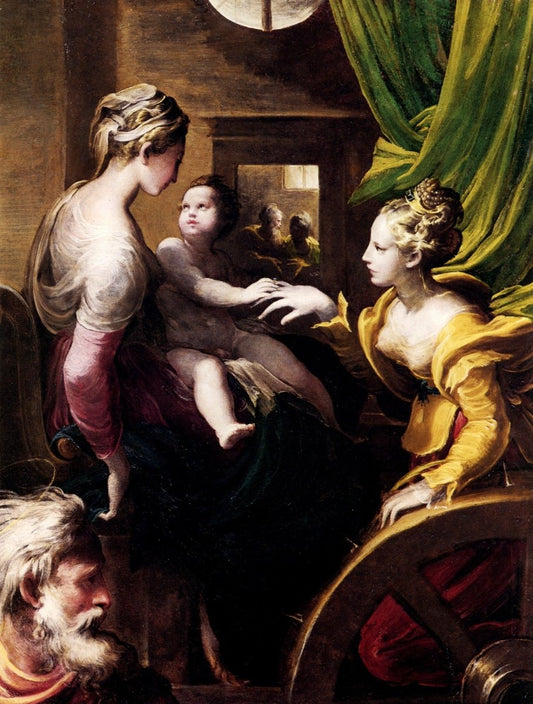
Parmigianino (1503-1540) - The Mystic Marriage of St. Catherine c.1530
Vendor:Digital Download - 1 imageRegular price £0.80Regular priceUnit price per -

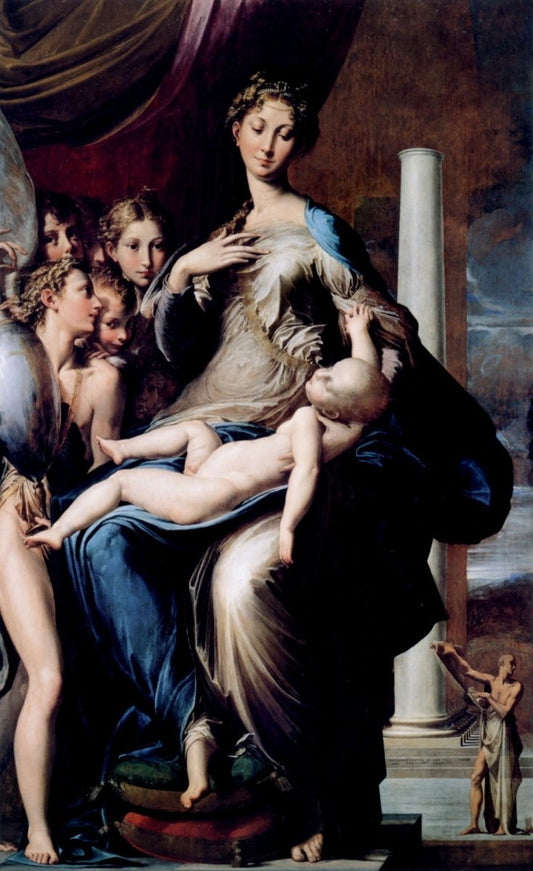
Parmigianino (1503-1540) - The Madonna of the Long Neck c.1534-39
Vendor:Digital Download - 1 imageRegular price £0.80Regular priceUnit price per


Latest Picture Trove Blog Posts
View all-

William Morris’s Strawberry Thief: The Story Behind a Classic Arts and Crafts Pattern
Few William Morris designs are as instantly recognisable as Strawberry Thief. With its richly patterned foliage, small red strawberries and watchful birds hidden among curling leaves, it has become one of the most loved designs of the Arts and Crafts movement.
William Morris’s Strawberry Thief: The Story Behind a Classic Arts and Crafts Pattern
Few William Morris designs are as instantly recognisable as Strawberry Thief. With its richly patterned foliage, small red strawberries and watchful birds hidden among curling leaves, it has become one of the most loved designs of the Arts and Crafts movement.
-

Glasgow and the Mackintosh Style
We recently took ourselves off to Scotland, and on our travels, we popped into the Mackintosh Tea Rooms in Glasgow for a bit of a nose around and a spot of lunch.
Glasgow and the Mackintosh Style
We recently took ourselves off to Scotland, and on our travels, we popped into the Mackintosh Tea Rooms in Glasgow for a bit of a nose around and a spot of lunch.
-

A Trip to Edinburgh & Glasgow, and Scottish Art
We have just returned from a well-deserved few days' break in Scotland, visiting both Edinburgh and Glasgow, taking in Scottish art and tea rooms!
A Trip to Edinburgh & Glasgow, and Scottish Art
We have just returned from a well-deserved few days' break in Scotland, visiting both Edinburgh and Glasgow, taking in Scottish art and tea rooms!


