

Christopher Richard Wynne Nevinson (1889-1946) stands as one of the most distinctive and influential British artists of the early twentieth century. Born in London, Nevinson was the son of the renowned war correspondent Henry Nevinson and suffragist Margaret Nevinson, an intellectual pedigree that fostered his acute social awareness and passion for innovation. Educated at the Slade School of Fine Art, he studied alongside luminaries such as Stanley Spencer and Paul Nash, before completing further training in Paris at the Académie Julian, where he absorbed the radical influences of Cubism and Futurism.
Nevinson’s early work is marked by a fascination with the dynamism and fragmentation of modern life, an interest that found its fullest expression in his association with the Italian Futurists. His alignment with this avant-garde movement was evident in both his subject matter and style, as he depicted the energy and chaos of urban existence through geometric forms and bold, sweeping lines. However, his greatest impact came during the First World War. Serving first as an ambulance driver and later as an official war artist, Nevinson brought a new visual language to the depiction of conflict. Works such as “La Mitrailleuse” and “Paths of Glory” offered a sombre, mechanised vision of warfare, emphasising the dehumanising effects of technology and the anonymity of the modern soldier.
Nevinson’s war art was both celebrated and controversial. His unflinching realism and innovative technique won him acclaim, yet also brought censorship, particularly with “Paths of Glory”, which was initially banned by military authorities for its depiction of dead British soldiers. Despite this, the public’s response was overwhelmingly positive, and Nevinson quickly became one of the most well-known war artists of his generation.
In the interwar years, Nevinson’s style evolved. He moved away from the severe geometries of Futurism towards a more naturalistic approach, producing cityscapes and landscapes that captured the mood of the era. His scenes of New York, painted after a visit in the 1920s, are especially notable for their evocative portrayal of the city’s monumental architecture and restless energy. Later, his health declined, and the outbreak of the Second World War saw him produce fewer works, though he continued to engage with themes of conflict and modernity.
Nevinson’s legacy lies in his ability to bridge the gap between modernist experimentation and social commentary. His best works remain powerful commentaries on the human condition in the age of machines, securing his place as a pivotal figure in British art history.
Images to download
-


Nevinson, C.R.W. (1889-1946) - A Studio in Montparnasse 1926
Vendor:Digital Download - 1 imageRegular price £0.80Regular priceUnit price per -

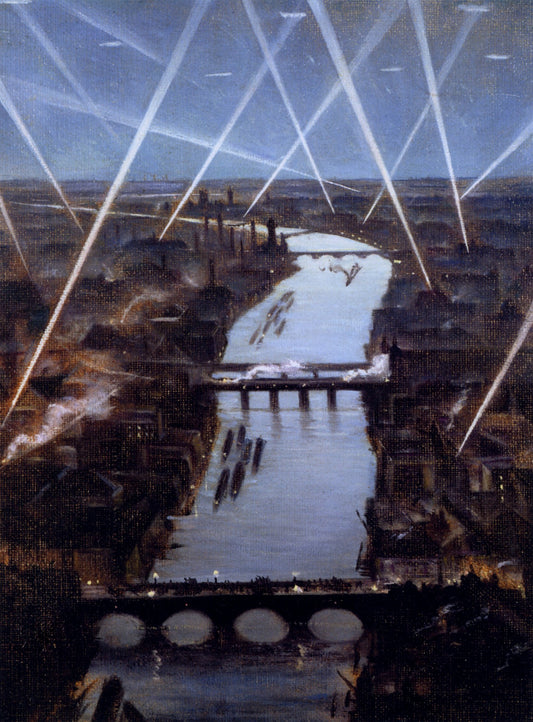
Nevinson, C.R.W. (1889-1946) - Among the London Searchlights 1918
Vendor:Digital Download - 1 imageRegular price £0.80Regular priceUnit price per -


Nevinson, C.R.W. (1889-1946) - Banking at 4000 feet 1917
Vendor:Digital Download - 1 imageRegular price £0.80Regular priceUnit price per -


Nevinson, C.R.W. (1889-1946) - Flooded Trench on the Yser 1916
Vendor:Digital Download - 1 imageRegular price £0.80Regular priceUnit price per -

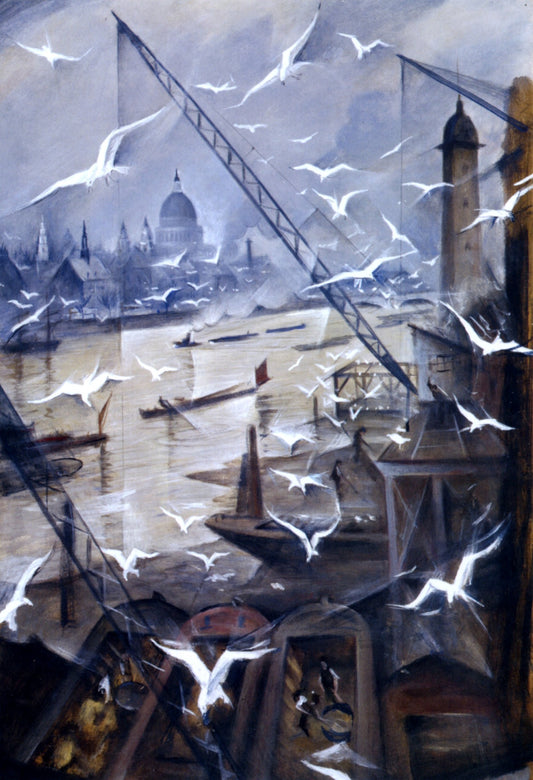
Nevinson, C.R.W. (1889-1946) - London, Winter 1928
Vendor:Digital Download - 1 imageRegular price £0.80Regular priceUnit price per -


Nevinson, C.R.W. (1889-1946) - The Arrival 1913-14
Vendor:Digital Download - 1 imageRegular price £0.80Regular priceUnit price per -


Nevinson, C.R.W. (1889-1946) - Troops Resting 1916
Vendor:Digital Download - 1 imageRegular price £0.80Regular priceUnit price per -

Trains in Art - 105 High Resolution Images
Vendor:Digital Download - 105 imagesRegular price £6.00Regular priceUnit price per


Latest Picture Trove Blog Posts
View all-

William Morris’s Strawberry Thief: The Story Behind a Classic Arts and Crafts Pattern
Few William Morris designs are as instantly recognisable as Strawberry Thief. With its richly patterned foliage, small red strawberries and watchful birds hidden among curling leaves, it has become one of the most loved designs of the Arts and Crafts movement.
William Morris’s Strawberry Thief: The Story Behind a Classic Arts and Crafts Pattern
Few William Morris designs are as instantly recognisable as Strawberry Thief. With its richly patterned foliage, small red strawberries and watchful birds hidden among curling leaves, it has become one of the most loved designs of the Arts and Crafts movement.
-

Glasgow and the Mackintosh Style
We recently took ourselves off to Scotland, and on our travels, we popped into the Mackintosh Tea Rooms in Glasgow for a bit of a nose around and a spot of lunch.
Glasgow and the Mackintosh Style
We recently took ourselves off to Scotland, and on our travels, we popped into the Mackintosh Tea Rooms in Glasgow for a bit of a nose around and a spot of lunch.
-

A Trip to Edinburgh & Glasgow, and Scottish Art
We have just returned from a well-deserved few days' break in Scotland, visiting both Edinburgh and Glasgow, taking in Scottish art and tea rooms!
A Trip to Edinburgh & Glasgow, and Scottish Art
We have just returned from a well-deserved few days' break in Scotland, visiting both Edinburgh and Glasgow, taking in Scottish art and tea rooms!


