

Anne Killigrew (1660-1685) was a remarkable figure in the late seventeenth-century English cultural landscape, celebrated both as a painter and a poet. Despite her brief life (she died aged just twenty-five), Killigrew’s artistic and literary achievements have secured her a lasting place in the annals of British art and literature.
Born into a distinguished and artistic family, Anne was the daughter of Dr Henry Killigrew, a clergyman and playwright, and her uncle Thomas Killigrew was a noted dramatist and courtier. Raised in the stimulating environment of the Restoration court, Anne became a maid of honour to Mary of Modena, Duchess of York and later Queen Consort. This position afforded her access to the upper echelons of society, as well as vital exposure to the arts.
As a painter, Anne Killigrew was highly regarded by her contemporaries. Although few of her works survive today, accounts from the period praise her skill in portraiture and her ability to capture her subjects with sensitivity and grace. Her paintings, described as possessing a refined delicacy, were compared favourably with those of more established male artists of her day. The Royal Collection still holds a portrait believed to be painted by her, attesting to her talent and recognition.
Killigrew’s reputation as a poet was cemented posthumously with the publication of “Poems by Mrs Anne Killigrew” in 1686. This volume, issued the year after her death, contains a range of works, including odes, pastorals, and religious verse. Her poetry is notable for its sophistication, classical influences, and occasional subversive wit. Killigrew’s verse grapples with themes of mortality, virtue, and the nature of artistic inspiration. Her poem “Upon the Saying That My Verses Were Made by Another” offers a spirited defence of her own authorship and talent, a striking assertion in an era when women’s creative achievements were often undervalued or dismissed.
Anne Killigrew’s contemporaries recognised her unique gifts. Most famously, John Dryden, the leading poet of the age, dedicated an ode to her memory, “To the Pious Memory of the Accomplished Young Lady Mrs Anne Killigrew” (1686). Dryden’s poem extols her as a “grace for beauty, and a muse for wit,” comparing her to Sappho and celebrating her dual mastery of poetry and painting.
Though her life was short, Anne Killigrew’s legacy endures as a symbol of female creativity in a predominantly male artistic world. Her work continues to inspire scholars and artists alike, a testament to her enduring relevance and remarkable talent.
Images to download
-


Killigrew, Anne (1660-1685) - Venus Attired by the Three Graces c.1680
Vendor:Digital Download - 1 imageRegular price £0.80Regular priceUnit price per -

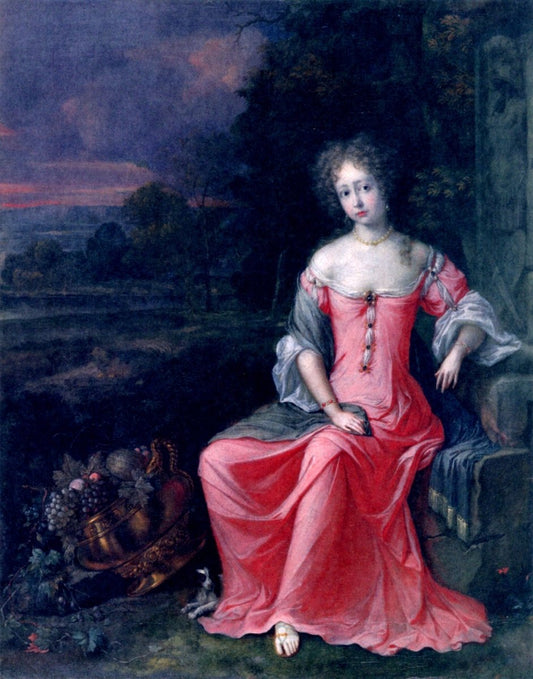
Killigrew, Anne (1660-1685) - A Lady as Venus mourning Adonis c.1682-5
Vendor:Digital Download - 1 imageRegular price £0.80Regular priceUnit price per


Latest Picture Trove Blog Posts
View all-

William Morris’s Strawberry Thief: The Story Behind a Classic Arts and Crafts Pattern
Few William Morris designs are as instantly recognisable as Strawberry Thief. With its richly patterned foliage, small red strawberries and watchful birds hidden among curling leaves, it has become one of the most loved designs of the Arts and Crafts movement.
William Morris’s Strawberry Thief: The Story Behind a Classic Arts and Crafts Pattern
Few William Morris designs are as instantly recognisable as Strawberry Thief. With its richly patterned foliage, small red strawberries and watchful birds hidden among curling leaves, it has become one of the most loved designs of the Arts and Crafts movement.
-

Glasgow and the Mackintosh Style
We recently took ourselves off to Scotland, and on our travels, we popped into the Mackintosh Tea Rooms in Glasgow for a bit of a nose around and a spot of lunch.
Glasgow and the Mackintosh Style
We recently took ourselves off to Scotland, and on our travels, we popped into the Mackintosh Tea Rooms in Glasgow for a bit of a nose around and a spot of lunch.
-

A Trip to Edinburgh & Glasgow, and Scottish Art
We have just returned from a well-deserved few days' break in Scotland, visiting both Edinburgh and Glasgow, taking in Scottish art and tea rooms!
A Trip to Edinburgh & Glasgow, and Scottish Art
We have just returned from a well-deserved few days' break in Scotland, visiting both Edinburgh and Glasgow, taking in Scottish art and tea rooms!


