

Suzuki Harunobu (1724-1770) was a prominent Japanese ukiyo-e artist, best known for his pioneering contributions to the development of full-colour woodblock printing, a technique known as nishiki-e. Before Harunobu’s innovations, most ukiyo-e prints were produced using only a limited palette, often restricted to black ink with hand-applied colour, or at most two or three printed colours. Harunobu’s introduction of multiple woodblocks for each colour revolutionised the art form, enabling the production of vibrant and detailed images that captivated contemporary audiences and influenced generations of artists.
Little is known about Harunobu’s early life. He was born in 1724, presumably in Edo (present-day Tokyo), the cultural centre of the Tokugawa shogunate. Although details of his artistic training are scarce, it is believed he studied under Nishimura Shigenaga, another notable ukiyo-e artist. Harunobu’s early works were primarily book illustrations and monochrome prints, but his reputation grew rapidly with the advent of his nishiki-e prints in the 1760s.
Harunobu’s full-colour prints first appeared around 1765, coinciding with the annual custom of exchanging picture calendars (egoyomi) during the New Year. These prints were highly sought after, and their popularity led to widespread adoption of the nishiki-e technique throughout Edo and beyond. Harunobu’s subjects often included bijin-ga (portraits of beautiful women), scenes of daily life, and poetic allusions to classical literature. His figures are characterised by their delicate, graceful lines and a subtle sense of emotion, often depicted in refined domestic settings or seasonal landscapes. The artist was also known for his playful incorporation of literary references and visual puns, adding layers of meaning for sophisticated viewers.
Throughout his career, Harunobu produced a substantial number of prints, many of which survive and are considered masterpieces of the genre. His innovative approach to composition, colour, and subject matter established new standards for ukiyo-e, inspiring contemporaries and successors such as Torii Kiyonaga and Kitagawa Utamaro. Despite his relatively short life, Harunobu’s impact on Japanese art was profound.
Suzuki Harunobu died in 1770, leaving behind a legacy that helped define the aesthetics of the late Edo period. His work remains highly regarded in both Japan and abroad, celebrated for its technical brilliance, lyrical beauty, and enduring influence on the ukiyo-e tradition.
Images to download
-

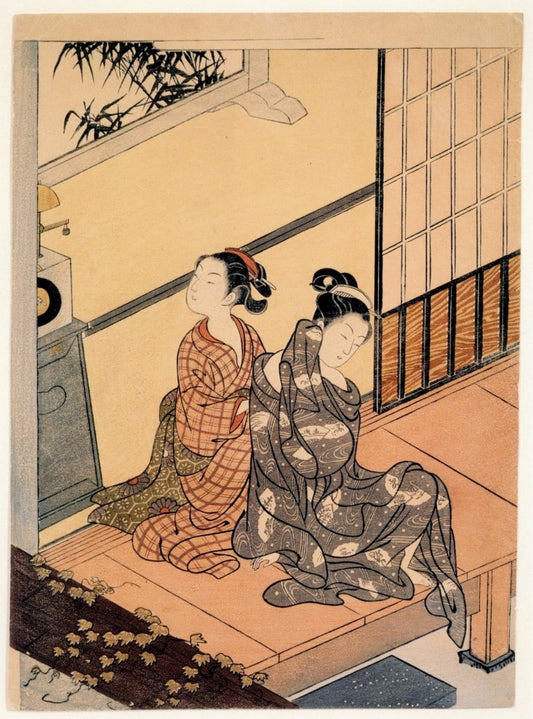
Harunobu, Suzuki (1724-1770) - The Evening Bell, Eight Interior Views c.1765-66
Vendor:Digital Download - 1 imageRegular price £0.80Regular priceUnit price per -

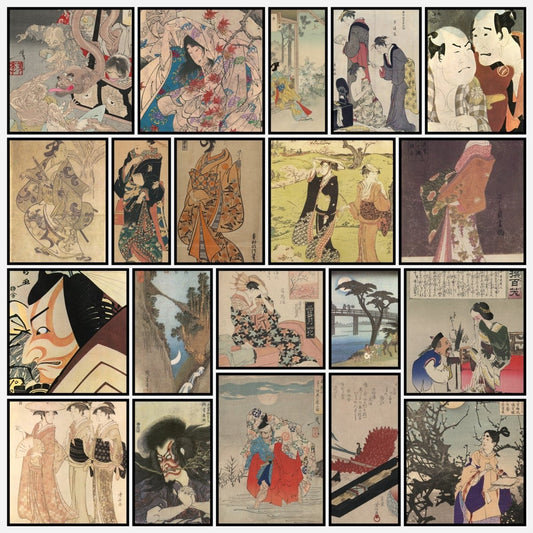
Ukiyo-e or Japanese Wood-block Prints - 95 High Resolution Images
Vendor:Digital Download - 95 imagesRegular price £4.00Regular priceUnit price per


Latest Picture Trove Blog Posts
View all-

William Morris’s Strawberry Thief: The Story Behind a Classic Arts and Crafts Pattern
Few William Morris designs are as instantly recognisable as Strawberry Thief. With its richly patterned foliage, small red strawberries and watchful birds hidden among curling leaves, it has become one of the most loved designs of the Arts and Crafts movement.
William Morris’s Strawberry Thief: The Story Behind a Classic Arts and Crafts Pattern
Few William Morris designs are as instantly recognisable as Strawberry Thief. With its richly patterned foliage, small red strawberries and watchful birds hidden among curling leaves, it has become one of the most loved designs of the Arts and Crafts movement.
-

Glasgow and the Mackintosh Style
We recently took ourselves off to Scotland, and on our travels, we popped into the Mackintosh Tea Rooms in Glasgow for a bit of a nose around and a spot of lunch.
Glasgow and the Mackintosh Style
We recently took ourselves off to Scotland, and on our travels, we popped into the Mackintosh Tea Rooms in Glasgow for a bit of a nose around and a spot of lunch.
-

A Trip to Edinburgh & Glasgow, and Scottish Art
We have just returned from a well-deserved few days' break in Scotland, visiting both Edinburgh and Glasgow, taking in Scottish art and tea rooms!
A Trip to Edinburgh & Glasgow, and Scottish Art
We have just returned from a well-deserved few days' break in Scotland, visiting both Edinburgh and Glasgow, taking in Scottish art and tea rooms!


