

The term ‘Glasgow Girls’ was coined by William Buchanan in an essay he contributed to the catalogue for a Glasgow Boys exhibition held in 1968. Though he was using this title to show that these artists were the female equivalents of their well-known male counterparts, it does not reflect the personal and professional complexity of this group. They pursued different styles and worked in a range of art forms. Some formed discreet groups while others chose to work alone. Even residence in Glasgow was not a unifying factor, as many lived and worked elsewhere in Scotland.
They were connected, however, through shared experiences and their continued efforts to support one another. Artists who are understood to be ‘Glasgow Girls’ include:-
Jessie Marion King (1875-1949)
Margaret Macdonald Mackintosh (1864-1933
Frances Macdonald MacNair (1873-1921)
Helen Paxton Brown (1876-1956)
Eleanor Allen Moore (1885-1955)
Annie French (1872-1965)
Jessie Wylie Newbery (1864-1948)
Ann Macbeth (1875-1948)
Norah Neilson Gray (1882-1931)
During the late nineteenth and early twentieth centuries, Glasgow emerged as a thriving industrial hub. The city’s economic prosperity fostered a climate of opportunity, attracting artists and designers keen to exploit the wealth of commissions and creative projects that arose from this dynamic environment.
At the same time, the Glasgow School of Art experienced a golden age under the leadership of Francis Newbery. Fra Newbery (as he was known) and his wife Jessie Newbery pioneered a more inclusive approach to art and design training. Crucially, they afforded the Decorative Arts, such as textiles, ceramics and jewellery-making, the same status as the Fine Arts, like painting and sculpture. This allowed artists to excel in areas that had previously been ignored in art education.
Many of the female students formed close friendships and rented studios together in the city centre. For example, the studio that Jessie M King and Helen Paxton Brown shared at 141 Bath Street, Glasgow, became a hub where a like-minded community of artists, writers and patrons could meet. In 1882, a group of these women founded the Glasgow Society of Lady Artists to provide a dedicated forum where they could promote their work.
The Glasgow Girls employed a wide variety of techniques and developed a range of artistic styles. Two of the most prominent painters of the group were Bessie MacNicol and Stansmore Dean. Both studied at the Glasgow School of Art and subsequently went to the Académie Colarossi in Paris, where they could study from the life model. Dean’s paintings reflect the influence of the Aesthetic Movement, while MacNicol’s style became more decorative after she met E.A. Hornel in 1896.
Those who worked in design-based art forms were more closely associated with the development of the Glasgow Style. Inspired by aspects of the Arts and Crafts movement, the Celtic Revival and European Art Nouveau, this style was characterised by flowing, linear motifs derived from nature. Artists like Jessie M King, Annie French and Jessie Newbery would then apply this distinctive style to everything from book illustrations, posters, wallpaper and fabrics to jewellery and homewares.
This all-embracing approach to art and design also defined the work of ‘The Four’ – Margaret and Frances Macdonald and their husbands Charles Rennie Mackintosh and Herbert McNair.
Some of the Glasgow Girls were able to show their oil and watercolour paintings in exhibitions held by art institutions in Glasgow, Edinburgh, and London. Progressive publications like The Studio circulated their prints and engraved reproductions of their works to a wider audience. As a result, many were asked to participate in major international exhibitions held in Munich, Berlin, Vienna and Turin. Their success led to solo shows back home in Britain. In addition to the critical recognition they received from exhibitions, objects that they designed were purchased for use or display in domestic settings and public spaces such as tea rooms.
After World War I, the Glasgow style largely fell out of favour. Though there were major retrospectives for their near contemporaries, the Glasgow Boys and Charles Rennie Mackintosh, the work of the Glasgow Girls was forgotten or deliberately edited out of art historical accounts of this period. It was not until 1990 when Jude Burkhauser organised the first survey exhibition of their work, Glasgow Girls: Women in Art and Design 1880-1920 that their accomplishments were finally recognised. Her research highlighted not only women’s vital contribution to the development of the Glasgow Style but also their capacity to overcome the inequalities they faced in society at that time. Their legacy continues as museums and galleries seek to address gaps in their collection by acquiring and displaying more examples of work by the Glasgow Girl artists.
Images to download
-


Margaret Macdonald Mackintosh 16 High Resolution Images
Vendor:Digital Download - 16 imagesRegular price £3.00Regular priceUnit price per -

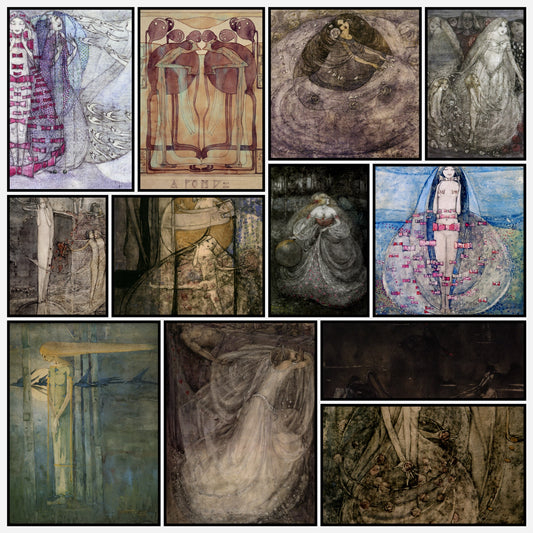
Frances Macdonald MacNair 12 High Resolution Images
Vendor:Digital Download - 12 imagesRegular price £3.00Regular priceUnit price per -


King, Jessie M (1875-1949) - The Frog Prince 1913
Vendor:Digital Download - 1 imageRegular price £0.80Regular priceUnit price per -


Mackintosh, M. Macdonald (1864-1933) - The Opera of the Wind c.1902
Vendor:Digital Download - 1 imageRegular price £0.80Regular priceUnit price per -


Mackintosh, M. Macdonald (1864-1933) - Pink Tobacco Flower textile design
Vendor:Digital Download - 1 imageRegular price £0.80Regular priceUnit price per -


MacNair, Frances Macdonald (1873-1921) - Bows c.1910
Vendor:Digital Download - 1 imageRegular price £0.80Regular priceUnit price per -


MacNair, Frances Macdonald (1873-1921) - A Pond 1894
Vendor:Digital Download - 1 imageRegular price £0.80Regular priceUnit price per -


MacNair, Frances Macdonald (1873-1921) - A Paradox 1911
Vendor:Digital Download - 1 imageRegular price £0.80Regular priceUnit price per -


Mackintosh, M. Macdonald (1864-1933) - The Three Perfumes 1912
Vendor:Digital Download - 1 imageRegular price £0.80Regular priceUnit price per -


Mackintosh, M. Macdonald (1864-1933) - The Opera of the Sea c.1902
Vendor:Digital Download - 1 imageRegular price £0.80Regular priceUnit price per -


Mackintosh, M. Macdonald (1864-1933) - The Mysterious Garden 1911
Vendor:Digital Download - 2 imagesRegular price £0.80Regular priceUnit price per -


Mackintosh, M. Macdonald (1864-1933) - The Heart of the Rose 1901-2
Vendor:Digital Download - 1 imageRegular price £0.80Regular priceUnit price per -


King, Jessie M (1875-1949) - Illustration for 'The Magic Grammar' from The Studio 1902
Vendor:Digital Download - 1 imageRegular price £0.80Regular priceUnit price per -


Stevenson, Stansmore Dean (1866-1944) - Byway, Old Holland 1895
Vendor:Digital Download - 1 imageRegular price £0.80Regular priceUnit price per -


Moore, Eleanor Allen (1885-1955) - The Silk Dress c.1918
Vendor:Digital Download - 1 imageRegular price £0.80Regular priceUnit price per -


Gray, Norah Neilson (1882-1931) - Mother and Child 1920s
Vendor:Digital Download - 1 imageRegular price £0.80Regular priceUnit price per -


MacNicol, Bessie (1869-1904) - A Girl of the Sixties c.1900
Vendor:Digital Download - 1 imageRegular price £0.80Regular priceUnit price per -


MacNair, Frances Macdonald (1873-1921) - Woman standing behind the sun 1911
Vendor:Digital Download - 1 imageRegular price £0.80Regular priceUnit price per -


MacNair, Frances Macdonald (1873-1921) - The Frog Prince 1898
Vendor:Digital Download - 1 imageRegular price £0.80Regular priceUnit price per -


MacNair, Frances Macdonald (1873-1921) - The Choice 1911
Vendor:Digital Download - 1 imageRegular price £0.80Regular priceUnit price per -


MacNair, Frances Macdonald (1873-1921) - Sleep 1911
Vendor:Digital Download - 1 imageRegular price £0.80Regular priceUnit price per -


MacNair, Frances Macdonald (1873-1921) - Shameful Death in the Defence of Guinevere 1897
Vendor:Digital Download - 1 imageRegular price £0.80Regular priceUnit price per -


MacNair, Frances Macdonald (1873-1921) - Ill Omen 1893
Vendor:Digital Download - 1 imageRegular price £0.80Regular priceUnit price per -


MacNair, Frances Macdonald (1873-1921) - Girl with White Butterflies 1907
Vendor:Digital Download - 1 imageRegular price £0.80Regular priceUnit price per -


MacNair, Frances Macdonald (1873-1921) - Death of Jehane from Golden Wings 1897
Vendor:Digital Download - 1 imageRegular price £0.80Regular priceUnit price per -

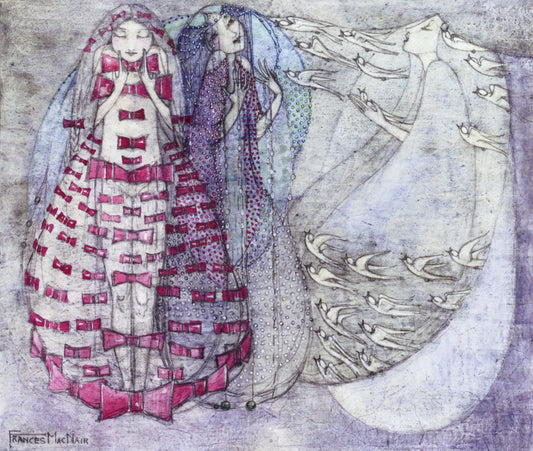
MacNair, Frances Macdonald (1873-1921) - Bows, Beads & Birds 1911
Vendor:Digital Download - 2 imagesRegular price £0.80Regular priceUnit price per -


Mackintosh, M. Macdonald (1864-1933) - Yet I Am Very Sorry For My Sins From King Arthur's Tomb 1897
Vendor:Digital Download - 1 imageRegular price £0.80Regular priceUnit price per -


Mackintosh, M. Macdonald (1864-1933) - The White Rose & the Red Rose 1902
Vendor:Digital Download - 1 imageRegular price £0.80Regular priceUnit price per -


Mackintosh, M. Macdonald (1864-1933) - The Silver Apples of the Moon c.1912
Vendor:Digital Download - 1 imageRegular price £0.80Regular priceUnit price per -


Mackintosh, M. Macdonald (1864-1933) - The Seven Princesses (detail) 1906
Vendor:Digital Download - 1 imageRegular price £0.80Regular priceUnit price per -


Mackintosh, M. Macdonald (1864-1933) - The Pool of Silence 1913
Vendor:Digital Download - 1 imageRegular price £0.80Regular priceUnit price per -


Mackintosh, M. Macdonald (1864-1933) - Poster for the Glasgow Institute of Fine Arts c.1895
Vendor:Digital Download - 1 imageRegular price £0.80Regular priceUnit price per -


Mackintosh, M. Macdonald (1864-1933) - Pair of Embroidered Panels for Hill House 1902
Vendor:Digital Download - 1 imageRegular price £0.80Regular priceUnit price per -


Mackintosh, M. Macdonald (1864-1933) - Deutsche Kunst und Dekoration cover May 1902
Vendor:Digital Download - 1 imageRegular price £0.80Regular priceUnit price per -


Mackintosh, M. Macdonald (1864-1933) - Circles, Lines, Checks & Dots, Chiffon Voile
Vendor:Digital Download - 1 imageRegular price £0.80Regular priceUnit price per -


Mackintosh, C.R. (1868-1928) & Margaret (1864-1933) - The Little Hills right panel c.1916-17
Vendor:Digital Download - 1 imageRegular price £0.80Regular priceUnit price per -


Mackintosh, C.R. (1868-1928) & Margaret (1864-1933) - The Little Hills left panel c.1916-17
Vendor:Digital Download - 1 imageRegular price £0.80Regular priceUnit price per


Latest Picture Trove Blog Posts
View all-

William Morris’s Strawberry Thief: The Story Behind a Classic Arts and Crafts Pattern
Few William Morris designs are as instantly recognisable as Strawberry Thief. With its richly patterned foliage, small red strawberries and watchful birds hidden among curling leaves, it has become one of the most loved designs of the Arts and Crafts movement.
William Morris’s Strawberry Thief: The Story Behind a Classic Arts and Crafts Pattern
Few William Morris designs are as instantly recognisable as Strawberry Thief. With its richly patterned foliage, small red strawberries and watchful birds hidden among curling leaves, it has become one of the most loved designs of the Arts and Crafts movement.
-

Glasgow and the Mackintosh Style
We recently took ourselves off to Scotland, and on our travels, we popped into the Mackintosh Tea Rooms in Glasgow for a bit of a nose around and a spot of lunch.
Glasgow and the Mackintosh Style
We recently took ourselves off to Scotland, and on our travels, we popped into the Mackintosh Tea Rooms in Glasgow for a bit of a nose around and a spot of lunch.
-

A Trip to Edinburgh & Glasgow, and Scottish Art
We have just returned from a well-deserved few days' break in Scotland, visiting both Edinburgh and Glasgow, taking in Scottish art and tea rooms!
A Trip to Edinburgh & Glasgow, and Scottish Art
We have just returned from a well-deserved few days' break in Scotland, visiting both Edinburgh and Glasgow, taking in Scottish art and tea rooms!


