

Émile-Allain Séguy (1877-1951), often abbreviated as E.A. Séguy, was a French decorative painter of the early 20th century, renowned for his illustrations of plants and insects in the Art Nouveau and later Art Deco styles. His ornamental designs were intended for the textile and wallpaper manufacturers of his time.
Émile-Allain Séguy is often confused with his contemporary Eugène Séguy (1890-1985), an eminent French dipterologist, also an illustrator of insects and author of the Universal Colour Code. This is evidenced by the cover of the American scientific magazine FASEB, April 2009, where E.A. Séguy is named Eugène Alain Séguy, where his given birth and death dates are actually those of his namesake, and where their works are completely intertwined. We think it's safe to say that all the colourful Art Deco, butterfly and insect designs that you find when Googling Séguy are by Émile-Allain Séguy. Eugene Séguy was a dipterologist - he studied and wrote about flies, and did line drawings of them within his texts. These men have been confused and conflated across the internet, including on Archive.org!
Émile-Allain Séguy was born on 14th October 1877 in Saint-Sulpice-Laurière in Haute-Vienne. He came from a family long established in the region; his grandfather, a local industrialist, owned a wool mill there. He began his schooling in Castel-Sarrazin and finished it at the Collège Rollin in Paris. He then entered the École des Arts Décoratifs, where he met Jules Habert-Dys, then a professor. A pioneer of Art Nouveau, Habert-Dys was strongly influenced by Japanese arts, particularly Ukiyo-e from the Edo period. For example, in Études d'insectes, seize motifs, Fantaisies décoratifs, dating from 1886-1887, his illustrations blend the purity of Japanese Kachō-ga lines with the European scientific precision of flora and fauna, the insect always being included within its environment.
In 1898, E.A. Séguy exhibited his first works at the Salon des Artistes Français alongside his friend Édouard Bénédictus; these were embossed leather objects and art bookbindings. At the 1900 Exposition Universelle, he was awarded two silver medals for his creations. In 1902, immediately after finishing his studies, he published two portfolios of floral ornaments that attracted attention. At the same time, he created new forms for ceramics and metalwork. He also designed and commissioned furniture using lacquer as decoration, an innovation that quickly became popular. Around 1910, he published the album Textiles, followed by Primavera in 1913, tinged with Fauvism, and Floréal in 1914. These pattern books were hand-coloured using stencils in the Art Nouveau style. At that time, he shared, for a time, his artistic emotions with the group of the Apaches, of which Maurice Ravel was the spearhead. He was subsequently chosen as publishing director of Éditions Pierre-Lafitte and founded in 1913 the artistic department for the windows of the Printemps stores, a profession which he practiced until 1924.
The war of 1914-1918 interrupted his work; he was mobilised during the four years of the war in the 44th Territorial Infantry Regiment and followed most of the trenches, in particular those of Verdun.
Upon demobilisation, he returned to his studio on the Île Saint-Louis and continued his exploration of ornamental designs intended for manufacturers and designers of textiles, carpets, and wallpapers. Indeed, he wished to make "available to designers, in a practical form, a set of materials capable of enriching and renewing their productions, and this in a distinctly contemporary way." He thus made a decisive contribution to the development of the Art Deco style in flat decoration. He published Samarkande (1920) with its oriental motifs, Suggestions for Fabrics and Carpets (1924), and Bouquets and Foliage (1925). He and his friend Edouard Benedictus were among the most prominent designers of ornamental patterns of his time. Many industrialists sought his collaboration, such as Lyon fabric publishers like Bianchini-Ferrier and wallpaper manufacturers like Duchesne-Binet and especially Leroy. His numerous creations earned him, at the 1925 International Exhibition of Modern Decorative Arts, two gold medals in the "book" section, an honorary diploma in the "wallpaper" section and the grand prize in the "textiles" section.
At the height of his powers, Émile-Allain Séguy created some of the most memorable insect illustrations of the Art Deco period, publishing them in two volumes: Papillons (1928) and Insectes (1929). Exotic butterflies, wasps, and planthoppers appear alongside dragonflies, grasshoppers, beetles, and cicadas. Richly coloured and more naturalistic than ornamental, his plates are the product of genuine entomological knowledge and an inexhaustible graphic imagination. This level of detail and diversity is rarely seen in traditional European art. As a result, Séguy's art is sometimes compared to Japanese art. However, the very dense layout and the complete absence of ecological context are not characteristic of traditional Japanese art. In the Kachō-ga, the details of the insect are counterbalanced by simpler elements, whereas Séguy's works teem with a dizzying amount of detail.
Wishing to pass on his expertise to younger generations, he became a professor of decorative composition at the École Estienne. In 1931, he produced an even more personal work with Prismes. Subsequently, as the Art Deco style became less popular, he made a living by working for the seed company Vilmorin & Cie, for which he illustrated catalogs and seed packets. Having fallen into obscurity, he made a film, presumably lost, whose aim was to revive interest in natural forms in the art of his time.
Tired and overwhelmed by his family problems, E.A. Séguy produced no further notable works after the Second World War. He died on 22nd June 1951 at his home in the 4th arrondissement of Paris. He was buried three days later in the Thiais cemetery in Paris. Thanks to donations from his daughter, Monique Gueben, the Forney Library, specialising in decorative and graphic arts, now holds numerous documents by Emile-Allain Séguy.
Images to download
-

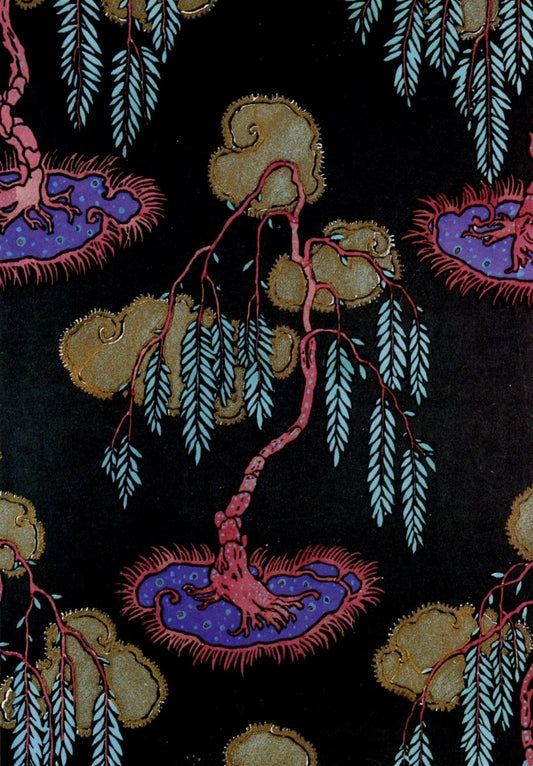
Séguy, Émile-Allain (1877-1951) - Willow 1914
Vendor:Digital Download - 1 imageRegular price £0.80Regular priceUnit price per -


Séguy, Émile-Allain (1877-1951) - Stylised Naturally Inspired design 1925
Vendor:Digital Download - 1 imageRegular price £0.80Regular priceUnit price per -


Séguy, Émile-Allain (1877-1951) - Stylised Floral design 1925
Vendor:Digital Download - 1 imageRegular price £0.80Regular priceUnit price per -


Séguy, Émile-Allain (1877-1951) - Stylised & semi-abstract floral design 1925
Vendor:Digital Download - 1 imageRegular price £0.80Regular priceUnit price per -

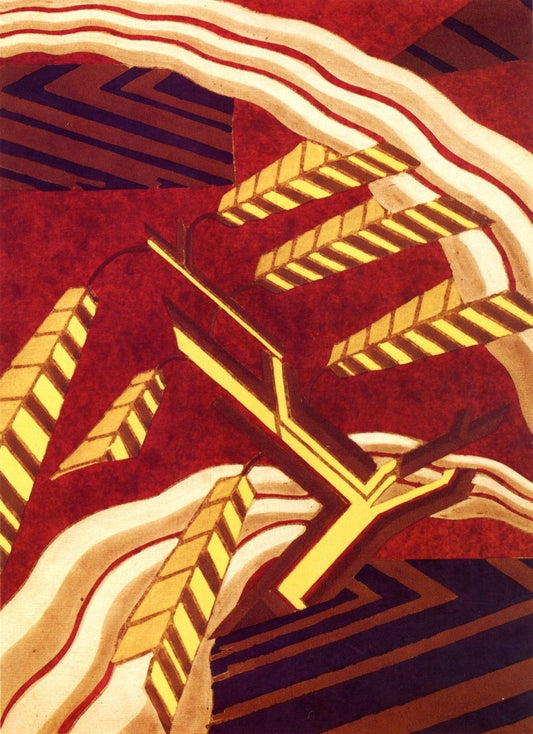
Séguy, Émile-Allain (1877-1951) - Semi-abstract geological design 1931
Vendor:Digital Download - 1 imageRegular price £0.80Regular priceUnit price per -

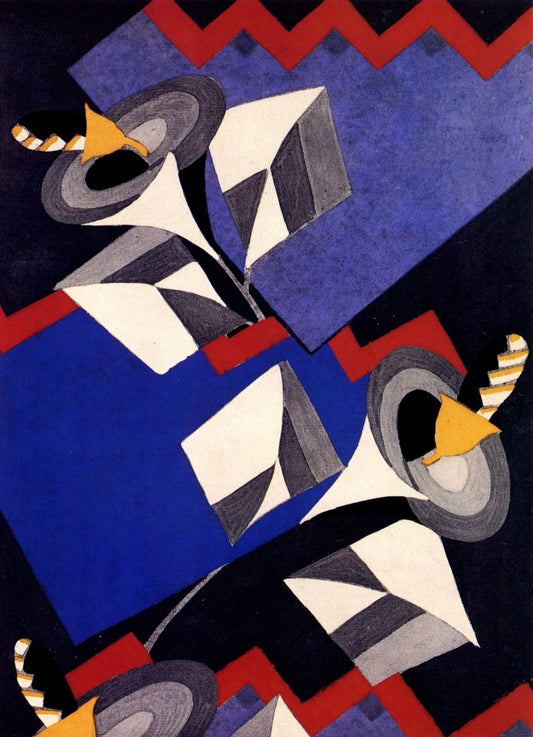
Séguy, Émile-Allain (1877-1951) - Semi-abstract floral design 1931
Vendor:Digital Download - 1 imageRegular price £0.80Regular priceUnit price per -

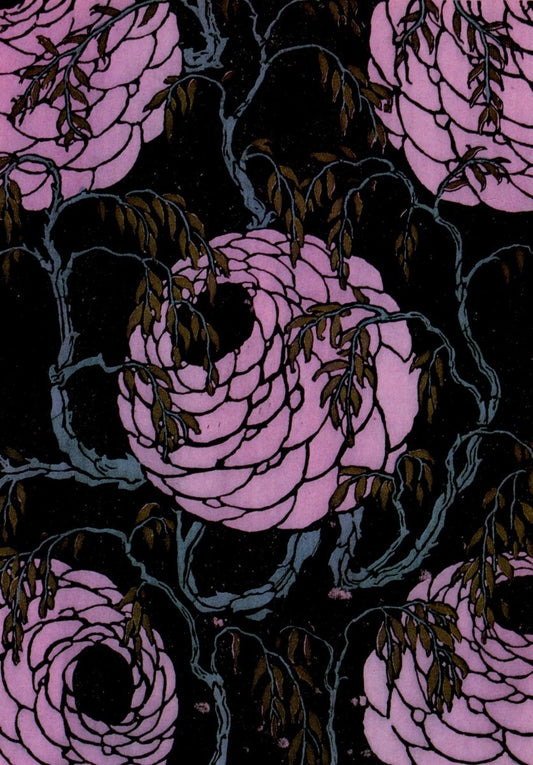
Séguy, Émile-Allain (1877-1951) - Floral 1914
Vendor:Digital Download - 1 imageRegular price £0.80Regular priceUnit price per -


Séguy, Émile-Allain (1877-1951) - Fish & naturally inspired designs 1925
Vendor:Digital Download - 1 imageRegular price £0.80Regular priceUnit price per -

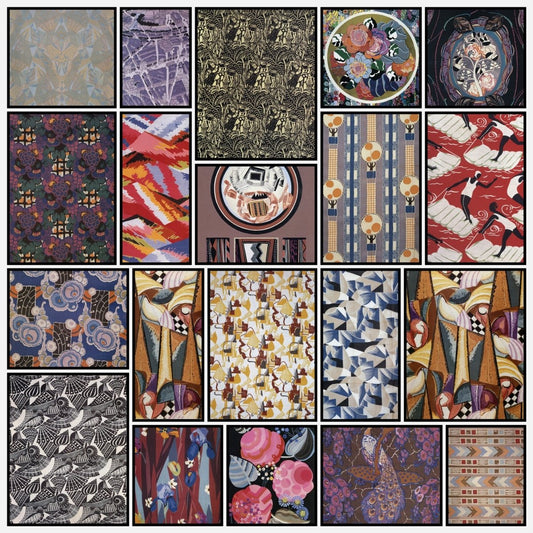
Art Deco Designs - 32 High Resolution Images
Vendor:Digital Download - 32 imagesRegular price £4.00Regular priceUnit price per


Latest Picture Trove Blog Posts
View all-

William Morris’s Strawberry Thief: The Story Behind a Classic Arts and Crafts Pattern
Few William Morris designs are as instantly recognisable as Strawberry Thief. With its richly patterned foliage, small red strawberries and watchful birds hidden among curling leaves, it has become one of the most loved designs of the Arts and Crafts movement.
William Morris’s Strawberry Thief: The Story Behind a Classic Arts and Crafts Pattern
Few William Morris designs are as instantly recognisable as Strawberry Thief. With its richly patterned foliage, small red strawberries and watchful birds hidden among curling leaves, it has become one of the most loved designs of the Arts and Crafts movement.
-

Glasgow and the Mackintosh Style
We recently took ourselves off to Scotland, and on our travels, we popped into the Mackintosh Tea Rooms in Glasgow for a bit of a nose around and a spot of lunch.
Glasgow and the Mackintosh Style
We recently took ourselves off to Scotland, and on our travels, we popped into the Mackintosh Tea Rooms in Glasgow for a bit of a nose around and a spot of lunch.
-

A Trip to Edinburgh & Glasgow, and Scottish Art
We have just returned from a well-deserved few days' break in Scotland, visiting both Edinburgh and Glasgow, taking in Scottish art and tea rooms!
A Trip to Edinburgh & Glasgow, and Scottish Art
We have just returned from a well-deserved few days' break in Scotland, visiting both Edinburgh and Glasgow, taking in Scottish art and tea rooms!


