

Giuseppe Crespi, known as “Lo Spagnuolo” (The Spaniard) (1665-1747), was an Italian Baroque painter whose career spanned the late seventeenth and early eighteenth centuries. Born in Bologna in 1665, Crespi became one of the most distinctive and original artists of his generation, celebrated for his keen observation of everyday life and innovative approach to storytelling within his paintings.
Crespi’s early training took place in his native city, where he studied under Angelo Michele Toni and later in the studio of Carlo Cignani. His nickname, “Lo Spagnuolo”, is believed to have originated from his preference for wearing Spanish-style clothing, a fashionable eccentricity that set him apart from his peers. This sense of individuality extended into his art, where he diverged from the grandiose religious and mythological subjects favoured by many Baroque painters, instead focusing on scenes drawn from daily life.
Unlike the more theatrical compositions of his contemporaries, Crespi’s paintings are marked by their intimacy and naturalism. He excelled in genre painting, capturing the lives of ordinary people with a sympathetic and often humorous eye. His celebrated series “Le Sette Arti Liberali” (The Seven Liberal Arts) is a testament to his skill in depicting human character and emotion. Crespi’s brushwork is lively and expressive, with a looseness that anticipates the later developments of Rococo painting.
Crespi was not limited to genre scenes; he also produced religious works, portraits, and allegorical paintings. His altarpieces, such as those for the churches of Bologna and Ferrara, show a mastery of dramatic light and a deep sensitivity to the spiritual content of his subjects. However, even in these more traditional commissions, Crespi’s individuality shines through in the psychological depth he brings to his figures.
Throughout his career, Crespi remained largely based in Bologna, where he influenced a new generation of artists, including his own sons, Antonio and Luigi Crespi. His reputation extended beyond his lifetime, as his works were sought after by collectors and connoisseurs in Italy and abroad.
Today, Giuseppe Crespi is recognised as a key figure in the transition from the Baroque to the Rococo, and his paintings are held in major museums, including the Uffizi in Florence and the National Gallery in London.
Images to download
-

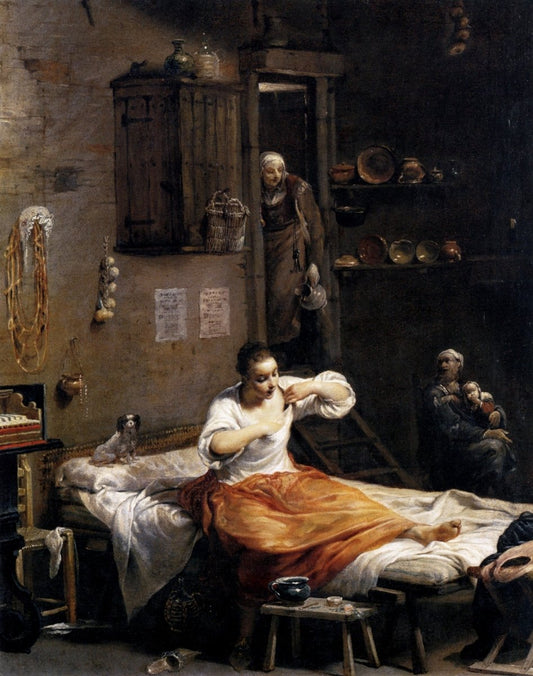
Crespi, Giuseppe (Lo Spagnuolo, 1665-1747) - Woman with the Flea 1720-30
Vendor:Digital Download - 1 imageRegular price £0.80Regular priceUnit price per -

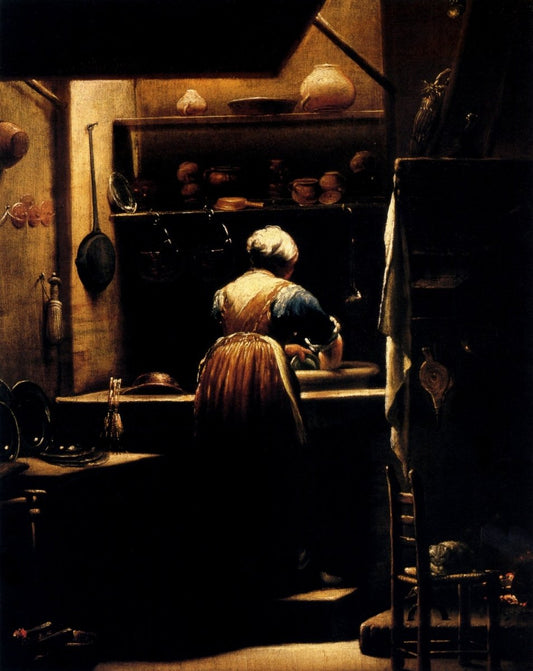
Crespi, Giuseppe (Lo Spagnuolo, 1665-1747) - The Scullery Maid c.1720
Vendor:Digital Download - 1 imageRegular price £0.80Regular priceUnit price per


Latest Picture Trove Blog Posts
View all-

William Morris’s Strawberry Thief: The Story Behind a Classic Arts and Crafts Pattern
Few William Morris designs are as instantly recognisable as Strawberry Thief. With its richly patterned foliage, small red strawberries and watchful birds hidden among curling leaves, it has become one of the most loved designs of the Arts and Crafts movement.
William Morris’s Strawberry Thief: The Story Behind a Classic Arts and Crafts Pattern
Few William Morris designs are as instantly recognisable as Strawberry Thief. With its richly patterned foliage, small red strawberries and watchful birds hidden among curling leaves, it has become one of the most loved designs of the Arts and Crafts movement.
-

Glasgow and the Mackintosh Style
We recently took ourselves off to Scotland, and on our travels, we popped into the Mackintosh Tea Rooms in Glasgow for a bit of a nose around and a spot of lunch.
Glasgow and the Mackintosh Style
We recently took ourselves off to Scotland, and on our travels, we popped into the Mackintosh Tea Rooms in Glasgow for a bit of a nose around and a spot of lunch.
-

A Trip to Edinburgh & Glasgow, and Scottish Art
We have just returned from a well-deserved few days' break in Scotland, visiting both Edinburgh and Glasgow, taking in Scottish art and tea rooms!
A Trip to Edinburgh & Glasgow, and Scottish Art
We have just returned from a well-deserved few days' break in Scotland, visiting both Edinburgh and Glasgow, taking in Scottish art and tea rooms!


