

John Sell Cotman (1782-1842) was an English marine and landscape painter, etcher, illustrator, and a leading member of the Norwich School of painters.
John Sell Cotman was born in Norwich on 16 May 1782, the eldest child of Edmund Cotman and his wife Ann (née Sell) living at 26 Bridge Street, in St George's parish. Edmund Cotman was a hairdresser who later became a silk merchant and a lace dealer.
The young Cotman was educated at Norwich Grammar School, and is recorded as starting there as a non-paying pupil on 3 August 1793. He showed a talent for art from an early age and would often go out on drawing trips into the countryside around Norwich and the North Norfolk coast. A story survives that the boy's headmaster, Dr Samuel Forster, disliked cats. When Forster saw a large realistic-looking cardboard cat on his desk, he held the silhouette up, saying, "I know who is the only boy who could have drawn this."
Cotman moved to London, probably in 1798. He lived at 28 Gerrard Street, Soho, initially making a living through commissions from print-sellers. His sketches at Rudulph Ackerman's print shop at 96 The Strand were studied by the Norwich artist John Thirtle when a young man. Cotman came under the patronage of Thomas Munro, physician to the Bridewell and Bethlehem Hospitals, whose house in Adelphi Terrace was a studio and a meeting place for artists that had included the young J.M.W. Turner and Thomas Girtin.
Cotman was influenced by Girtin, and soon joined his sketching club. During the summer of 1799 the two artists travelled together south of London to Surrey on a drawing expedition. In 1800 (and again in 1802 with his landlord, the artist Paul Sandby Munn), Cotman travelled to Wales on a sketching trip.
In 1800, Cotman exhibited at the Royal Academy for the first time. He exhibited other Welsh scenes at the Royal Academy in 1801 and 1802. In 1800, he was awarded an honorary palette by the Society of Arts. He continued to exhibit at the Academy until 1806. He was based during the early 1800s in London, but is known to have advertised in Norwich his services as a drawing teacher in the Norwich Mercury.
In the three summers of 1803-1805, Cotman stayed with the Cholmeley family at Brandsby Hall in Yorkshire. On the last of these three visits from London, he made a series of watercolours of the River Greta, after he was invited to visit Rokeby Park, the home of the English traveller John Morritt. Cotman's delicate paintings from these visits are among the finest produced by a European watercolourist.
In late 1806, Cotman returned to live in Norwich. He joined the recently formed Norwich Society of Artists and exhibited 149 works with the society between 1807 and 1810. He became the society's President in 1811.
Cotman married Ann Miles at Felbrigg parish church on 6 January 1809. The pair remained devoted throughout their married lives. Their eldest child Miles Edmund Cotman was born on 5 February the year after their marriage. Their daughter Ann was born in July 1812 after the family moved to Great Yarmouth in April 1812, followed by three more sons and a daughter.
As part of his teaching, Cotman operated his own version of a watercolour subscription library, so that his pupils could take home his drawings to copy. In 1810, Cotman began to etch, and the following year his first set of etchings (Miscellaneous Etchings) was published, strongly influenced by the work of the Italian artist Piranesi. All but one of the subjects were architectural, and were mostly of Yorkshire buildings. He later published a set of etchings of the ancient buildings of Norfolk (Architectural Antiquities of Norfolk 1818).
From 1812 to 1823, Cotman lived on the Norfolk coast at Great Yarmouth, where he studied the shipping and mastered depicting the form of sea waves. Some of his finest marine pieces date from this time.
In 1817, 1818, and 1820, whilst Cotman was living in Great Yarmouth, he visited Normandy to make drawings of the landscape and buildings of the region. The three tours are well documented, as Cotman wrote letters about his travels to his wife, and to Dawson Turner, who made extensive use of them in A Tour of Normandy (1820). The idea for Cotman to tour Normandy came from his friend Dawson Turner, who had visited the region in September 1815 with the British artist Thomas Phillips to view the works of art taken to Paris by Napoleon.
Cotman went first to London, where he purchased a camera lucida from Sir Henry Englefield, and viewed the newly-installed Elgin Marbles at the British Museum. The camera lucida was used for all three of Cotman's tours, but he seems to have struggled to use it to depict buildings accurately.
Cotman sailed from Brighton to Dieppe on 18 July, and began exploring the area around Dieppe the following day. His first trip to Normandy lasted over five weeks. He described his accommodation during this trip as being of poor quality, and that the local population were openly hostile towards him. From the drawings he produced in Normandy he is apparent that he took sketch books and drawing equipment, but no painting materials.
Cotman returned to Norwich in 1824, hoping to improve his financial position, and moved into a large house in St Martin's Plain, opposite the Bishop's Palace, where he built up a collection of prints, books, armour, and models of ships, to aid his compositions. He showed work from 1823 to 1825 at the Norwich Society of Artists' annual exhibitions.
In 1825, Cotman became an Associate of the Royal Society of Painters in Watercolours and was a frequent exhibitor there until 1839. During this period in his career he was driven to despair by his constant financial struggles.
In January 1834, Cotman was appointed Master of landscape drawing at King's College School in London, partly on the recommendation of J.M.W. Turner. In 1836 Miles Edmund Cotman was appointed to assist his father. The poet and artist Dante Gabriel Rossetti was one of his pupils. In London, Cotman developed friendships with the artists James Stark, George Cattermole, Samuel Prout, and Cornelius Varley. In 1836, he became an honorary member of the Institute of British Architects. In 1838, all of his etchings were published by Henry George Bohn.
In 1834, Miles Edmund remained in Norwich to work as an art teacher, when the rest of the Cotman family moved to London upon Cotman's appointment at King's College. A year after his move to London, Mile moved to London to be his father's assistant, after his brother John Joseph returned to Norwich. Miles succeeded his father as drawing master at King's College in 1843.
From 1839, Cotman became severely depressed, a condition that lasted into 1841. That year, he resumed his correspondence with Dawson Turner. Granted a fortnight's leave from King's College, he journeyed from London to Great Yarmouth by ship and then on to Norwich, ultimately staying in Norfolk for two months before returning to the capital. He produced some chalk drawings of church interiors, and of the Norfolk countryside, the dates of which allow his journey around the county to be traced: his sketches included Itteringham, 12 November and Storm off Cromer. During this period he was able to visit his elderly father at Thorpe St Andrew outside Norwich, when he probably began preparatory work for a painting, entitled From my Father's House at Thorpe. His last oil painting, dated 18 January 1842 and never completed, was A View of the Norwich River.
Cotman's depression returned, and by June 1842 he had become seriously ill, dying "of natural decay" on 24 July 1842. He was interred in the cemetery of St John's Wood Chapel, London. In his will he left everything to his wife Ann, and enabled her to receive a pension. His paintings and drawings were sold off from May 1843, fetching lower and lower prices for his financially-troubled family as the sales continued.
Cotman was not thought to be important during his lifetime, and he made little money from sales of his paintings and drawings. The sale of his works and library took place over five days at Christie's. His drawings and pictures fetched £260, his collection of books and art was sold off for £300 and the sum total for his prints was £30.
You can explore individual pictures by John Sell Cotman below, as well as our John Sell Cotman 36 High Resolution Images collection.
Images to download
-


John Sell Cotman 36 High Resolution Images
Vendor:Digital Download - 36 imagesRegular price £3.00Regular priceUnit price per -

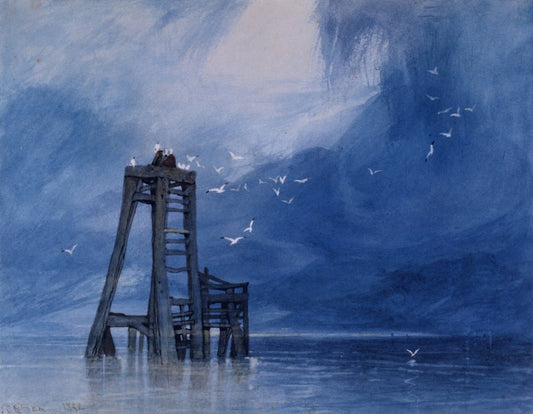
Cotman, John Sell (1782-1842) - Sea and Gulls 1832
Vendor:Digital Download - 1 imageRegular price £0.80Regular priceUnit price per -

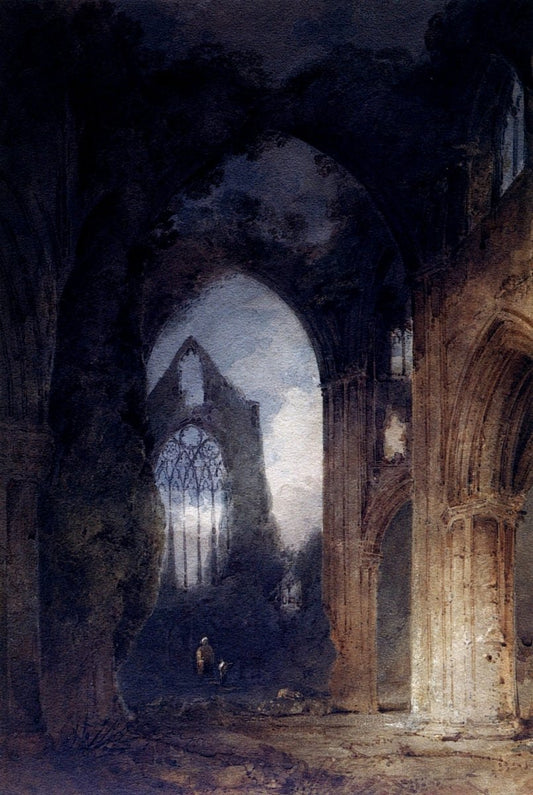
Cotman, John Sell (1782-1842) - Tintern Abbey by Moonlight c.1802
Vendor:Digital Download - 1 imageRegular price £0.80Regular priceUnit price per -


Cotman, John Sell (1782-1842) - The Swallow Falls, North Wales 1803
Vendor:Digital Download - 1 imageRegular price £0.80Regular priceUnit price per -


Cotman, John Sell (1782-1842) - The Marl Pit c.1809
Vendor:Digital Download - 1 imageRegular price £0.80Regular priceUnit price per -


Cotman, John Sell (1782-1842) - Norwood Church, Middlesex 1803
Vendor:Digital Download - 1 imageRegular price £0.80Regular priceUnit price per -


Cotman, John Sell (1782-1842) - New Bridge, Durham c.1805
Vendor:Digital Download - 1 imageRegular price £0.80Regular priceUnit price per -

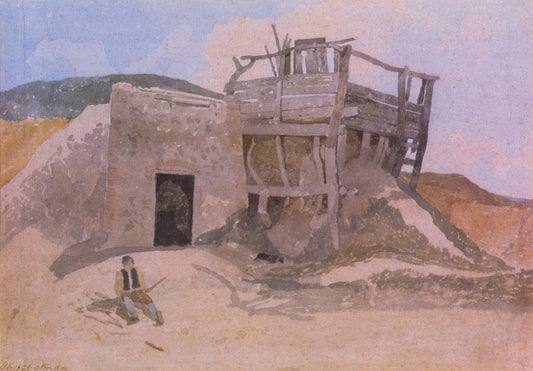
Cotman, John Sell (1782-1842) - Lime Kiln near Cromer c.1815
Vendor:Digital Download - 1 imageRegular price £0.80Regular priceUnit price per -


Cotman, John Sell (1782-1842) - Duncombe Park 1806-10
Vendor:Digital Download - 1 imageRegular price £0.80Regular priceUnit price per -


Cotman, John Sell (1782-1842) - Duncombe Park 1805
Vendor:Digital Download - 1 imageRegular price £0.80Regular priceUnit price per -


Cotman, John Sell (1782-1842) - Crosby Hall 1830
Vendor:Digital Download - 1 imageRegular price £0.80Regular priceUnit price per -


Cotman, John Sell (1782-1842) - Chirk Aquaduct 1806-7
Vendor:Digital Download - 1 imageRegular price £0.80Regular priceUnit price per -


Cotman, John Sell (1782-1842) - Brecknock (detail) c.1801
Vendor:Digital Download - 1 imageRegular price £0.80Regular priceUnit price per -

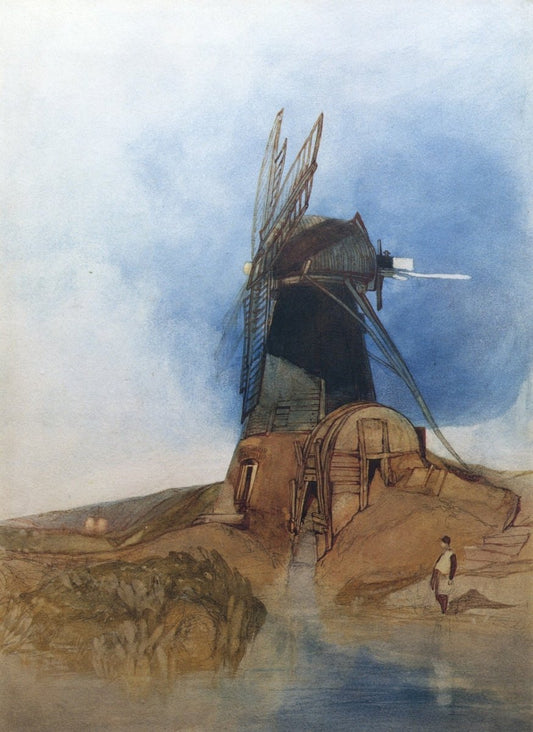
Cotman, John Sell (1782-1842) - A Windmill c.1828
Vendor:Digital Download - 1 imageRegular price £0.80Regular priceUnit price per -


Cotman, John Sell (1782-1842) - A Screen, Norwich Cathedral c.1811
Vendor:Digital Download - 1 imageRegular price £0.80Regular priceUnit price per -

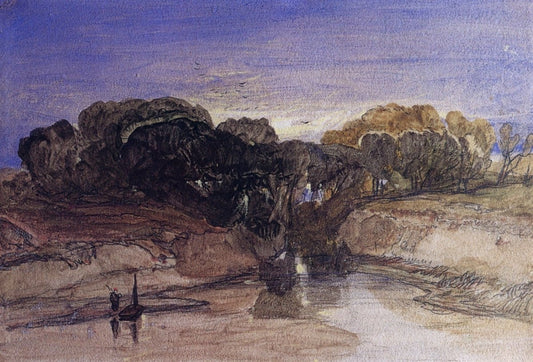
Cotman, John Sell (1782-1842) - A River Bank with Trees 1830s
Vendor:Digital Download - 1 imageRegular price £0.80Regular priceUnit price per -


Cotman, John Sell (1782-1842) - A Beached Barge near Battersea Bridge c.1809
Vendor:Digital Download - 1 imageRegular price £0.80Regular priceUnit price per


Latest Picture Trove Blog Posts
View all-

William Morris’s Strawberry Thief: The Story Behind a Classic Arts and Crafts Pattern
Few William Morris designs are as instantly recognisable as Strawberry Thief. With its richly patterned foliage, small red strawberries and watchful birds hidden among curling leaves, it has become one of the most loved designs of the Arts and Crafts movement.
William Morris’s Strawberry Thief: The Story Behind a Classic Arts and Crafts Pattern
Few William Morris designs are as instantly recognisable as Strawberry Thief. With its richly patterned foliage, small red strawberries and watchful birds hidden among curling leaves, it has become one of the most loved designs of the Arts and Crafts movement.
-

Glasgow and the Mackintosh Style
We recently took ourselves off to Scotland, and on our travels, we popped into the Mackintosh Tea Rooms in Glasgow for a bit of a nose around and a spot of lunch.
Glasgow and the Mackintosh Style
We recently took ourselves off to Scotland, and on our travels, we popped into the Mackintosh Tea Rooms in Glasgow for a bit of a nose around and a spot of lunch.
-

A Trip to Edinburgh & Glasgow, and Scottish Art
We have just returned from a well-deserved few days' break in Scotland, visiting both Edinburgh and Glasgow, taking in Scottish art and tea rooms!
A Trip to Edinburgh & Glasgow, and Scottish Art
We have just returned from a well-deserved few days' break in Scotland, visiting both Edinburgh and Glasgow, taking in Scottish art and tea rooms!


