

Giovanni Bellini (c.1430-1516) stands as one of the most influential figures in the history of Venetian painting. As a master of the Italian Renaissance, Bellini’s innovative approach to colour, composition, and emotional expression helped to define the visual language of his era and set a foundation for future generations of artists.
Born into a family of painters in Venice, Giovanni was the son of Jacopo Bellini and the brother of Gentile Bellini, both of whom were highly regarded in their own right. The Bellini workshop was a thriving centre for artistic activity, shaping the early careers of many artists, including Giorgione and Titian. Giovanni’s familial connections provided him with a rich artistic heritage, but it was his unique vision and technical mastery that allowed him to stand out amid his contemporaries.
Bellini’s early works were heavily influenced by the traditions of the Byzantine and Gothic styles, which were prevalent in Venice during his youth. However, as he matured, he became increasingly drawn to the innovations of the Renaissance, particularly the use of perspective, naturalistic detail, and a heightened sense of individuality in his subjects. One of his great contributions was his pioneering use of oil paint, a relatively new medium in Italy at the time. Unlike tempera, oil paint allowed for subtle gradations of tone and greater luminosity, qualities that Bellini exploited to render the natural world with unprecedented realism.
Throughout his long career, Bellini produced a wide array of altarpieces, devotional images, and portraits. His religious compositions, such as the “San Zaccaria Altarpiece” and the “Madonna of the Meadow,” are celebrated for their harmonious balance and serene beauty. Bellini had a particular talent for conveying spiritual depth and human emotion, qualities that imbue his Madonnas and saints with a sense of life and presence. His handling of light, in particular, became a hallmark of the Venetian school, influencing not only his immediate followers but also the broader trajectory of Western art.
In addition to his religious works, Bellini was an accomplished portraitist. His images of Venetian patricians reveal a keen psychological insight, capturing the dignity and complexity of his sitters. The subtle modelling of faces, delicate play of light across textures, and careful attention to background landscape all attest to his skill and sensitivity.
Bellini’s influence extended well beyond his own lifetime. As the teacher of Giorgione and Titian, he helped usher in the High Renaissance in Venice, laying the groundwork for some of the greatest achievements in European painting. His workshop was a centre of artistic innovation, where the traditions of the past met the possibilities of the future.
Giovanni Bellini died in 1516, but his legacy endures. His paintings can be found in major museums around the world, and his approach to colour and composition continues to inspire artists and art lovers alike. Through his dedication to craft and his profound understanding of the human experience, Bellini secured his place as one of the true masters of the Renaissance.
Images to download
-

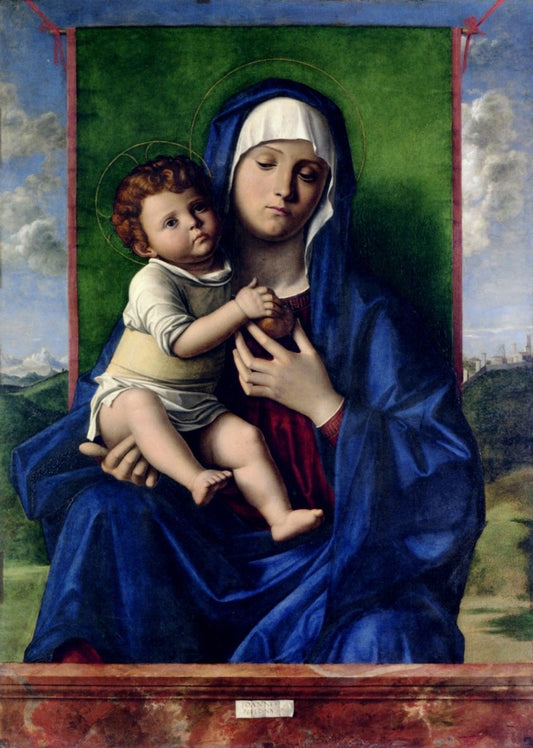
Bellini, Giovanni (1430-1516) - Virgin and Child c.1480-1500
Vendor:Digital Download - 1 imageRegular price £0.80Regular priceUnit price per -

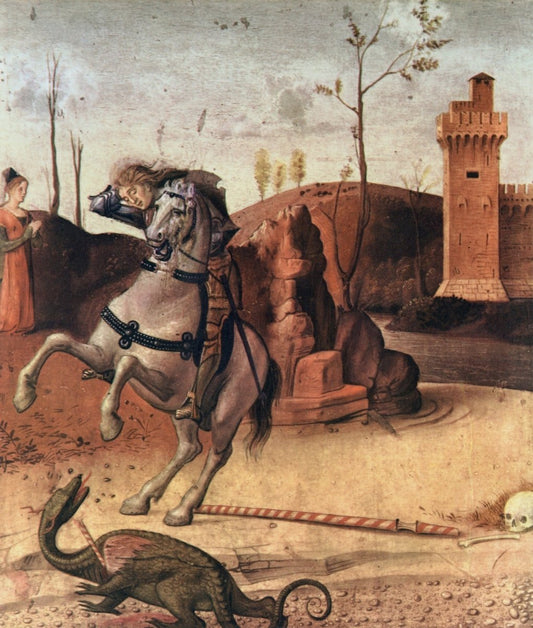
Bellini, Giovanni (1430-1516) - St George conquers the Dragon (Pesaro altarpiece) c.1471-4
Vendor:Digital Download - 1 imageRegular price £0.80Regular priceUnit price per -

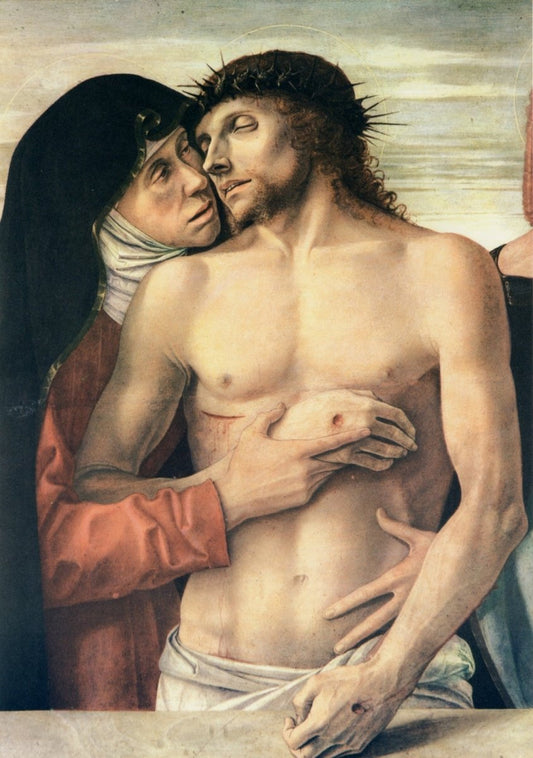
Bellini, Giovanni (1430-1516) - Pieta (detail) 1455
Vendor:Digital Download - 1 imageRegular price £0.80Regular priceUnit price per -

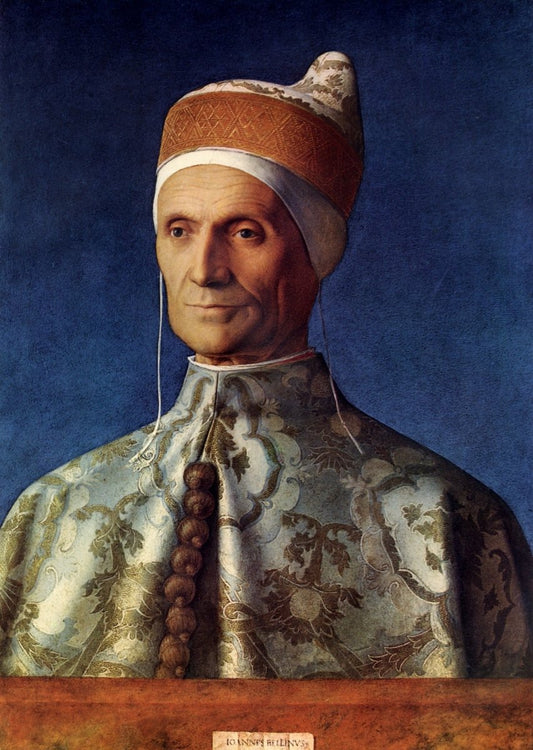
Bellini, Giovanni (1430-1516) - The Doge c.1501-2
Vendor:Digital Download - 1 imageRegular price £1.00Regular priceUnit price per -

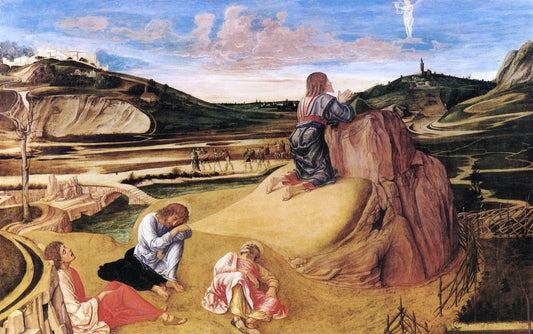
Bellini, Giovanni (1430-1516) - The Agony in the Garden c.1465
Vendor:Digital Download - 1 imageRegular price £0.80Regular priceUnit price per


Latest Picture Trove Blog Posts
View all-

William Morris’s Strawberry Thief: The Story Behind a Classic Arts and Crafts Pattern
Few William Morris designs are as instantly recognisable as Strawberry Thief. With its richly patterned foliage, small red strawberries and watchful birds hidden among curling leaves, it has become one of the most loved designs of the Arts and Crafts movement.
William Morris’s Strawberry Thief: The Story Behind a Classic Arts and Crafts Pattern
Few William Morris designs are as instantly recognisable as Strawberry Thief. With its richly patterned foliage, small red strawberries and watchful birds hidden among curling leaves, it has become one of the most loved designs of the Arts and Crafts movement.
-

Glasgow and the Mackintosh Style
We recently took ourselves off to Scotland, and on our travels, we popped into the Mackintosh Tea Rooms in Glasgow for a bit of a nose around and a spot of lunch.
Glasgow and the Mackintosh Style
We recently took ourselves off to Scotland, and on our travels, we popped into the Mackintosh Tea Rooms in Glasgow for a bit of a nose around and a spot of lunch.
-

A Trip to Edinburgh & Glasgow, and Scottish Art
We have just returned from a well-deserved few days' break in Scotland, visiting both Edinburgh and Glasgow, taking in Scottish art and tea rooms!
A Trip to Edinburgh & Glasgow, and Scottish Art
We have just returned from a well-deserved few days' break in Scotland, visiting both Edinburgh and Glasgow, taking in Scottish art and tea rooms!


