-
Digital Download - 1 image -
Dimensions 3606 x 6128 pixels
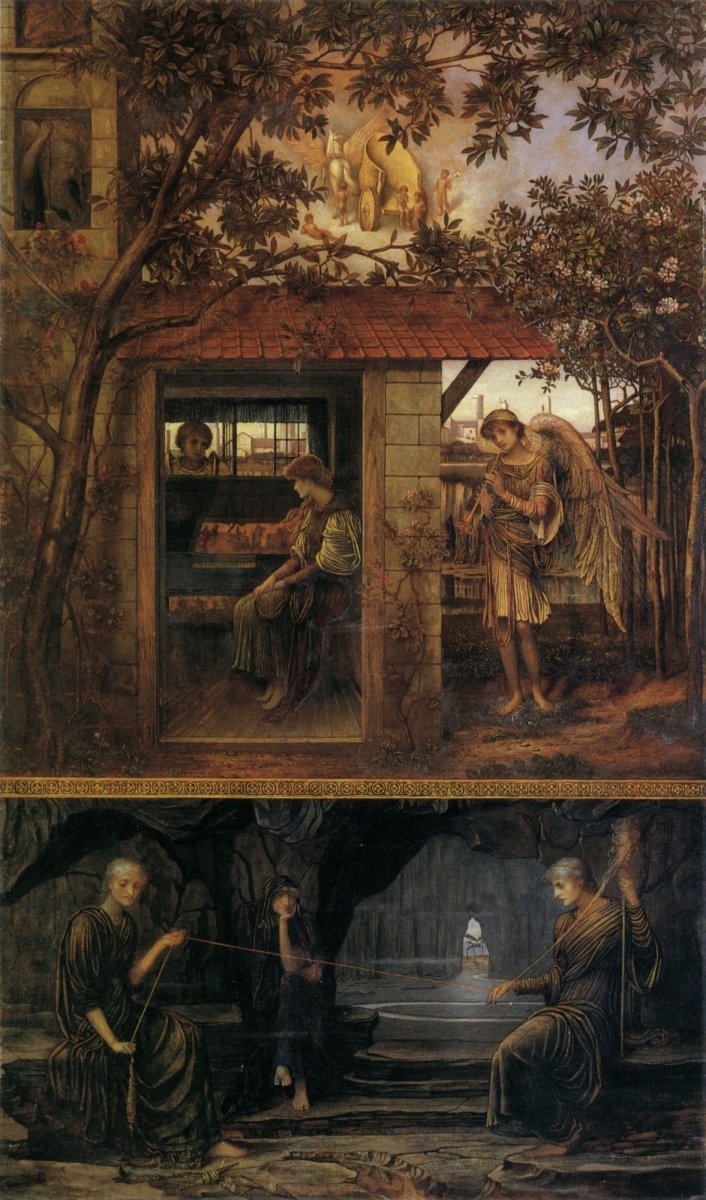
Strudwick, John Melhuish (1849-1935) - A Golden Thread 1885
Digital Download - 1 image
Couldn't load pickup availability
- All images are out of copyright
- Commercial use allowed
- Immediate download after purchase
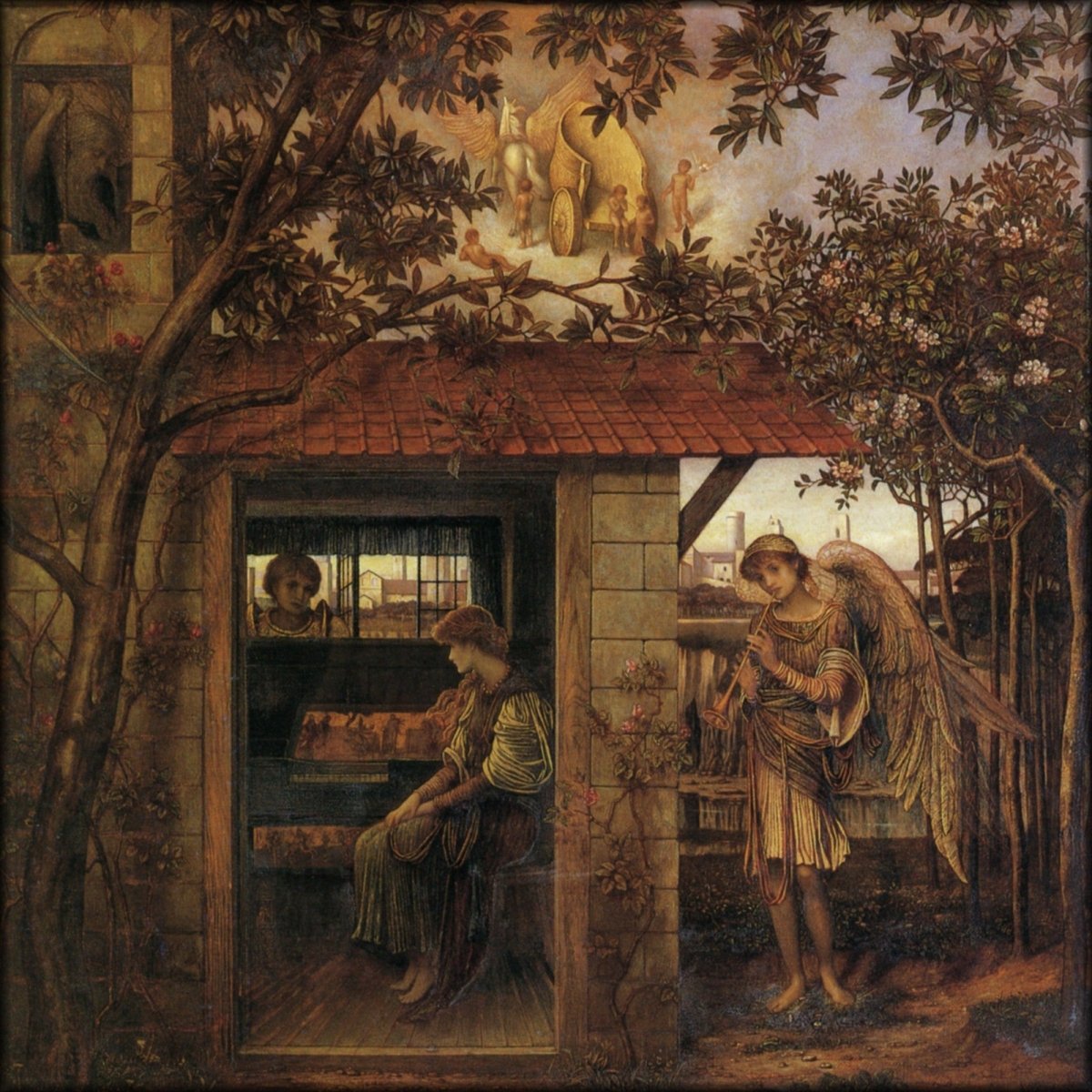
This picture was painted by Pre-Raphaelite John Melhuish Strudwick, who loved to create canvases with fairy-tale, mystical and mythological subjects. This work is a depiction of the ancient Greek myth of the Moirai (the Fates), who spun the thread of destiny.
This download consists of 1 image, in jpeg format, that is 600dpi and 3606 pixels wide by 6128 pixels tall.
The picture is out of copyright and in the public domain, so you are free to use it in whatever way you'd like, including commercial use.
John Melhuish Strudwick (1849-1937) was a British Pre-Raphaelite painter.
Strudwick, born in Hammersmith, London, was the son of William Strudwick (1808-1861) and Sarah Melhuish (1800-1862). He attended St Saviour's Grammar School in Southwark. Disliking the idea of a business career, he took classes at the Royal Academy Schools in South Kensington, but was not regarded as a promising student.
In the 1860s he was encouraged by a visitor, the Scottish genre painter, John Pettie, whose style he subsequently emulated. His depiction of the ballad of 'Auld Robin Gray', which was exhibited at the Royal Society of British Artists in 1873, is an example of this period. His art style, however, developed in a new direction in the 1870s when he worked first as studio assistant to Spencer Stanhope and then to Edward Burne-Jones. In keeping with artists in his circle, he exhibited at the Grosvenor Gallery and the New Gallery in London. Strudwick's studio was in Hammersmith, close to that of Burne-Jones and Thomas Matthews Rooke, who had also been an assistant to Burne-Jones. He married Harriet Reed and had a single daughter, Ethel (1880-1954), who later became High Mistress of St Paul's Girls' School from 1927 to 1948, and was appointed a CBE.
His initial success as a painter came to an end when wealthy and influential patrons such as the Liverpool shipowners William Imrie and George Holt withdrew their support. His painting "When Sorrow comes in Summer Days, Roses Bloom in Vain" was left half finished in protest at the seemingly orchestrated collapse of his career.
Strudwick's paintings were done in a blend of medieval and Renaissance styles, with meticulous attention to detail, especially in his treatment of draperies and accessories, and leading to a very small output. Some thirty of his paintings depict legendary and symbolic subjects, sometimes employing a lapidary technique from the Italian quattrocento. He employed rich, deep colours, faces clearly inspired by Burne-Jones and sumptuous drapery. His work was regularly slated by Frederic George Stephens, a failed painter come critic for the Athenaeum, who could find little positive to say.
His obituary in The Times described him as "a beautiful old man... a charming personality, exceedingly kind to young artists."

Public Domain Copyright Rules
The pictures in our collections are out of copyright in the United States, the UK, Canada, most of Europe, Australia and all countries that follow the lifetime plus 70 years rule. Read our blog post about public domain copyright rules for more information.