-
Digital Download - 1 image -
Dimensions 4689 x 5895 pixels
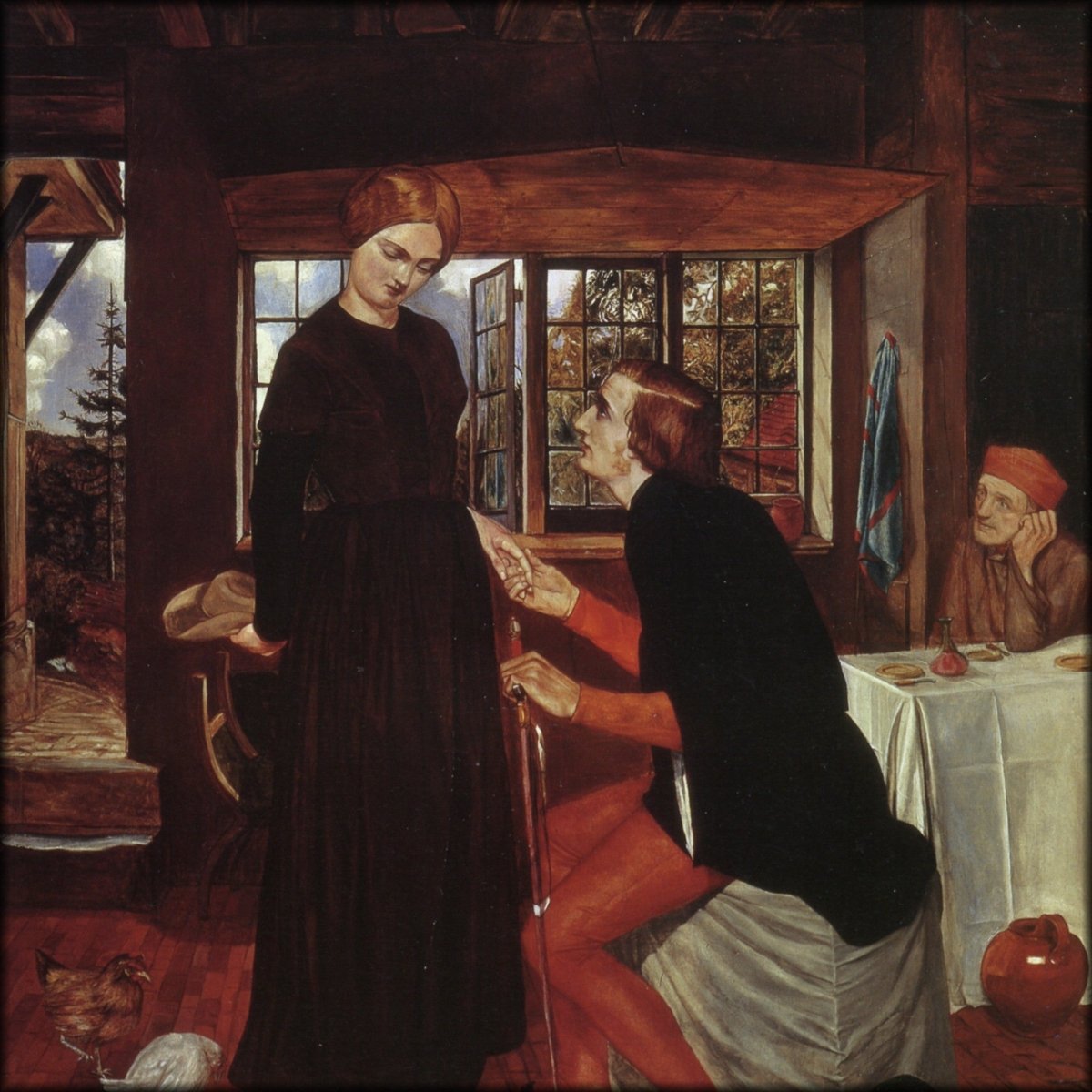
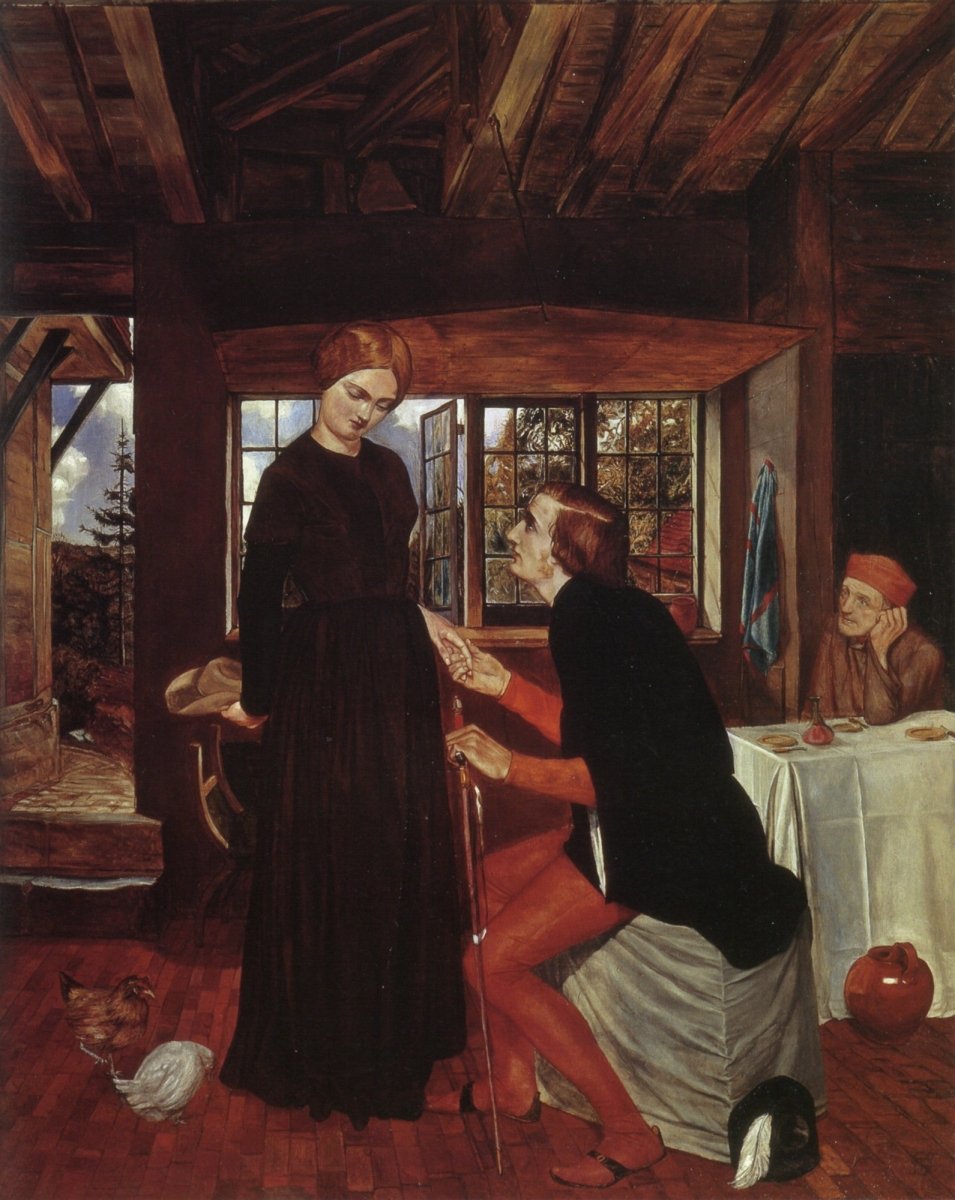
Stephens, Frederick G. (1828-1907) - The Proposal (Marquis & Griselda) c.1850
Digital Download - 1 image
Couldn't load pickup availability
- All images are out of copyright
- Commercial use allowed
- Immediate download after purchase
Like many Pre-Raphaelite works, The Proposal demonstrates the hierarchy of rich and poor and explores love across social classes. In this scene from Chaucer’s Canterbury Tales, a nobleman has put Griselda through trials, but she has taught him kinder ways. She thinks about her future. The open window suggests she will leave her father’s cottage. This is the only surviving complete painting by the Pre-Raphaelite painter Frederic Stephens. Griselda was modelled by the artist Elizabeth Siddal.
This download consists of 1 image, in jpeg format, that is 600dpi and 4689 pixels wide by 5895 pixels tall.
The picture is out of copyright and in the public domain, so you are free to use it in whatever way you'd like, including commercial use.
Frederic George Stephens (1827-1907) was a British art critic and a key figure within the Pre-Raphaelite Brotherhood, despite being one of its two non-artistic members. Born in Walworth, London, Stephens faced physical challenges due to an accident in 1837, leading to a private education and eventual enrolment at the Royal Academy Schools in 1844. There, he met future Brotherhood members John Everett Millais and William Holman Hunt, joining the group in 1848 and often serving as a model for their works.
Disappointed by his own artistic capabilities, Stephens shifted his focus to art criticism, claiming to have destroyed most of his paintings, though several, including "The Proposal" and "Morte d'Arthur," are now in the Tate Gallery. His criticism work began at the Athenaeum, where he served as art critic and later editor from 1860 to 1901, and contributed to other art journals, including the Pre-Raphaelite journal, The Crayon.
Stephens published works on Gothic and Netherlandish art and wrote extensively on British collecting, promoting Victorian interest in contemporary art. He also served as Keeper of Prints and Drawings at the British Museum, contributing significantly to its catalogue.
A falling out occurred between Stephens and Holman Hunt over the latter's painting "The Triumph of the Innocents," which damaged their friendship. Despite being a loyal supporter, Stephens criticised the work, prompting Hunt's retaliatory attack years later. Stephens’ conservative views on art and his disapproval of Impressionism contributed to the end of his long association with the Athenaeum.
In 1866, Stephens married artist Rebecca Clara Dalton, and they lived together in Hammersmith, London, raising a family until he died in 1907.

Public Domain Copyright Rules
The pictures in our collections are out of copyright in the United States, the UK, Canada, most of Europe, Australia and all countries that follow the lifetime plus 70 years rule. Read our blog post about public domain copyright rules for more information.