Skip to product information
1 of 2

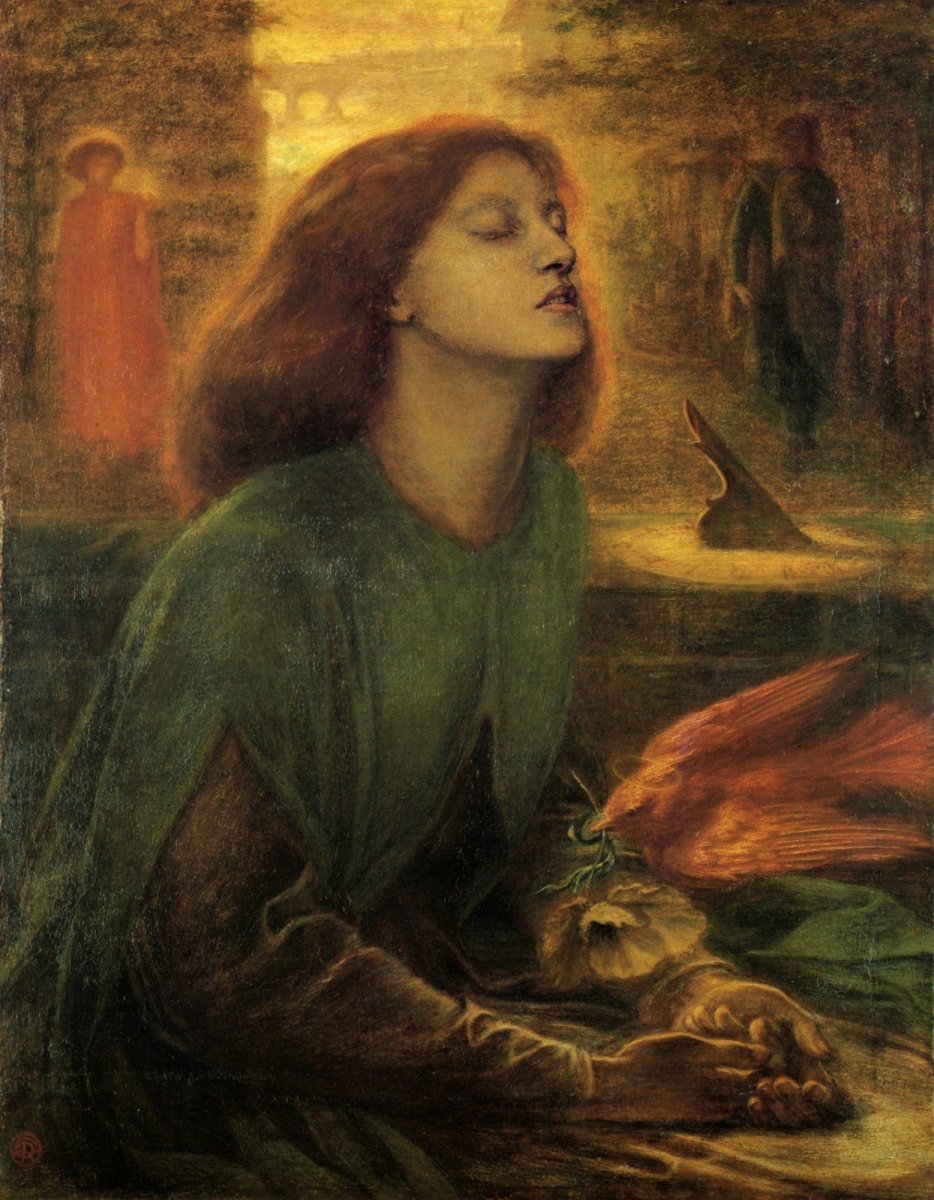
Rossetti, Dante Gabriel (1828-1882) - Beata Beatrix 1864-70

Rossetti, Dante Gabriel (1828-1882) - Beata Beatrix 1864-70

Digital Download - 1 image

Regular price £0.80
Regular price Sale price £0.80
Value Bundle Sold out
Tax included.

Beata Beatrix is a painting by Rossetti, inspired by Dante Alighieri's 'La Vita Nuova' and depicting Beatrice Portinari. The painting, often considered a memorial to Rossetti's deceased wife, Elizabeth Siddal, shows Beatrice moments before her death, symbolised by a bird dropping a white poppy. Rossetti used sketches of Siddal to create the image of Beatrice. 

This download consists of 1 image, in jpeg format, that is 600dpi and 5390 pixels wide by 6800 pixels tall.

This image (same size) is included in our Dante Gabriel Rossetti 70-image collection.

The picture is out of copyright and in the public domain, so you are free to use it in whatever way you'd like, including commercial use.

Dante Gabriel Rossetti (1828-1882) was a pivotal figure in the Pre-Raphaelite Brotherhood, a group of English painters, poets and critics that sought to challenge the conventions of art and literature during the Victorian era.

Rossetti, the son of Italian expatriates, had a deep appreciation for his heritage, which influenced both his art and poetry.

Initially studying at the Royal Academy and later at the King's College School, Rossetti's early career was marked by a fusion of artistic and literary talent.

He co-founded the Pre-Raphaelite Brotherhood with artists William Holman Hunt and John Everett Millais in 1848. The Brotherhood aimed to return to the detailed observation of nature and the vibrant colours characteristic of art before the High Renaissance.

Rossetti's paintings, famed for their lush, romantic imagery and vivid colours, often drew upon themes from mythology, literature and medieval history. His works, such as 'The Day Dream' and 'The Blessed Damozel', reflected his muse-like fascination with women, often portraying them as ethereal and idealised figures.

In addition to his painting, Rossetti was a prolific poet, whose verses were infused with personal emotion and vivid imagery.

Despite his significant contributions to both visual art and literature, Rossetti struggled with mental health issues and the pressures of fame.

On Easter Sunday, 1882, he died at the country house of a friend, where he had gone in a vain attempt to recover his health, which had been destroyed by chloral as his wife's, Lizzie Siddall, had been destroyed by laudanum.  He died of Bright's disease, a disease of the kidneys from which he had been suffering for some time. He had been housebound for some years on account of paralysis of the legs, though his chloral addiction is believed to have been a means of alleviating pain from a botched operation.

He had also been suffering from alcohol psychosis for some time brought on by the excessive amounts of whisky he used to drown out the bitter taste of the chloral hydrate. A sad end for a truly talented man.

View full details