Skip to product information
1 of 2

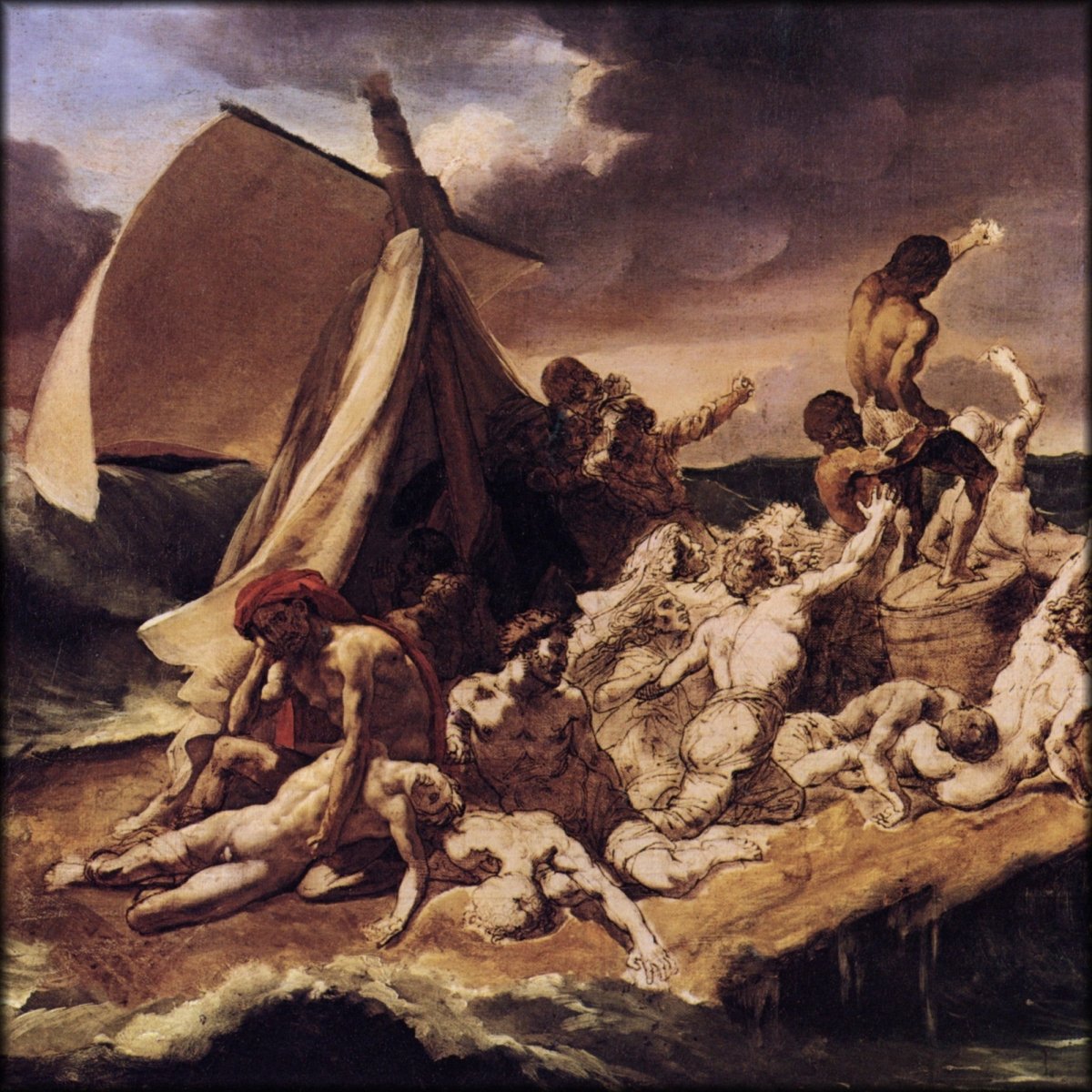
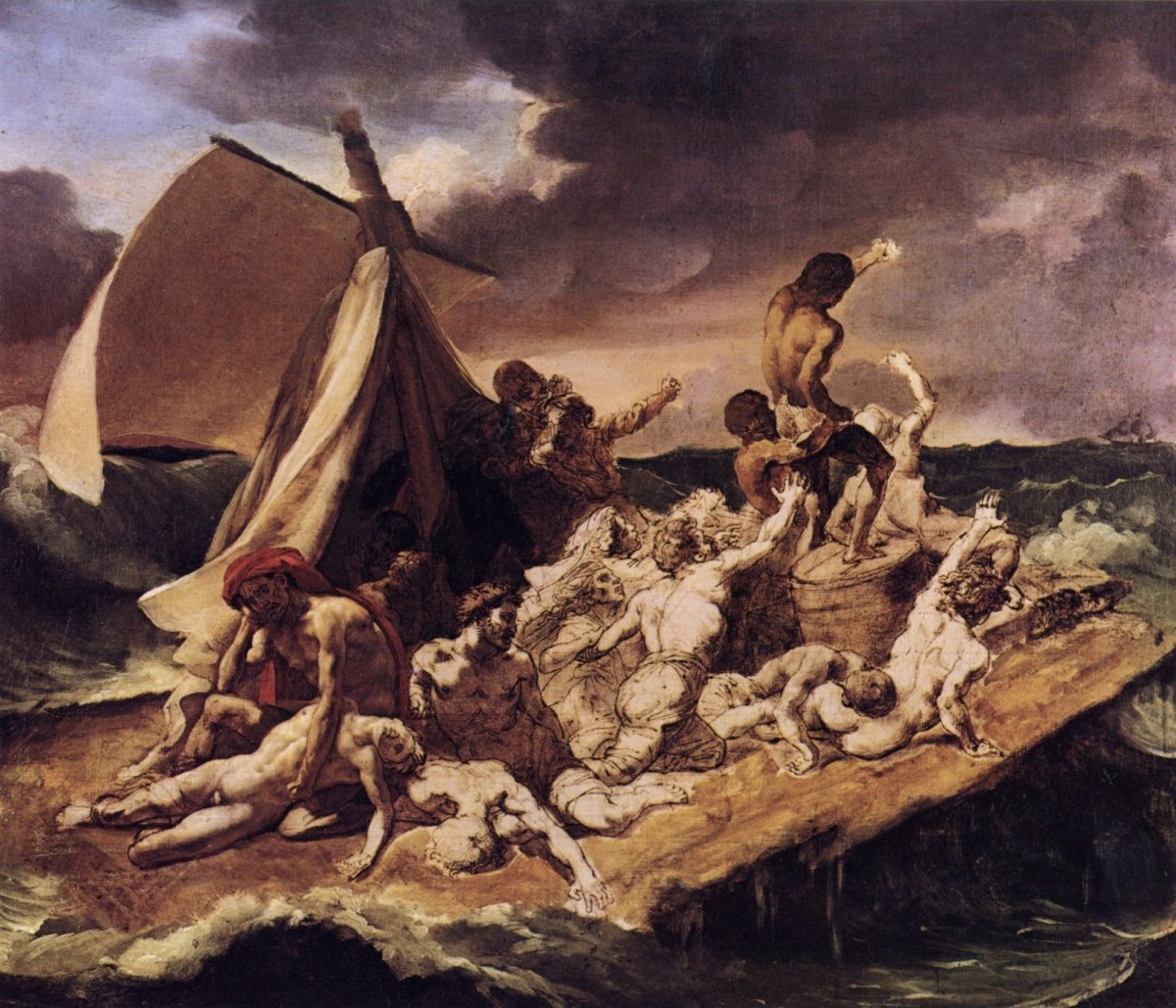
Géricault,Théodore (1791-1824) - The Raft of the Medusa (study) 1818

Géricault,Théodore (1791-1824) - The Raft of the Medusa (study) 1818

Digital Download - 1 image

Regular price £0.80
Regular price Sale price £0.80
Value Bundle Sold out
Tax included.

The Raft of the Medusa (1818-19) depicts the aftermath of a contemporary French shipwreck, Medusa, in which the captain had left the crew and passengers to die.

The incident became a national scandal, and Géricault's dramatic interpretation presented a contemporary tragedy on a monumental scale. The painting's notoriety stemmed from its indictment of a corrupt establishment, but it also dramatised a more eternal theme, that of man's struggle with nature. It surely excited the imagination of the young Eugène Delacroix, who posed for one of the dying figures.

The painting ignited political controversy when first exhibited at the Paris Salon of 1819; it then travelled to England in 1820, accompanied by Géricault himself, where it received much praise.

This download consists of 1 image, in jpeg format, that is 600dpi and 5552 pixels wide by 4760 pixels tall.

The picture is out of copyright and in the public domain, so you are free to use it in whatever way you'd like, including commercial use.

Jean-Louis André Théodore Géricault (1791-1824) was a French painter and lithographer, whose best-known painting is The Raft of the Medusa. Despite his short life, he was one of the pioneers of the Romantic movement.

Born in Rouen, France, Géricault moved to Paris with his family, probably in 1797, where Théodore's father, a lawyer, worked in the family tobacco business based at the Hôtel de Longueville on the Place du Carrousel. Géricault's artistic abilities were likely first recognised by the painter and art dealer Jean-Louis Laneuville. Laneuville lived at the Hotel de Longueville alongside Jean-Baptiste Caruel, Théodore Géricault's maternal uncle, and other members of the extended Géricault family.

In 1797, Théodore Géricault's Saint Domingue relation Louis Robillard de Peronville arrived in Paris with his family, having fled war and revolution in France's Caribbean colony. In 1802, with France once more at peace, Robillard de Peronville and Pierre Laurent, an engraver, founded the Entreprise De La Gravure De La Galerie du Musée Central des Arts à Paris, private business partnership producing high-quality engravings of paintings, sculptures, and bas-reliefs in the national museum at the Louvre for a domestic and international clientele. Géricault's family circle embraced the Musée Français, as the enterprise was known, thus providing Géricault with a rare education in the production and history of art during this critical period in his young life.

In 1808, Géricault began training at the studio of Carle Vernet, where he was educated in the tradition of English sporting art. In 1810, Géricault began studying classical figure composition under Pierre-Narcisse Guérin, a rigorous classicist who disapproved of his student's impulsive temperament while recognising his talent. Géricault soon left the classroom, choosing to study at the Louvre, where from 1810 to 1815 he copied paintings by Rubens, Titian, Velázquez and Rembrandt.

During this period at the Louvre, he discovered a vitality he found lacking in the prevailing school of Neoclassicism. Much of his time was spent in Versailles, where he found the palace stables open to him and where he gained his knowledge of the anatomy and action of horses.

A trip to Florence, Rome, and Naples (1816-17), prompted in part by the desire to flee from a romantic entanglement with his aunt, ignited a fascination with Michelangelo. Rome itself inspired the preparation of a monumental canvas, the Race of the Barberi Horses, a work of epic composition and abstracted theme that promised to be "entirely without parallel in its time". However, Géricault never completed the painting and returned to France.

Géricault continually returned to the military themes of his early paintings, and the series of lithographs he undertook on military subjects after his return from Italy are considered some of the earliest masterworks in that medium.

While in London, Géricault witnessed urban poverty, made drawings of his impressions, and published lithographs based on these observations which were free of sentimentality. He associated much there with Charlet, the lithographer and caricaturist. In 1821, while still in England, he painted The Derby of Epsom.

After his return to France in 1821, Géricault was inspired to paint a series of ten portraits of the insane. These were the patients of a friend, Dr. Étienne-Jean Georget (a pioneer in psychiatric medicine), with each subject exhibiting a different affliction. There are five remaining portraits from the series, including Insane Woman.

The paintings are noteworthy for their bravura style, expressive realism, and for their documenting of the psychological discomfort of individuals, made all the more poignant by the history of insanity in Géricault's family, as well as the artist's own fragile mental health. His observations of the human subject were not confined to the living, for some remarkable still-lifes, painted studies of severed heads and limbs, have also been ascribed to the artist.

Géricault's last efforts were directed toward preliminary studies for several epic compositions, including the Opening of the Doors of the Spanish Inquisition and the African Slave Trade. The preparatory drawings suggest works of great ambition, but Géricault's waning health intervened. Weakened by riding accidents and chronic tubercular infection, Géricault died in Paris in 1824 after a long period of suffering. His bronze figure reclines, brush in hand, on his tomb at Père Lachaise Cemetery in Paris, above a low-relief panel of The Raft of the Medusa.


View full details