Skip to product information
1 of 2

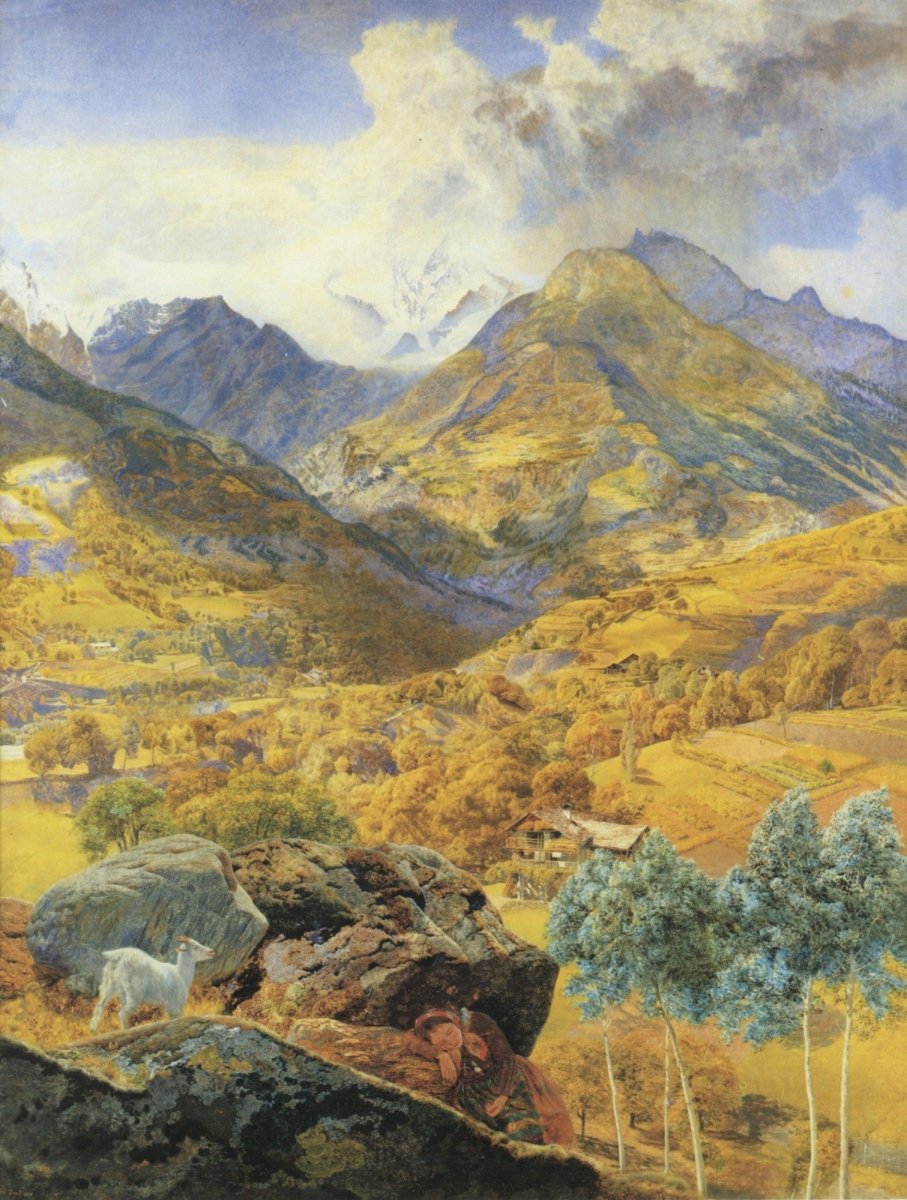
Brett, John (1831-1902) - The Val d'Aosta 1858

Brett, John (1831-1902) - The Val d'Aosta 1858

Digital Download - 1 image

Regular price £0.80
Regular price Sale price £0.80
Value Bundle Sold out
Tax included.

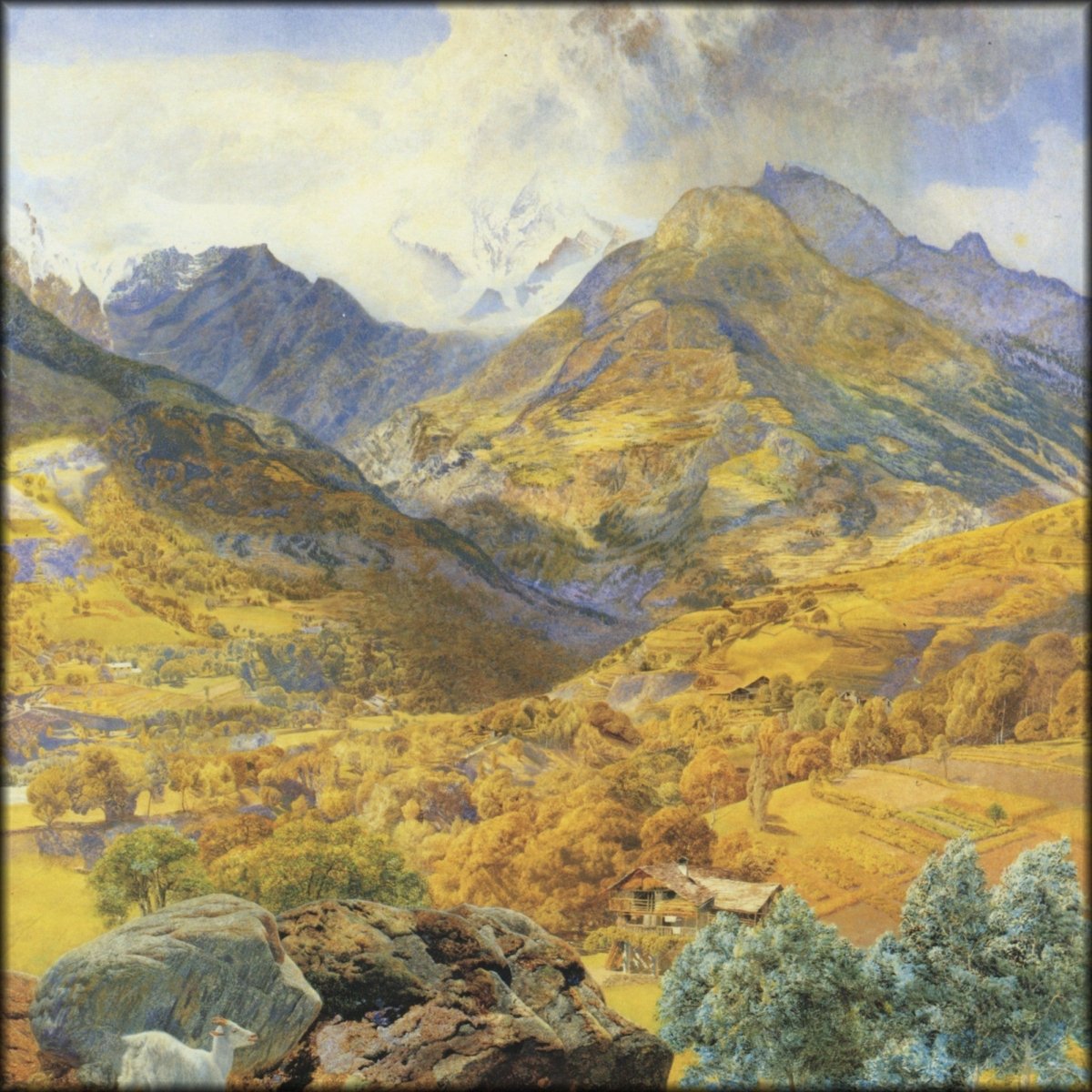
The Val d'Aosta (1858) by John Brett is a landscape painting known for its meticulous detail and photorealistic style, influenced by Ruskinian colour theory. 

This download consists of 1 image, in jpeg format, that is 600dpi and 4950 pixels wide by 6550 pixels tall.

This image (same size) is also available in our Pre-Raphaelite collection.

The picture is out of copyright and in the public domain, so you are free to use it in whatever way you'd like, including commercial use.

John Brett ARA (1831-1902) was a British artist associated with the Pre-Raphaelite movement, mainly notable for his highly detailed landscapes.

Brett was born near Reigate on 8 December 1831, the son of an army vet. His sister Rosa Brett was also an artist and during 1850 and 1851 they shared a studio. In 1851 he began lessons in art with James Duffield Harding, a landscape painter. He also studied with Richard Redgrave. In 1853 he entered the Royal Academy Schools, but was more interested in the ideas of John Ruskin and William Holman Hunt, whom he met through his friend the poet Coventry Patmore. Inspired by Hunt's ideal of scientific landscape painting, Brett visited Switzerland, where he worked on topographical landscapes and came under the further influence of John William Inchbold.

In 1858 Brett exhibited The Stonebreaker, the painting that made his reputation. This depicted a youth smashing stones to create a road-surface, sitting in a brightly lit and brilliantly detailed landscape. The precision of the geological and botanical detail in Brett's version greatly impressed Ruskin, who praised the painting highly, predicting that Brett would be able to paint a masterpiece if he were to visit the Val d'Aosta in Italy. Partly funded by Ruskin, Brett made the trip to paint the location, exhibiting it in 1859, again to high praise from Ruskin, who bought the painting. Other critics were less effusive, one describing it as a "gravestone for post-Ruskinism".

Brett continued to paint carefully detailed landscape views, staying in Italy on many occasions in the 1860s. He was always keen to stress the scientific precision of his rendering of nature, but often infused it with moral and religious significance, as recommended by Ruskin. In his later years he painted more coastal subjects and seascapes, subjects he came to know well due to his ownership of a 210-ton schooner, Viking (which had a crew of twelve), on which he travelled the Mediterranean.

During summers in the 1880s Brett rented the castle at Newport, Pembrokeshire to use as a base for his large family while he painted, sketched and photographed the south and west coasts of Wales.

View full details