

Federico Zandomeneghi (1841-1917) was an Italian Impressionist painter.
He was born in Venice and his father Pietro and grandfather Luigi were neoclassic sculptors. The latter completed the monument to Titian found in the Frari of Venice. As a young man, he preferred painting to sculpture, enrolling in 1856 first in the Accademia di Belle Arti in Venice, and then in the Academy of Fine Arts of Milan. In 1859, to avoid conscription into the Austrian army, he fled Venice.
By the next year in 1860, he tried to join with the forces of Giuseppe Garibaldi (1807-1882) in his Expedition of the Thousand. This made it uncomfortable for him to reside in Venice, leading to a brief incarceration, and in 1862, he moved to Florence for 5 years where he frequented the Caffè Michelangiolo. There he met a number of the artists known as the Macchiaioli, including Signorini, Martorelli, Giovanni Fattori and Giuseppe Abbati, and he joined them in painting landscapes outdoors. Painting outside of the studio, "en plein air", was at that time an innovative approach, allowing for a new vividness and spontaneity in the rendering of light.
By 1866, Zandomeneghi had returned to Venice. In 1871 Pompeo Molmenti wrote glowing assessments of three young Venetian painters: Guglielmo Ciardi, Alessandro Zezzos, and Zandomeneghi. In 1872, he travelled to Rome and painted one of his masterworks; I poverini sui gradini dell'Ara Coeli.
In 1874, he went to Paris, where he spent nearly the rest of his life. He quickly made the acquaintance of the Impressionists, who had just had their first group exhibition. Zandomeneghi, whose style of painting was similar to theirs, would participate in four of their later exhibitions, in 1879, 1880, 1881, and 1886. Like his close friend Edgar Degas he was primarily a figure painter, although Zandomeneghi's work was more sentimental in character than Degas'. He also admired the work of Mary Cassatt and Pierre-Auguste Renoir, and his many paintings of women in their domestic routines follow their example. To supplement the meager returns from the sale of his paintings, Zandomeneghi found work drawing illustrations for fashion magazines.
He took up working in pastels in the early 1890s, and became especially adept in this medium. At about this time his reputation and his fortunes were enhanced when the art dealer Durand-Ruel showed Zandomeneghi's work in the United States. From then on, he enjoyed continuing modest success until he died in Paris in 1917.
Images to download
-

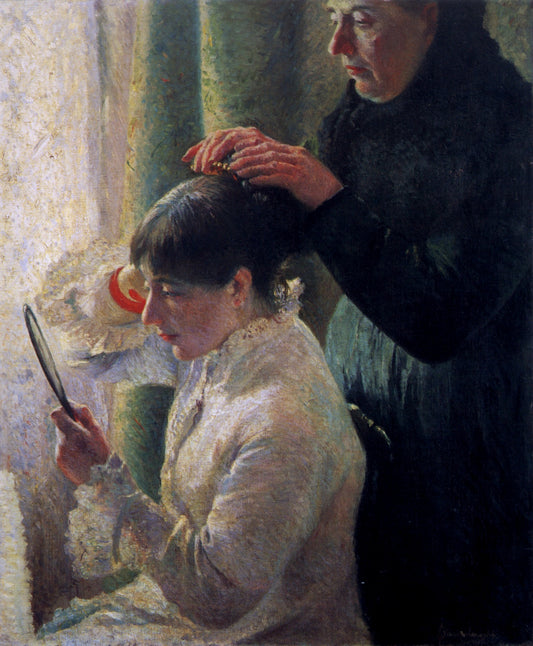
Zandomeneghi, Federico (1841-1917) - Mother and Daughter 1879
Vendor:Digital Download - 1 imageRegular price £0.80Regular priceUnit price per -

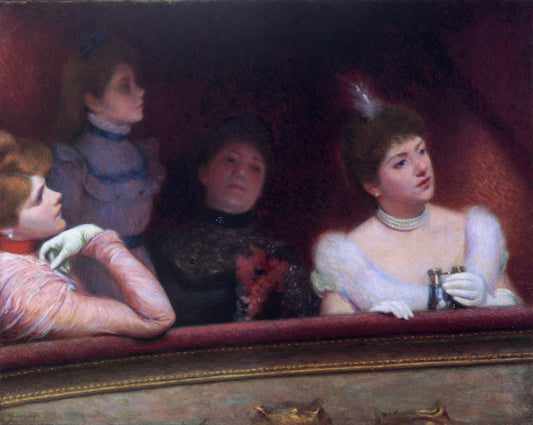
Zandomeneghi, Federico (1841-1917) - In a Box at the Theatre c.1890-95
Vendor:Digital Download - 1 imageRegular price £0.80Regular priceUnit price per -

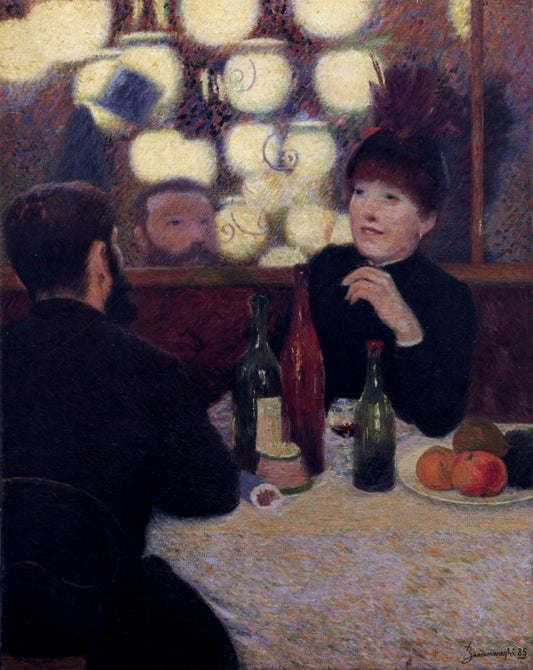
Zandomeneghi, Federico (1841-1917) - At the Cafe de la Nouvelle Athenes 1885
Vendor:Digital Download - 1 imageRegular price £0.80Regular priceUnit price per -

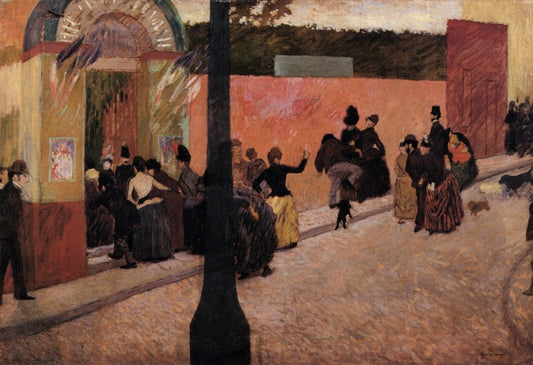
Zandomeneghi, Federico (1841-1917) - The Moulin de la Galette c1879
Vendor:Digital Download - 1 imageRegular price £0.80Regular priceUnit price per -

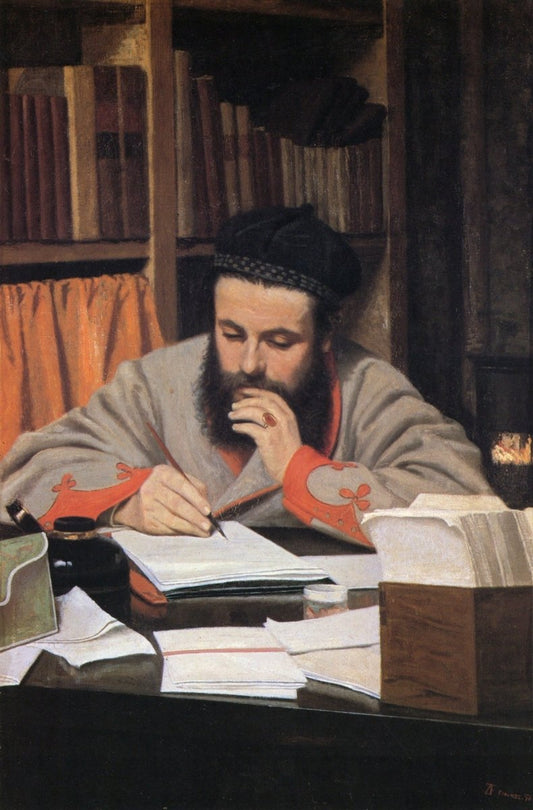
Zandomeneghi, Federico (1841-1917) - Portrait of Diego Martelli 1879
Vendor:Digital Download - 1 imageRegular price £0.80Regular priceUnit price per -

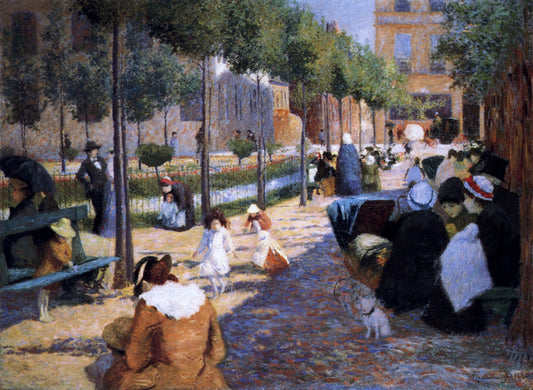
Zandomeneghi, Federico (1841-1917) - Place D'Anvers, Paris 1880
Vendor:Digital Download - 1 imageRegular price £0.80Regular priceUnit price per


Latest Picture Trove Blog Posts
View all-

William Morris’s Strawberry Thief: The Story Behind a Classic Arts and Crafts Pattern
Few William Morris designs are as instantly recognisable as Strawberry Thief. With its richly patterned foliage, small red strawberries and watchful birds hidden among curling leaves, it has become one of the most loved designs of the Arts and Crafts movement.
William Morris’s Strawberry Thief: The Story Behind a Classic Arts and Crafts Pattern
Few William Morris designs are as instantly recognisable as Strawberry Thief. With its richly patterned foliage, small red strawberries and watchful birds hidden among curling leaves, it has become one of the most loved designs of the Arts and Crafts movement.
-

Glasgow and the Mackintosh Style
We recently took ourselves off to Scotland, and on our travels, we popped into the Mackintosh Tea Rooms in Glasgow for a bit of a nose around and a spot of lunch.
Glasgow and the Mackintosh Style
We recently took ourselves off to Scotland, and on our travels, we popped into the Mackintosh Tea Rooms in Glasgow for a bit of a nose around and a spot of lunch.
-

A Trip to Edinburgh & Glasgow, and Scottish Art
We have just returned from a well-deserved few days' break in Scotland, visiting both Edinburgh and Glasgow, taking in Scottish art and tea rooms!
A Trip to Edinburgh & Glasgow, and Scottish Art
We have just returned from a well-deserved few days' break in Scotland, visiting both Edinburgh and Glasgow, taking in Scottish art and tea rooms!


