

James Abbott McNeill Whistler (1834-1903) was an American painter, printmaker, and influential figure in the art world, best known for his innovative approach to art and his belief in "art for art's sake." Born on 10th July 1834, in Lowell, Massachusetts, Whistler was the first child of Anna McNeill Whistler and George Washington Whistler. He grew up in an artistic environment, influenced by his mother's background and his father’s profession as a railroad engineer. His family moved several times during his childhood, eventually relocating to Stonington, Connecticut.
Whistler’s early years were marked by a moody disposition, but he exhibited artistic talent from an early age. When he was just seven, the family moved to Russia due to his father's employment with the Tsar on a railroad project. In St. Petersburg, young Whistler began to embrace his artistic inclinations, taking private art lessons and later enrolling in the Imperial Academy of Arts at the age of eleven. There, he honed his skills, embracing traditional techniques and thriving within the creative atmosphere.
After spending time in London during his family's brief stay in England, Whistler’s interest in art deepened, particularly under the influence of his brother-in-law, Francis Haden, who was both a physician and an artist. Haden introduced him to various art circles, and Whistler began to dream of a career in painting. Unfortunately, familial tragedy struck when his father died from cholera in 1849, prompting the family to return to the United States.
Whistler’s path took a significant turn when he applied to the United States Military Academy at West Point, following in his father's footsteps. However, his artistic ambitions prevailed; he was eventually expelled for failing to complete his studies. Relentless in his pursuit of art, he made his way to Paris in the 1850s, a pivotal move that exposed him to the avant-garde art movements of the time.
In Paris, Whistler developed his signature style, characterised by delicate brushwork and a focus on colour and composition. He became known for his use of tonal harmony, paralleling painting with the music of his time. His most famous work, "Arrangement in Grey and Black No. 1" (commonly known as "Whistler's Mother"), became a symbol of motherhood and artistic expression. The painting exemplified his belief in aesthetic beauty over narrative content.
Throughout his career, Whistler was a vocal advocate for artistic independence, often engaging in heated debates with critics and fellow artists. His provocative personality and commitment to his principles shaped his legacy. He became a significant figure in the art community, influencing contemporaries and later generations with his theories on art and his innovative techniques.
In his later years, Whistler continued to produce remarkable works while also facing financial difficulties, largely due to defamation lawsuits and his lavish lifestyle. He remained dedicated to the idea of art as a pursuit free from societal constraints until his death on 17th July 1903, in London.
Today, Whistler is celebrated not only for his captivating paintings but also for his enduring impact on modern art, embodying the spirit of innovation and self-expression that defined his era.
Images to download
-


James McNeill Whistler 80 High Resolution Images
Vendor:Digital Download - 80 imagesRegular price £5.00Regular priceUnit price per -


Whistler, James McNeill (1834-1903) - Harmony in Green and Rose (The Music Room) 1860-61
Vendor:Digital Download - 1 imageRegular price £0.80Regular priceUnit price per -

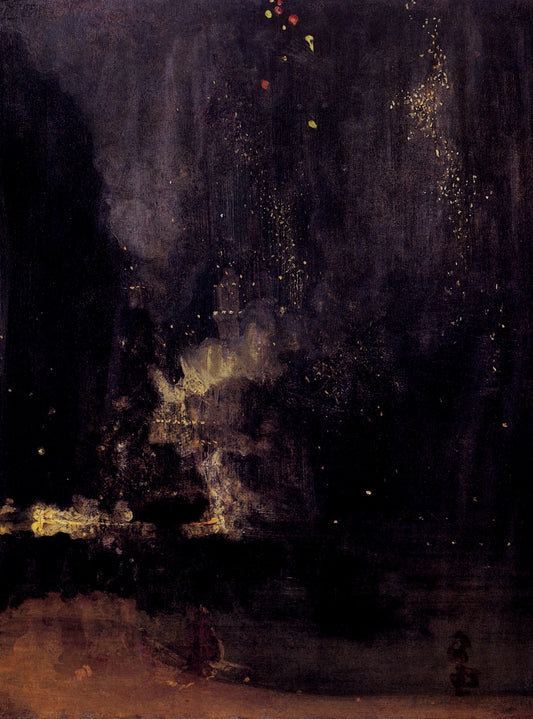
Whistler, James McNeill (1834-1903) - Nocturne in Black & Gold, The Falling Rocket 1875
Vendor:Digital Download - 1 imageRegular price £0.80Regular priceUnit price per -

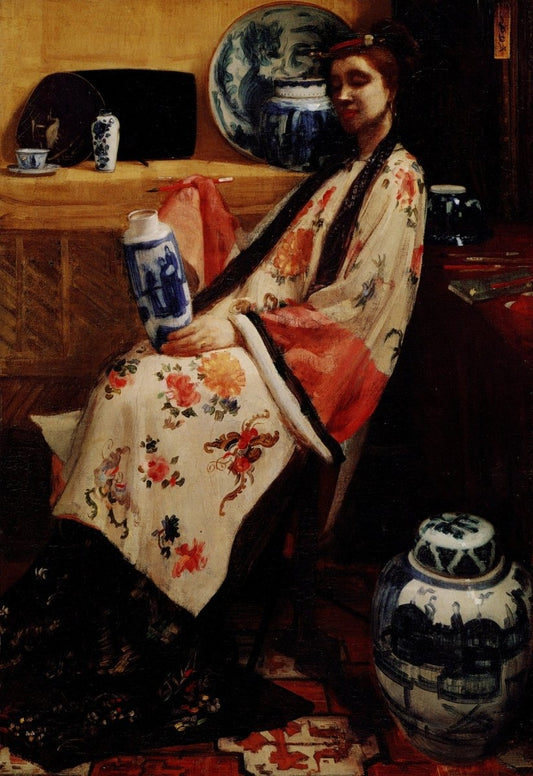
Whistler, James McNeill (1834-1903) - Purple & Rose, The Lange Leizen of the Six Marks 1864
Vendor:Digital Download - 1 imageRegular price £0.80Regular priceUnit price per -


Whistler, James McNeill (1834-1903) - The White Girl 1862
Vendor:Digital Download - 1 imageRegular price £0.80Regular priceUnit price per -


Whistler, James McNeill (1834-1903) - The Little White Girl 1864
Vendor:Digital Download - 1 imageRegular price £0.80Regular priceUnit price per -


Whistler, James McNeill (1834-1903) - Nocturne in Blue & Green, Chelsea 1870
Vendor:Digital Download - 1 imageRegular price £0.80Regular priceUnit price per -


British Impressionism Collection - 100 High Resolution Images
Vendor:Digital Download - 100 imagesRegular price £4.00Regular priceUnit price per


Latest Picture Trove Blog Posts
View all-

William Morris’s Strawberry Thief: The Story Behind a Classic Arts and Crafts Pattern
Few William Morris designs are as instantly recognisable as Strawberry Thief. With its richly patterned foliage, small red strawberries and watchful birds hidden among curling leaves, it has become one of the most loved designs of the Arts and Crafts movement.
William Morris’s Strawberry Thief: The Story Behind a Classic Arts and Crafts Pattern
Few William Morris designs are as instantly recognisable as Strawberry Thief. With its richly patterned foliage, small red strawberries and watchful birds hidden among curling leaves, it has become one of the most loved designs of the Arts and Crafts movement.
-

Glasgow and the Mackintosh Style
We recently took ourselves off to Scotland, and on our travels, we popped into the Mackintosh Tea Rooms in Glasgow for a bit of a nose around and a spot of lunch.
Glasgow and the Mackintosh Style
We recently took ourselves off to Scotland, and on our travels, we popped into the Mackintosh Tea Rooms in Glasgow for a bit of a nose around and a spot of lunch.
-

A Trip to Edinburgh & Glasgow, and Scottish Art
We have just returned from a well-deserved few days' break in Scotland, visiting both Edinburgh and Glasgow, taking in Scottish art and tea rooms!
A Trip to Edinburgh & Glasgow, and Scottish Art
We have just returned from a well-deserved few days' break in Scotland, visiting both Edinburgh and Glasgow, taking in Scottish art and tea rooms!


