

Marianne von Werefkin (1860-1938) was an influential Russian-Swiss Expressionist painter whose life and work left a profound mark on early twentieth-century European art. Born in 1860 in Tula, Russia, into a family of nobility, Werefkin’s upbringing was privileged yet unconventional, fostering her early interest in the arts. Her father was a high-ranking officer and governor, and her mother an educated woman who encouraged Marianne’s creative pursuits. Displaying artistic talent from a young age, she received formal training and, by her twenties, was studying under Ilya Repin, one of Russia’s foremost artists at the time.
In 1892, Werefkin moved to Munich with fellow painter Alexej von Jawlensky, beginning a lifelong partnership that was both creative and personally complex. Munich’s vibrant artistic scene exposed her to avant-garde ideas, and she soon became a key figure in the city’s cultural life. She hosted salons that attracted artists, writers, and intellectuals, providing a space for the exchange of radical new ideas. Despite her own talent, she initially put her career on hold to support Jawlensky, acting as a mentor and advocate for his work. However, around 1906, she resumed painting with renewed vigour, embarking on what would become her most significant artistic phase.
Werefkin was a founding member of the Neue Künstlervereinigung München (New Artists’ Association of Munich) in 1909, alongside Jawlensky, Wassily Kandinsky, and Gabriele Münter. This group laid the groundwork for the development of German Expressionism and later gave rise to the more famous Der Blaue Reiter movement. Werefkin’s paintings from this period are characterised by bold colours, dramatic compositions, and a focus on psychological states rather than realistic representation. Her work often explored themes of alienation, longing, and the human condition, reflecting her own internal struggles as well as the rapidly changing world around her.
In 1914, the outbreak of World War I forced Werefkin to leave Germany. She settled in Switzerland, where she continued to paint and write. Despite facing considerable hardship and relative obscurity, she remained committed to her artistic ideals. Her later works were influenced by her experiences as an émigré and by the spiritual questions that preoccupied her throughout her life.
Werefkin died in Ascona, Switzerland, in 1938. In recent years, her contributions have been increasingly recognised, with major retrospectives and scholarly studies highlighting her role as a bridge between Russian and Western European modernism. Marianne von Werefkin’s legacy endures in her evocative, emotionally charged art and in her pioneering role within the Expressionist movement.
Images to download
-

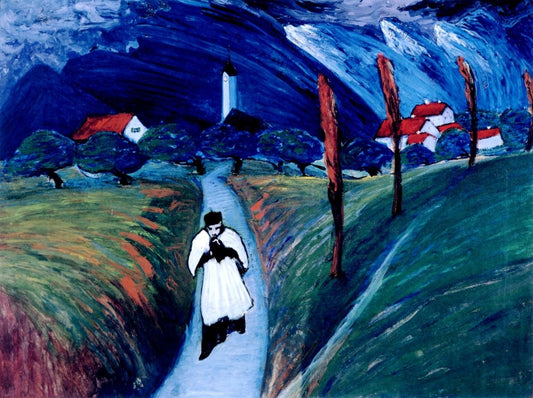
Werefkin, Marianne von (1860-1938) - Corpus Christi 1911
Vendor:Digital Download - 1 imageRegular price £0.80Regular priceUnit price per -

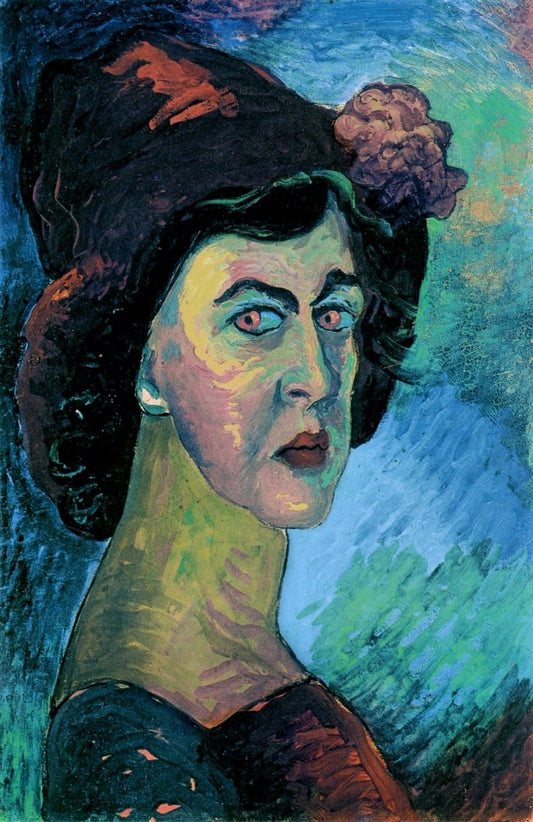
Werefkin, Marianne von (1860-1938) - Self-portrait 1910
Vendor:Digital Download - 1 imageRegular price £0.80Regular priceUnit price per -

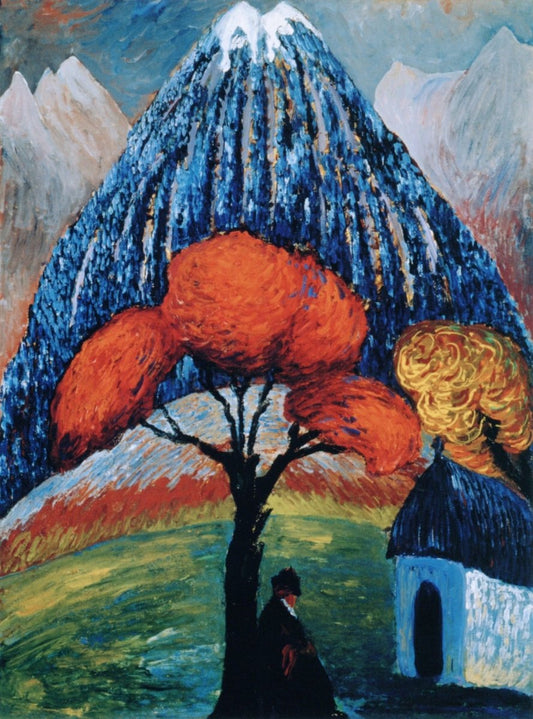
Werefkin, Marianne von (1860-1938) - The Red Tree 1910
Vendor:Digital Download - 1 imageRegular price £0.80Regular priceUnit price per -


Women Artists - 180 High Resolution Images
Vendor:Digital Download - 180 imagesRegular price £8.00Regular priceUnit price per


Latest Picture Trove Blog Posts
View all-

William Morris’s Strawberry Thief: The Story Behind a Classic Arts and Crafts Pattern
Few William Morris designs are as instantly recognisable as Strawberry Thief. With its richly patterned foliage, small red strawberries and watchful birds hidden among curling leaves, it has become one of the most loved designs of the Arts and Crafts movement.
William Morris’s Strawberry Thief: The Story Behind a Classic Arts and Crafts Pattern
Few William Morris designs are as instantly recognisable as Strawberry Thief. With its richly patterned foliage, small red strawberries and watchful birds hidden among curling leaves, it has become one of the most loved designs of the Arts and Crafts movement.
-

Glasgow and the Mackintosh Style
We recently took ourselves off to Scotland, and on our travels, we popped into the Mackintosh Tea Rooms in Glasgow for a bit of a nose around and a spot of lunch.
Glasgow and the Mackintosh Style
We recently took ourselves off to Scotland, and on our travels, we popped into the Mackintosh Tea Rooms in Glasgow for a bit of a nose around and a spot of lunch.
-

A Trip to Edinburgh & Glasgow, and Scottish Art
We have just returned from a well-deserved few days' break in Scotland, visiting both Edinburgh and Glasgow, taking in Scottish art and tea rooms!
A Trip to Edinburgh & Glasgow, and Scottish Art
We have just returned from a well-deserved few days' break in Scotland, visiting both Edinburgh and Glasgow, taking in Scottish art and tea rooms!


