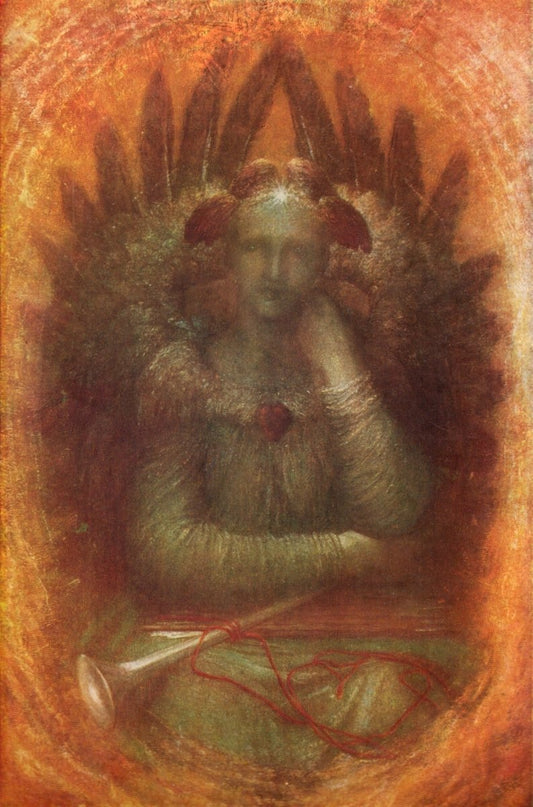
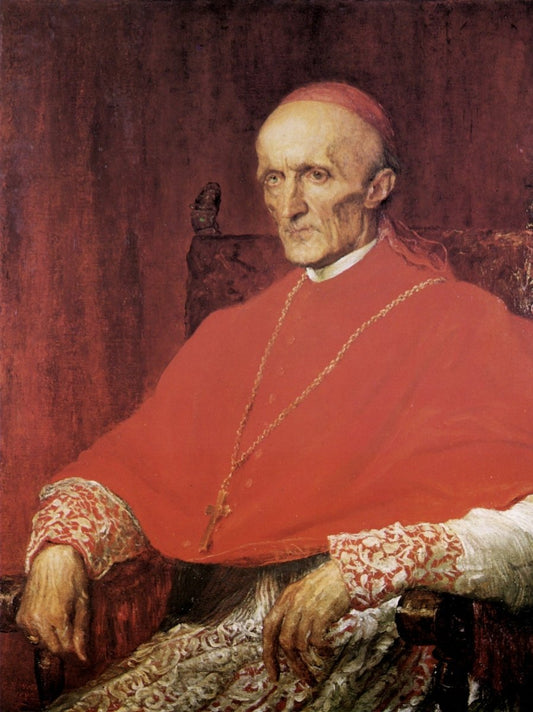
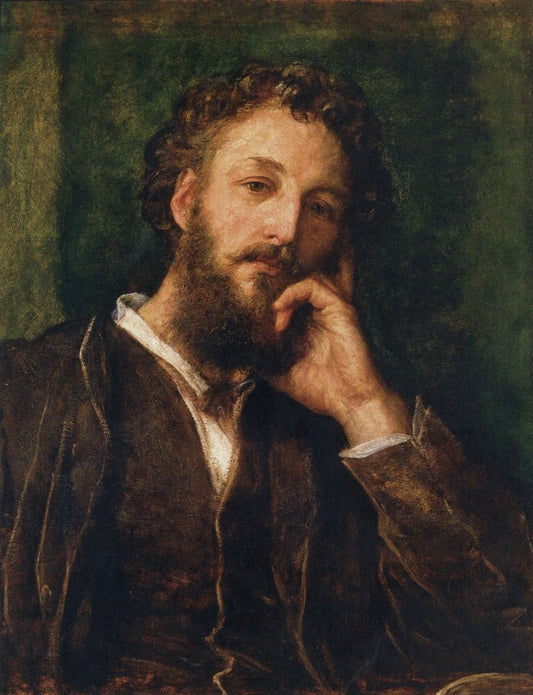
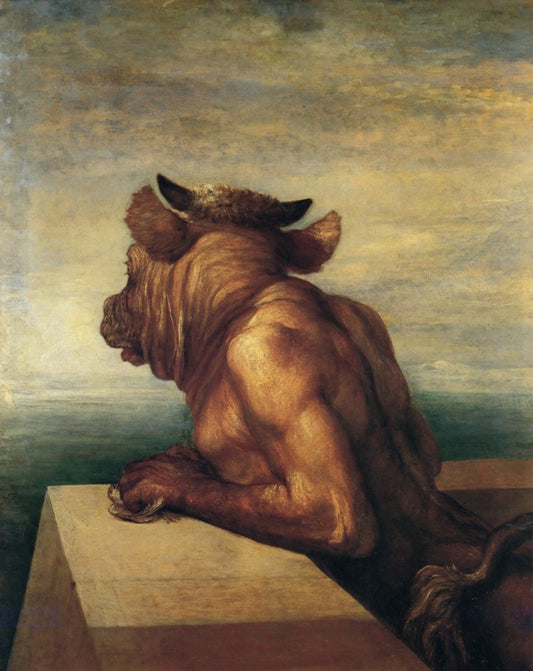
George Frederick Watts (1817-1904) was a prominent British painter and sculptor, celebrated for his significant contributions to the Aesthetic Movement and Symbolism.
Born in London to a humble family, Watts displayed artistic talent from a young age, which he nurtured largely through self-study and a passionate engagement with the works of the Old Masters. Watts's early career saw him embracing Romantic ideals, where themes of emotion, the human condition, and nature took precedence. His paintings often featured mythological, allegorical, and historical subjects, allowing him to express profound narratives through visual art.
One of his most renowned works, "Love and Death" (1886), encapsulates the duality of existence, presenting a poignant exploration of love entwined with mortality. This ability to convey complex emotional truths became a hallmark of his artistic philosophy. In the 1850s, Watts's journey took him to Italy, where he immersed himself in the study of classical art, drawing inspiration from renowned masters such as Michelangelo and Raphael. This pivotal experience led to an evolution in his style, characterised by a bold use of colour and dynamic compositions.
He embraced the dramatic intensity of his subjects, which allowed him to portray grand themes with both grandeur and intimacy. Watts became influential within the burgeoning Aesthetic Movement, emphasising the idea that art should be appreciated for its beauty and emotional resonance rather than solely for its moral or narrative content.
He collaborated with artists like Dante Gabriel Rossetti, who encouraged him to explore more abstract and symbolic elements in his work, further broadening his artistic scope. This partnership laid the groundwork for Watts's ambitious thematic projects, including the "Hall of Fame," commissioned for Westminster's National Portrait Gallery, celebrating prominent figures from British history.
In addition to his prowess as a painter, Watts was an accomplished sculptor. His notable work, "Physical Energy," is a striking bronze statue that embodies the spirit of human endeavour and resilience. It showcases Watts's skill in conveying movement and vitality, reflecting his overarching interest in depicting the struggles and triumphs of humanity. His sculptural works often paralleled his thematic paintings, presenting allegorical figures that engaged with profound existential questions.
Watts's creativity was prolific, with numerous portraits depicting notable figures such as the poet Robert Browning and the critic John Ruskin, highlighting his stature within the cultural milieu of his time. The painting "Hope" (1886), featuring a blindfolded woman holding a lyre, poignantly illustrates the fragility of hope, capturing the viewer's imagination with its striking symbolism. Beyond his artistic pursuits,
Watts was a committed social reformer and philanthropist. He believed in the transformative power of art, advocating for its role in improving society. In 1891, he founded the Watts Gallery in Compton, Surrey, a space dedicated to showcasing his works alongside those of contemporaries. The gallery became a significant cultural hub, embodying his belief in the accessibility of art and its ability to inspire and educate the public.
Watts's legacy endures, as his profound exploration of human experience through art continues to resonate with audiences today. His innovative approach to painting and sculpture not only played a crucial role in the Aesthetic Movement but also bridged the Romantic and Modern periods. Watts remains a significant figure in British art history, encouraging reflection on the complexities of life and the enduring power of creative expression.