

Jean-Édouard Vuillard (1868-1940) was a prominent French painter, draughtsman, and printmaker associated with the Post-Impressionist movement.
Born into a modest family in Cuiseaux, a small town in France, Vuillard grew to become a key figure in the Nabis group, which included artists like Édouard Bonnard and Maurice Denis. The Nabis were renowned for their innovative approach, moving away from traditional representation towards a more decorative style that emphasised colour and pattern.
Vuillard's early life was marked by a strong artistic influence from his mother, a successful amateur artist herself. This familial encouragement nurtured his talents, leading him to study at the prestigious École des Beaux-Arts in Paris. It was during this period that he was exposed to the booming artistic currents of the late 19th century, particularly the ideas of Symbolism and the emerging modernist movements.
The Nabis artists embraced these ideas, seeking to convey emotional and spiritual experiences through their work rather than merely depicting reality. One of Vuillard’s most notable contributions to the art world was his emphasis on intimate domestic scenes. His compositions often featured interiors filled with friends and family engaged in quiet domestic activities, elevating the mundane to the status of high art. This focus on intimate spaces and the life of ordinary people was revolutionary at the time, as it shifted the spotlight away from grand historical or mythological subjects that dominated much of the academic art in the 19th century. His works subtly explored themes of solitude, intimacy, and the complexities of human relationships, using colour and texture to evoke a sense of atmosphere and mood.
Vuillard’s innovative techniques included the use of flattened perspectives and intricate patterns, which often merged the figures with their surroundings, creating a sense of unity between the subject and the domestic environment. His hallmark was the use of a rich, vibrant colour palette, combined with a distinct brushwork style that gave depth and texture to his canvases. The juxtaposition of decorative elements with figuration created a unique aesthetic that marked Vuillard's work as distinctive within the Nabis group.
Throughout his career, Vuillard’s works were celebrated for their emotional resonance and painterly qualities. Notable pieces such as "The Interior" (1899) and "The Wait" (1902) exemplify his ability to convey a feeling of warmth and introspection, often drawing the viewer into the intimate space he portrayed. His art balances between realism and abstraction, as he employed decorative patterns reminiscent of textiles and wallpaper to further enrich his paintings.
In addition to his painting, Vuillard was also a talented printmaker, producing a significant body of lithographs that showcased his artistic versatility. His engagement with printmaking provided him with a broader avenue to explore his themes and reach a wider audience.
Despite facing challenges during his later years, including a decline in interest in the richly decorated interiors he once excelled in, Vuillard remained prolific, continually evolving his style. His later works increasingly incorporated influences from modernism, exploring abstraction while retaining his unique sensibility.
Today, Jean-Édouard Vuillard is recognised as a pivotal figure in the transition toward modern art. His ability to capture the nuances of everyday life and the interplay of colour and form continues to resonate with audiences, affirming his lasting legacy in the art world. His work is celebrated in major museums around the globe, securing his place as one of the notable artists of the late 19th and early 20th centuries.
Images to download
-

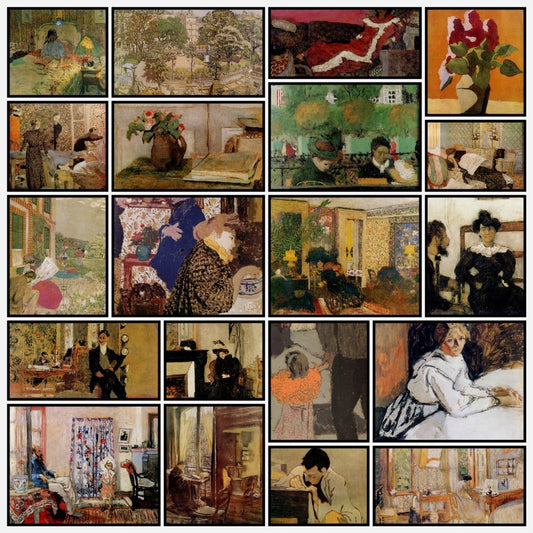
Edouard Vuillard 41 High Resolution Images
Vendor:Digital Download - 41 imagesRegular price £4.00Regular priceUnit price per -

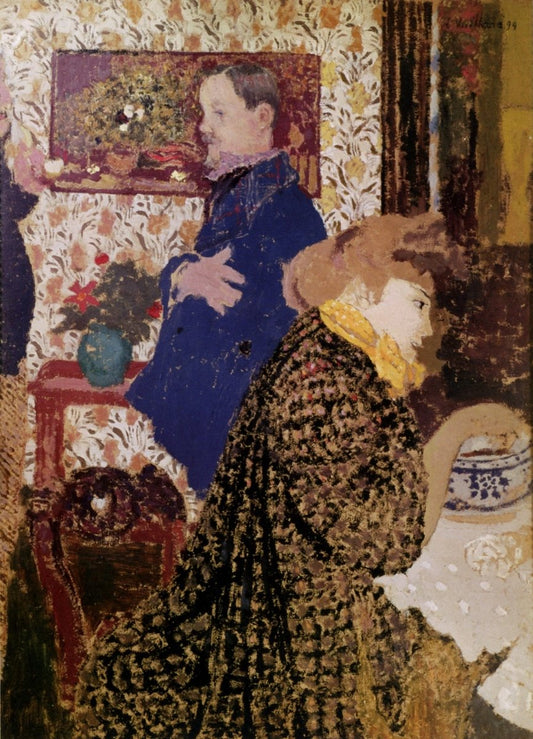
Vuillard, Edouard (1868-1940) - Room at Rue Saint-Florentin 1899
Vendor:Digital Download - 1 imageRegular price £0.80Regular priceUnit price per -

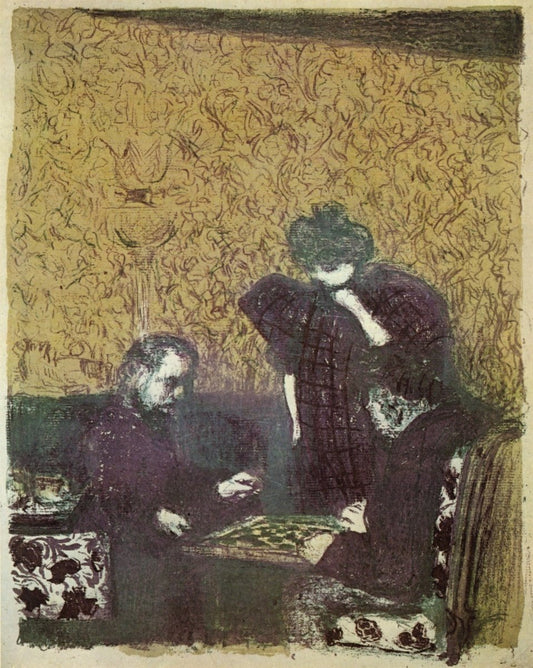
Vuillard, Edouard (1868-1940) - La Partie de Dames from Paysages de Interieurs 1899
Vendor:Digital Download - 1 imageRegular price £0.80Regular priceUnit price per -


Vuillard, Edouard (1868-1940) - Thadée Natanson 1897
Vendor:Digital Download - 1 imageRegular price £0.80Regular priceUnit price per -


Vuillard, Edouard (1868-1940) - Le Boulevard des Batignolles c.1910
Vendor:Digital Download - 1 imageRegular price £0.80Regular priceUnit price per -

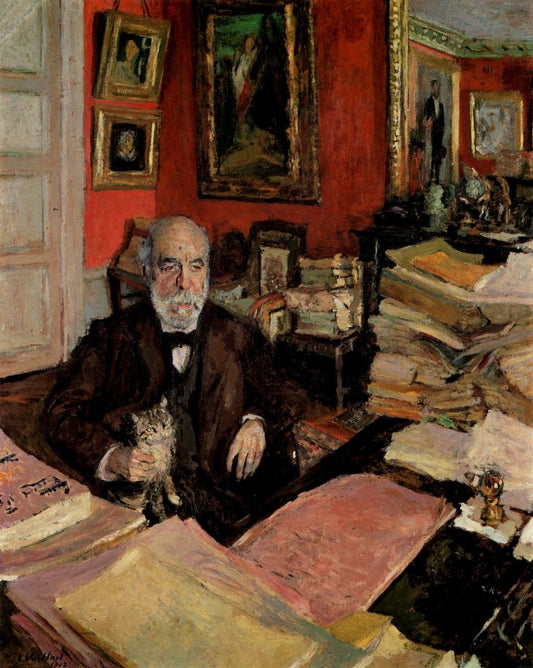
Vuillard, Edouard (1868-1940) - Theodore Duret in his Study with a Cat 1912
Vendor:Digital Download - 1 imageRegular price £0.80Regular priceUnit price per -

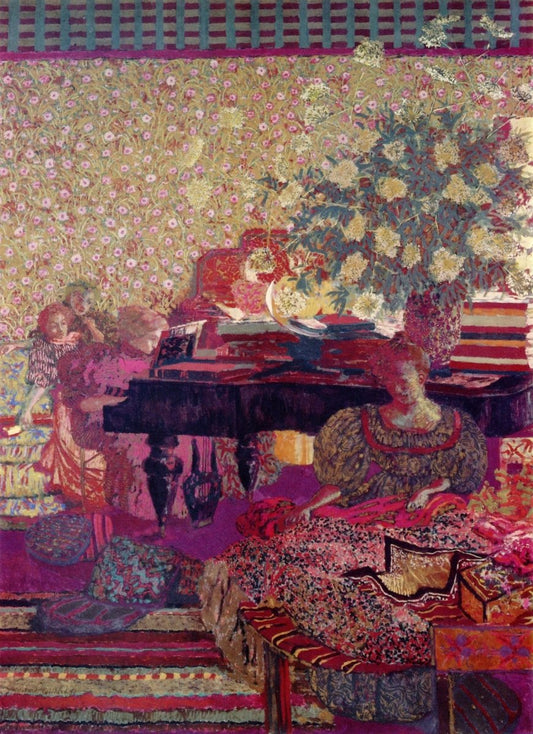
Vuillard, Edouard (1868-1940) - The Piano 1896
Vendor:Digital Download - 1 imageRegular price £0.80Regular priceUnit price per -

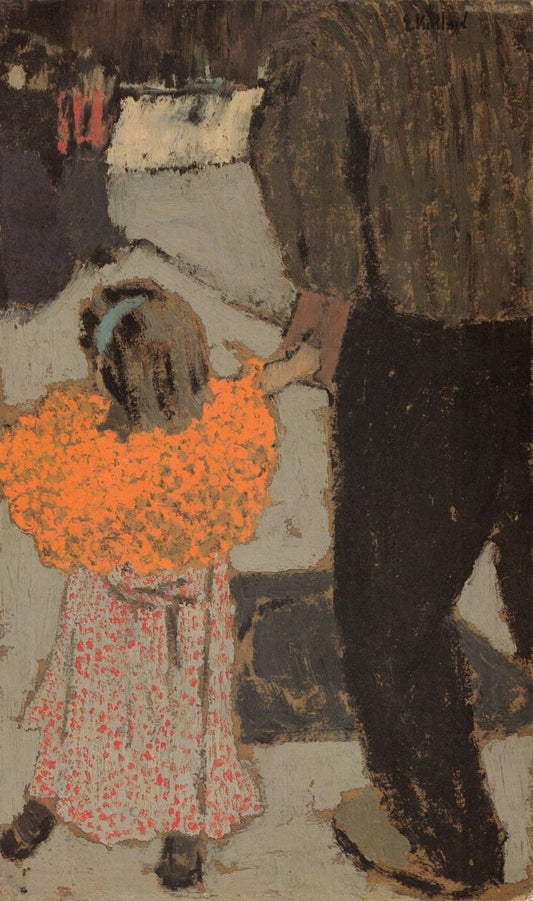
Vuillard, Edouard (1868-1940) - Child in Orange Shawl c.1891
Vendor:Digital Download - 1 imageRegular price £0.80Regular priceUnit price per


Latest Picture Trove Blog Posts
View all-

William Morris’s Strawberry Thief: The Story Behind a Classic Arts and Crafts Pattern
Few William Morris designs are as instantly recognisable as Strawberry Thief. With its richly patterned foliage, small red strawberries and watchful birds hidden among curling leaves, it has become one of the most loved designs of the Arts and Crafts movement.
William Morris’s Strawberry Thief: The Story Behind a Classic Arts and Crafts Pattern
Few William Morris designs are as instantly recognisable as Strawberry Thief. With its richly patterned foliage, small red strawberries and watchful birds hidden among curling leaves, it has become one of the most loved designs of the Arts and Crafts movement.
-

Glasgow and the Mackintosh Style
We recently took ourselves off to Scotland, and on our travels, we popped into the Mackintosh Tea Rooms in Glasgow for a bit of a nose around and a spot of lunch.
Glasgow and the Mackintosh Style
We recently took ourselves off to Scotland, and on our travels, we popped into the Mackintosh Tea Rooms in Glasgow for a bit of a nose around and a spot of lunch.
-

A Trip to Edinburgh & Glasgow, and Scottish Art
We have just returned from a well-deserved few days' break in Scotland, visiting both Edinburgh and Glasgow, taking in Scottish art and tea rooms!
A Trip to Edinburgh & Glasgow, and Scottish Art
We have just returned from a well-deserved few days' break in Scotland, visiting both Edinburgh and Glasgow, taking in Scottish art and tea rooms!


