

Jacopo Tintoretto, born Jacopo Robusti (1518-1594) in Venice, is one of the most celebrated painters of the Italian Renaissance. Known for his energetic brushwork and dramatic use of perspective and light, Tintoretto earned the nickname “Il Furioso” due to the dynamic, almost frenetic quality of his paintings. His career spanned more than six decades, during which he left a profound mark on Venetian art and contributed significantly to the development of Mannerism and the Baroque style.
Tintoretto was the son of a dyer, which is reflected in his adopted surname, meaning “little dyer.” His early exposure to colours and pigments likely influenced his later bold use of colour contrasts. It is said that Tintoretto was briefly a pupil of Titian, Venice’s most illustrious artist at the time, although their relationship was short-lived and possibly strained. Nonetheless, Tintoretto’s work shows a deep understanding of Titian’s colour techniques, combined with the monumental forms and dramatic compositions inspired by Michelangelo.
Much of Tintoretto’s career was centred in his native Venice, where he secured numerous commissions for churches, confraternities, and public buildings. One of his most significant patrons was the Scuola Grande di San Rocco, for whom he produced a vast cycle of paintings depicting scenes from the Old and New Testaments. These works, completed over more than twenty years, are regarded as some of the greatest achievements in Venetian painting. The dramatic compositions, daring perspectives, and masterful lighting effects in these canvases create a spiritual and emotional intensity that was unprecedented at the time.
Tintoretto’s technique was distinctive for its rapid execution and visible brushstrokes, a departure from the highly polished surfaces favoured by many of his contemporaries. He often made use of preparatory sketches and models, sometimes placing real figures in staged settings to study the effects of light and movement. His compositions frequently feature bold diagonals and theatrical arrangements, heightening the sense of action and narrative drama.
Tintoretto’s influence extended beyond his own lifetime, paving the way for the Baroque movement and influencing artists such as El Greco and Peter Paul Rubens. Today, Tintoretto is revered not only for his technical prowess and innovative vision but also for his ability to convey deep emotion and spirituality through paint. His legacy endures in the magnificent canvases that continue to grace Venetian churches and museums around the world
Images to download
-


Tintoretto (1518-1594) - The Creation of the Animals c.1550
Vendor:Digital Download - 1 imageRegular price £0.80Regular priceUnit price per -

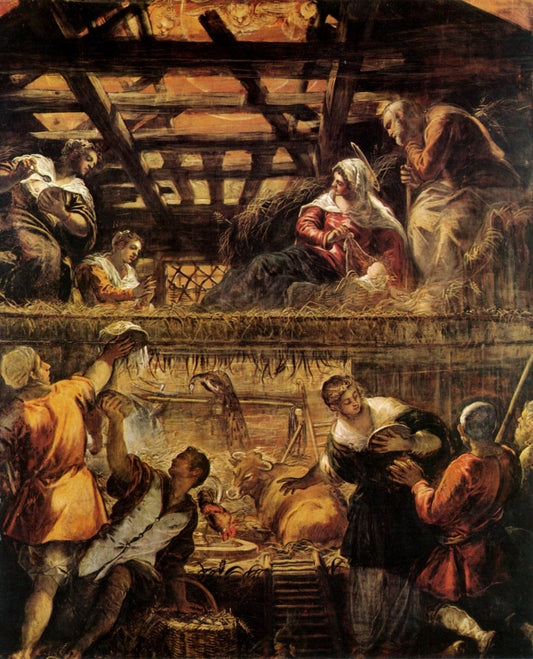
Tintoretto (1518-1594) - Nativity 1576-81
Vendor:Digital Download - 1 imageRegular price £0.80Regular priceUnit price per -

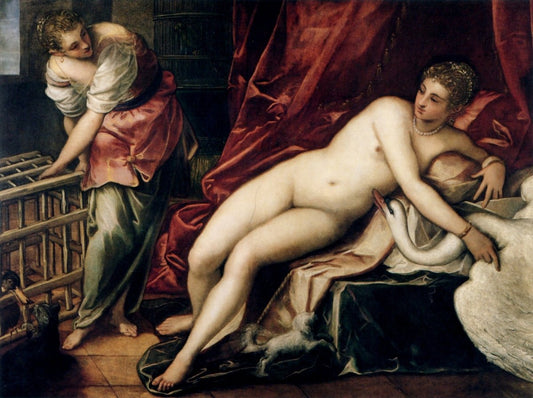
Tintoretto (1518-1594) - Leda and the Swan c.1550-60
Vendor:Digital Download - 2 imagesRegular price £0.80Regular priceUnit price per -

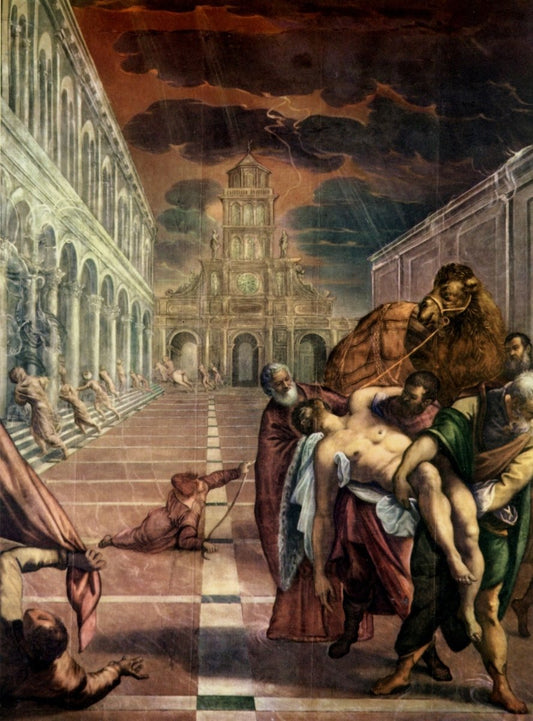
Tintoretto (1518-1594) - The Removal of the Body of St Mark 1562-66
Vendor:Digital Download - 1 imageRegular price £0.80Regular priceUnit price per -

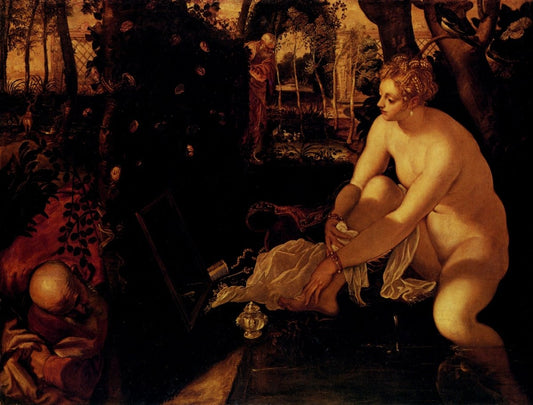
Tintoretto (1518-1594) - Susanna & the Elders c.1570
Vendor:Digital Download - 1 imageRegular price £0.80Regular priceUnit price per -

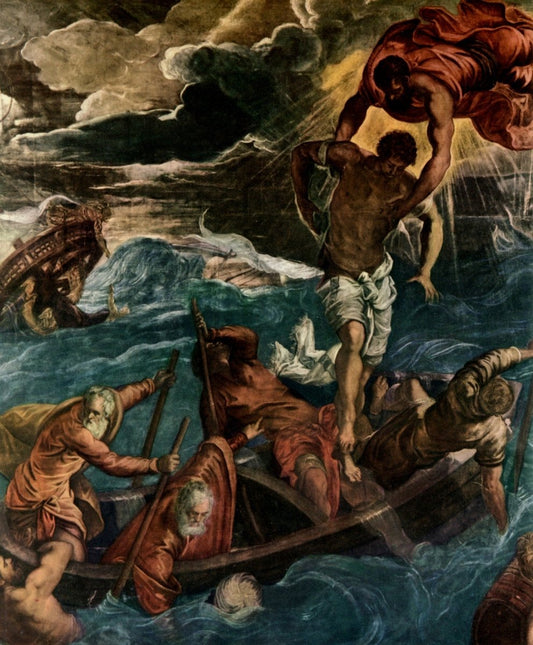
Tintoretto (1518-1594) - St Mark saving a Saracen 1562-66
Vendor:Digital Download - 1 imageRegular price £0.80Regular priceUnit price per -

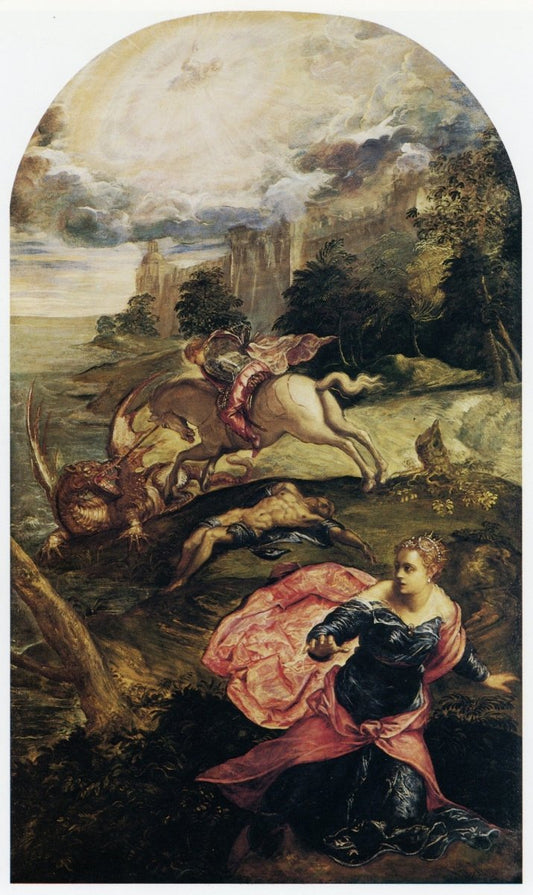
Tintoretto (1518-1594) - St George & the Dragon c.1560-70
Vendor:Digital Download - 1 imageRegular price £0.80Regular priceUnit price per


Latest Picture Trove Blog Posts
View all-

William Morris’s Strawberry Thief: The Story Behind a Classic Arts and Crafts Pattern
Few William Morris designs are as instantly recognisable as Strawberry Thief. With its richly patterned foliage, small red strawberries and watchful birds hidden among curling leaves, it has become one of the most loved designs of the Arts and Crafts movement.
William Morris’s Strawberry Thief: The Story Behind a Classic Arts and Crafts Pattern
Few William Morris designs are as instantly recognisable as Strawberry Thief. With its richly patterned foliage, small red strawberries and watchful birds hidden among curling leaves, it has become one of the most loved designs of the Arts and Crafts movement.
-

Glasgow and the Mackintosh Style
We recently took ourselves off to Scotland, and on our travels, we popped into the Mackintosh Tea Rooms in Glasgow for a bit of a nose around and a spot of lunch.
Glasgow and the Mackintosh Style
We recently took ourselves off to Scotland, and on our travels, we popped into the Mackintosh Tea Rooms in Glasgow for a bit of a nose around and a spot of lunch.
-

A Trip to Edinburgh & Glasgow, and Scottish Art
We have just returned from a well-deserved few days' break in Scotland, visiting both Edinburgh and Glasgow, taking in Scottish art and tea rooms!
A Trip to Edinburgh & Glasgow, and Scottish Art
We have just returned from a well-deserved few days' break in Scotland, visiting both Edinburgh and Glasgow, taking in Scottish art and tea rooms!


