

Giovanni Battista Tiepolo (1696-1770) stands as one of the most celebrated Italian painters of the eighteenth century, renowned for his remarkable ability to combine technical brilliance with imaginative storytelling. Born in Venice into a modest family, Tiepolo was apprenticed at a young age to the painter Gregorio Lazzarini, whose academic style and dramatic sense undoubtedly influenced the young artist. However, it was Tiepolo’s innate gift for composition and his bold, luminous palette that would ultimately set him apart from his contemporaries.
Tiepolo’s career was marked by both rapid ascent and a prodigious output. By his mid-twenties, he had already gained significant commissions in Venice and the surrounding Veneto region. His early works, such as the cycle of canvases for the Palazzo Patriarcale in Udine, demonstrate his mastery of grand, theatrical scenes and his skill at orchestrating large groups of figures. Tiepolo’s ability to create a sense of lightness and movement, even in complex compositions, became a defining feature of his style.
Perhaps Tiepolo’s greatest achievements can be found in his frescoes, which grace palaces and churches across Italy and beyond. He was particularly adept at the illusionistic technique of trompe-l’oeil, painting ceilings that seemed to open up to the heavens and fill rooms with celestial drama. Notable examples include the vast ceiling frescoes of the Palazzo Labia in Venice, depicting the dramatic story of Antony and Cleopatra, and the Residenz in Würzburg, Germany, where his monumental frescoes remain among the largest ever created.
Tiepolo’s work is characterised by an exuberant Rococo style, marked by airy compositions, delicate colours, and a playful approach to mythological and religious subjects. He often collaborated with his sons, Giandomenico and Lorenzo, who became accomplished artists in their own right. Tiepolo’s influence spread far beyond Venice, reaching the courts of Spain, where he worked for King Charles III, producing some of his most refined late works.
Despite changing artistic tastes in the later eighteenth century, Tiepolo’s reputation endured. His genius lay in his ability to transcend the confines of traditional subject matter, infusing his works with a sense of poetry, wit, and theatricality. Today, Giovanni Battista Tiepolo is remembered as a master of light and illusion, whose works continue to captivate audiences with their dazzling beauty and imaginative spirit.
Images to download
-

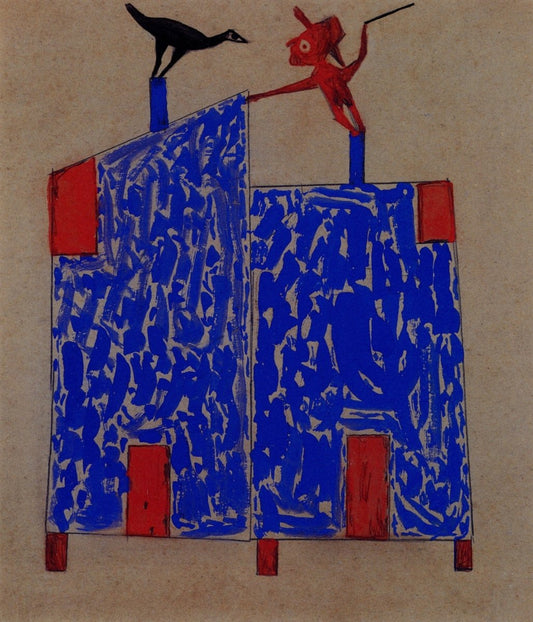
Traylor, Bill (1854-1949) - Man talking to Bird c.1939-45
Vendor:Digital Download - 1 imageRegular price £0.80Regular priceUnit price per -

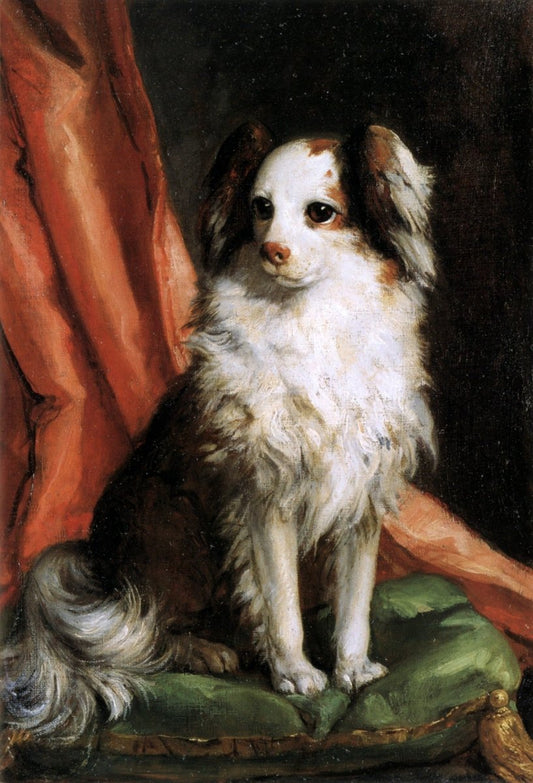
Tiepolo, G.B. (1696-1770) - Spaniel of Infanta Maria Josefa de Bourbon c.1763
Vendor:Digital Download - 1 imageRegular price £0.80Regular priceUnit price per -

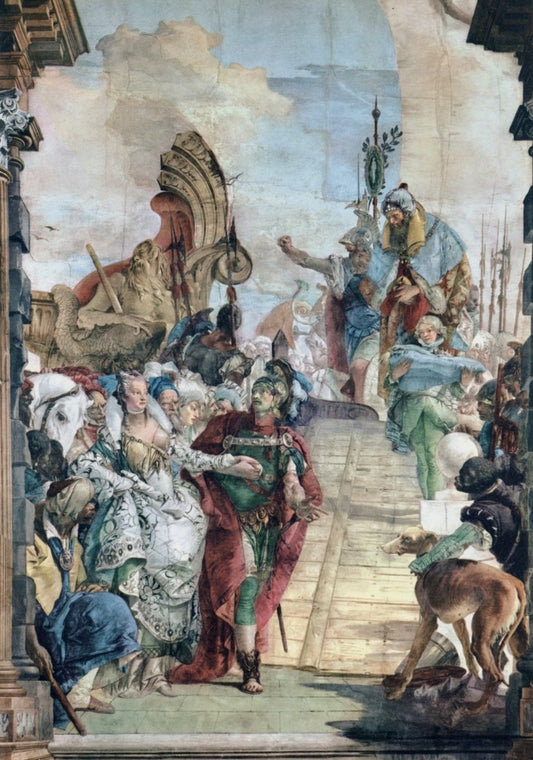
Tiepolo, G.B. (1696-1770) - Meeting of Anthony and Cleopatra 1747
Vendor:Digital Download - 1 imageRegular price £0.80Regular priceUnit price per -

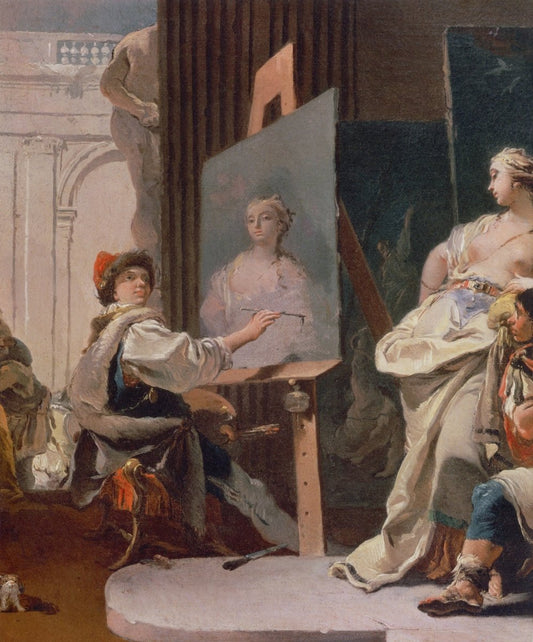
Tiepolo, G.B. (1696-1770) - Alexander & Campaspe in Studio of Apelles (detail) 1724
Vendor:Digital Download - 1 imageRegular price £0.80Regular priceUnit price per


Latest Picture Trove Blog Posts
View all-

William Morris’s Strawberry Thief: The Story Behind a Classic Arts and Crafts Pattern
Few William Morris designs are as instantly recognisable as Strawberry Thief. With its richly patterned foliage, small red strawberries and watchful birds hidden among curling leaves, it has become one of the most loved designs of the Arts and Crafts movement.
William Morris’s Strawberry Thief: The Story Behind a Classic Arts and Crafts Pattern
Few William Morris designs are as instantly recognisable as Strawberry Thief. With its richly patterned foliage, small red strawberries and watchful birds hidden among curling leaves, it has become one of the most loved designs of the Arts and Crafts movement.
-

Glasgow and the Mackintosh Style
We recently took ourselves off to Scotland, and on our travels, we popped into the Mackintosh Tea Rooms in Glasgow for a bit of a nose around and a spot of lunch.
Glasgow and the Mackintosh Style
We recently took ourselves off to Scotland, and on our travels, we popped into the Mackintosh Tea Rooms in Glasgow for a bit of a nose around and a spot of lunch.
-

A Trip to Edinburgh & Glasgow, and Scottish Art
We have just returned from a well-deserved few days' break in Scotland, visiting both Edinburgh and Glasgow, taking in Scottish art and tea rooms!
A Trip to Edinburgh & Glasgow, and Scottish Art
We have just returned from a well-deserved few days' break in Scotland, visiting both Edinburgh and Glasgow, taking in Scottish art and tea rooms!


