

Yves Tanguy (1900-1955), born in Paris, stands as one of the most enigmatic and inventive figures within the Surrealist movement. His works are instantly recognisable for their haunting, otherworldly landscapes, populated by strange, biomorphic forms and rendered in meticulous detail. Tanguy’s unique artistic vision and technical mastery have secured his place among the leading artists of twentieth-century Europe.
Tanguy’s early life was marked by upheaval. After losing his father at a young age, he spent some time at sea and held a series of odd jobs before discovering painting. His interest in art was sparked in his early twenties after seeing a painting by Giorgio de Chirico in a gallery window. Deeply moved by de Chirico’s mysterious and dreamlike imagery, Tanguy soon immersed himself in the Parisian avant-garde, connecting with André Breton and the circle of artists who would become synonymous with Surrealism.
Despite lacking formal training, Tanguy developed a singular style that set him apart from his contemporaries. By the late 1920s, he was exhibiting with the Surrealists and contributing to their exhibitions and publications. His paintings are characterised by vast, barren plains under luminous skies, dotted with abstract, organic shapes that seem both familiar and alien. These phantasmagorical landscapes do not reference any real place, but instead evoke the subconscious, dreams, and the uncanny terrains of the imagination.
Tanguy’s colour palette, often cool and restrained, further enhances the otherworldly atmosphere of his work. He used smooth gradations of tone and subtle variations in light to create an almost photographic clarity. The objects inhabiting his landscapes often appear to cast shadows, suggesting a tangible reality, yet their ambiguous forms defy easy categorisation. This paradoxical quality is central to the unsettling beauty of Tanguy’s art.
Throughout the 1930s, Tanguy’s reputation grew, and his work was included in major Surrealist exhibitions in Paris, London, and New York. In 1939, he married the American Surrealist painter Kay Sage, and soon after relocated to the United States, where he would spend the rest of his life. The move to America brought fresh inspiration, and his later works reveal an increasing complexity in composition and a heightened sense of drama.
Tanguy’s influence extended beyond painting. His vision of dreamlike, psychological spaces resonated with writers, poets, and filmmakers associated with Surrealism. He also experimented with sculpture and drawing, though it is his paintings that remain the most celebrated aspect of his legacy.
Yves Tanguy died in 1955, leaving behind a body of work that continues to intrigue and inspire. His art, with its fusion of precision and mystery, stands as a testament to the enduring power of the Surrealist imagination.
Images to download
-

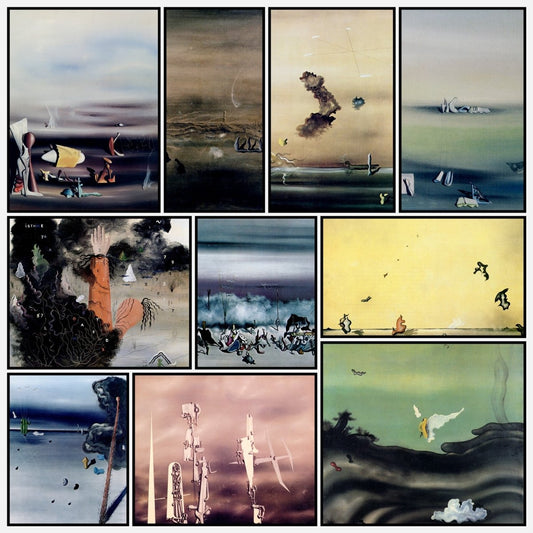
Yves Tanguy 10 High Resolution Images
Vendor:Digital Download - 10 imagesRegular price £2.00Regular priceUnit price per -

 Value Bundle
New for 2026 - 476 Image Value Bundle
Vendor:Digital Download - 476 imagesRegular price £35.00Regular priceUnit price per£50.40Sale price £35.00Value Bundle -

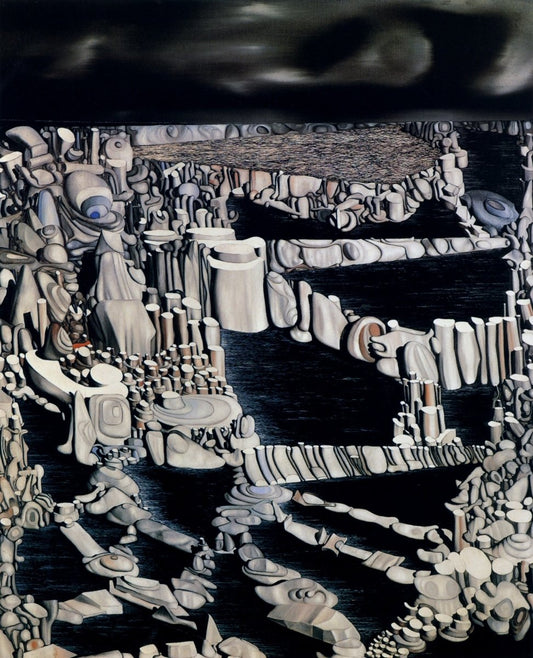
Tanguy, Yves (1900-1955) - Imaginery Numbers 1954
Vendor:Digital Download - 1 imageRegular price £0.80Regular priceUnit price per -


Tanguy, Yves (1900-1955) - Dress of the Morning 1946
Vendor:Digital Download - 1 imageRegular price £0.80Regular priceUnit price per -


Tanguy, Yves (1900-1955) - Tomorrow 1938
Vendor:Digital Download - 1 imageRegular price £0.80Regular priceUnit price per -


Tanguy, Yves (1900-1955) - Blue Bird 1929
Vendor:Digital Download - 1 imageRegular price £0.80Regular priceUnit price per -

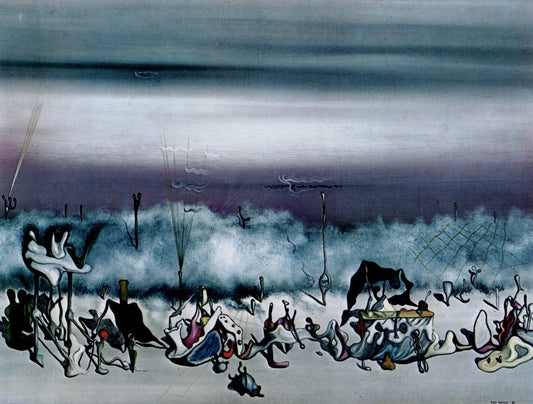
Tanguy, Yves (1900-1955) - The Ribbon of Extremes 1932
Vendor:Digital Download - 1 imageRegular price £0.80Regular priceUnit price per -

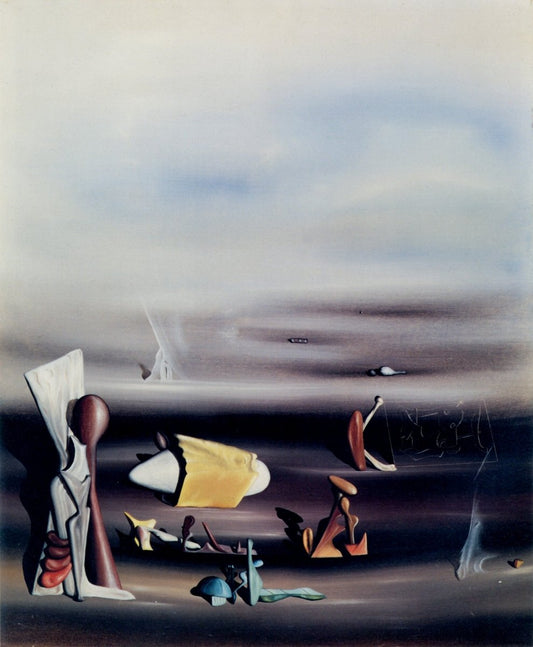
Tanguy, Yves (1900-1955) - Construct, Destroy 1940
Vendor:Digital Download - 1 imageRegular price £0.80Regular priceUnit price per -

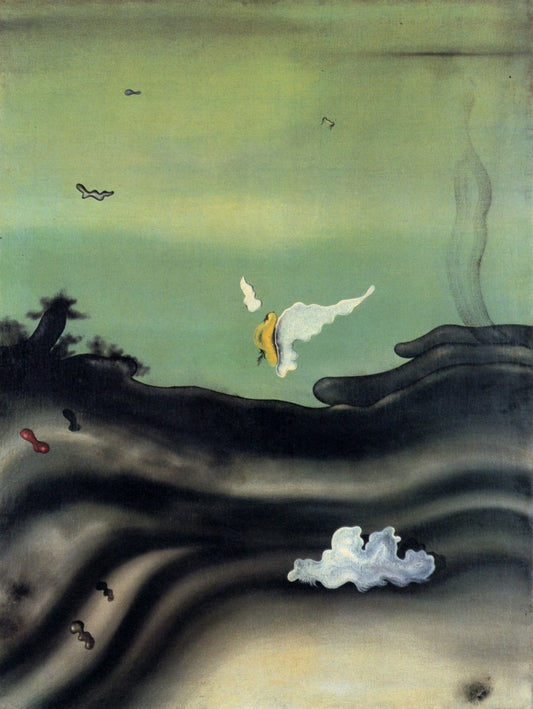
Tanguy, Yves (1900-1955) - At Four o'clock in the Afternoon 1929
Vendor:Digital Download - 1 imageRegular price £0.80Regular priceUnit price per


Latest Picture Trove Blog Posts
View all-

William Morris’s Strawberry Thief: The Story Behind a Classic Arts and Crafts Pattern
Few William Morris designs are as instantly recognisable as Strawberry Thief. With its richly patterned foliage, small red strawberries and watchful birds hidden among curling leaves, it has become one of the most loved designs of the Arts and Crafts movement.
William Morris’s Strawberry Thief: The Story Behind a Classic Arts and Crafts Pattern
Few William Morris designs are as instantly recognisable as Strawberry Thief. With its richly patterned foliage, small red strawberries and watchful birds hidden among curling leaves, it has become one of the most loved designs of the Arts and Crafts movement.
-

Glasgow and the Mackintosh Style
We recently took ourselves off to Scotland, and on our travels, we popped into the Mackintosh Tea Rooms in Glasgow for a bit of a nose around and a spot of lunch.
Glasgow and the Mackintosh Style
We recently took ourselves off to Scotland, and on our travels, we popped into the Mackintosh Tea Rooms in Glasgow for a bit of a nose around and a spot of lunch.
-

A Trip to Edinburgh & Glasgow, and Scottish Art
We have just returned from a well-deserved few days' break in Scotland, visiting both Edinburgh and Glasgow, taking in Scottish art and tea rooms!
A Trip to Edinburgh & Glasgow, and Scottish Art
We have just returned from a well-deserved few days' break in Scotland, visiting both Edinburgh and Glasgow, taking in Scottish art and tea rooms!


