

Jan Havickszoon Steen (c.1626-1679) was a Dutch Golden Age painter, one of the leading genre painters of the 17th century. His works are known for their psychological insight, sense of humour and abundance of colour. Their satire also mocks the behaviour and attitudes of the Dutch bourgeoisie.
Steen was born in Leiden, a town in Southern Holland, where his well-to-do, Catholic family were brewers who ran the tavern The Red Halbert for two generations. Steen's father even leased him a brewery of his own in Delft from the years 1654 until 1657. He was the eldest of eight or more children. Like his even more famous contemporary Rembrandt van Rijn, Jan Steen attended the Latin school and became a student in Leiden. Though no official records of Steen's artistic training are preserved, contemporary sources tell us he received his painterly education from three men, Nicolaes Knupfer (1603–1660), a German painter of historical and figurative scenes in Utrecht, Adriaen van Ostade, and Jan van Goyen, who would later become his father-in-law. Influences of Knupfer can be found in Steen's use of composition and colour. Another source of inspiration was Isaac van Ostade, a painter of rural scenes, who lived in Haarlem.
In 1648 Jan Steen and Gabriël Metsu founded the painters' Guild of Saint Luke at Leiden. Soon after he became an assistant to the renowned landscape painter Jan van Goyen (1596–1656), and moved into his house on the Bierkade in The Hague. On 3 October 1649, he married van Goyen's daughter Margriet, with whom he would have eight children. Steen worked with his father-in-law until 1654, when he moved to Delft, where he ran the brewery De Slang ("The Snake") for three years without much success. After the explosion in Delft in 1654 the art market was depressed, but Steen painted A Burgomaster of Delft and his daughter.
Steen lived in Warmond, just north of Leiden, from 1656 until 1660 and in Haarlem from 1660 until 1670 and in both periods he was especially productive. In 1670, after the death of his wife in 1669 and his father in 1670, Steen moved back to Leiden, where he stayed the rest of his life. When the art market collapsed in 1672, called the Year of Disaster, Steen opened a tavern. In April 1673 he married Maria van Egmont, who gave him another child. In 1674 he became president of the Saint Luke's Guild. Frans van Mieris (1635-1681) became one of his drinking companions. He died in Leiden in 1679 and was interred in a family grave in the Pieterskerk.
Images to download
-

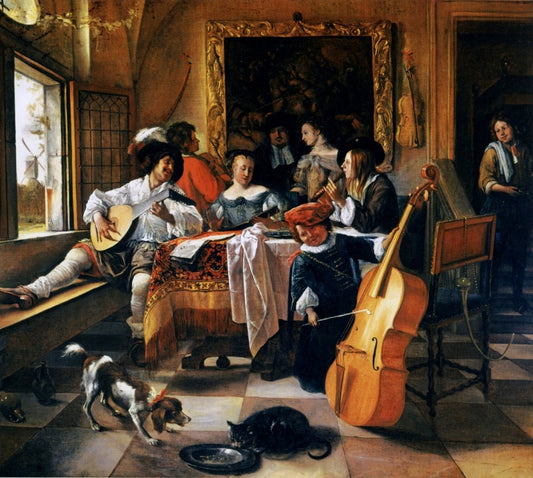
Steen, Jan (1626-1679) - The Family Concert 1666
Vendor:Digital Download - 1 imageRegular price £0.80Regular priceUnit price per -

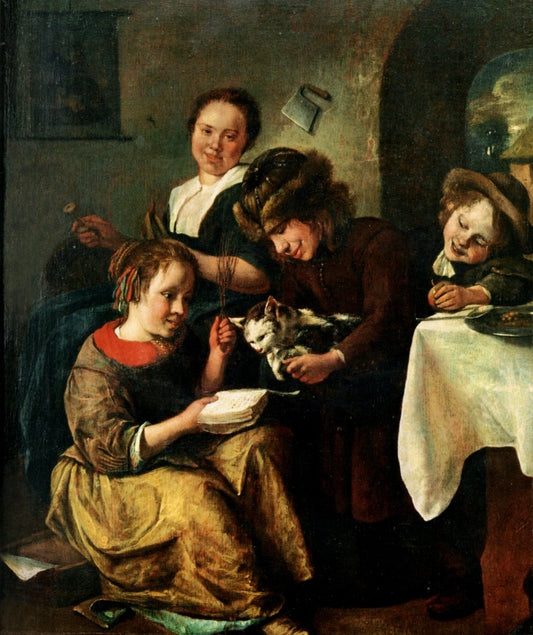
Steen, Jan (1626-1679) - Children teaching the cat to read c.1626-1679
Vendor:Digital Download - 1 imageRegular price £0.80Regular priceUnit price per -

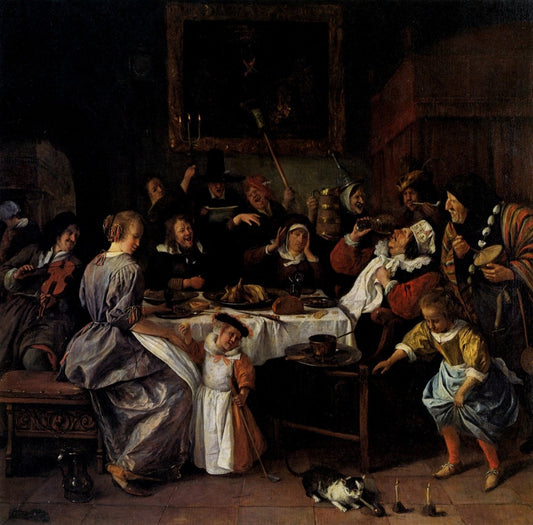
Steen, Jan (1626-1679) - Twelfth Night c.1668
Vendor:Digital Download - 1 imageRegular price £0.80Regular priceUnit price per -

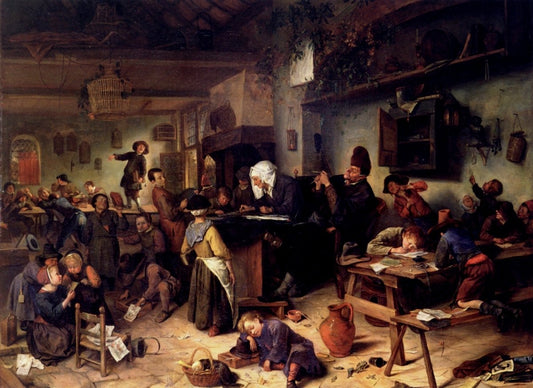
Steen, Jan (1626-1679) - The Village School c.1670
Vendor:Digital Download - 1 imageRegular price £0.80Regular priceUnit price per -

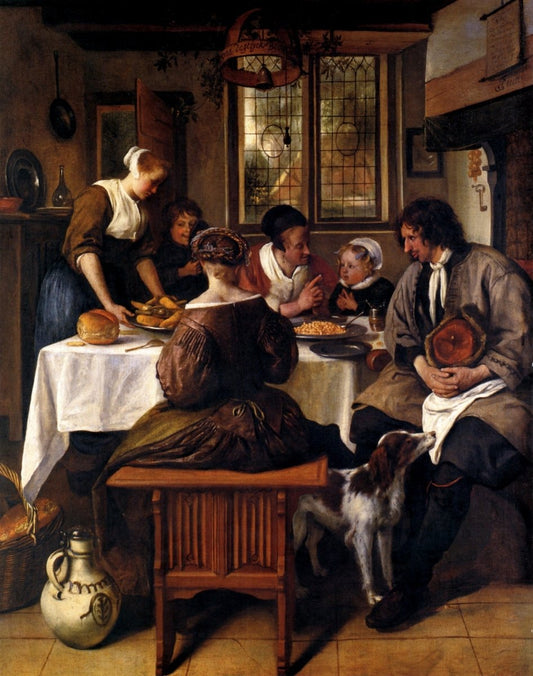
Steen, Jan (1626-1679) - The Prayer before the Meal 1660
Vendor:Digital Download - 1 imageRegular price £0.80Regular priceUnit price per -

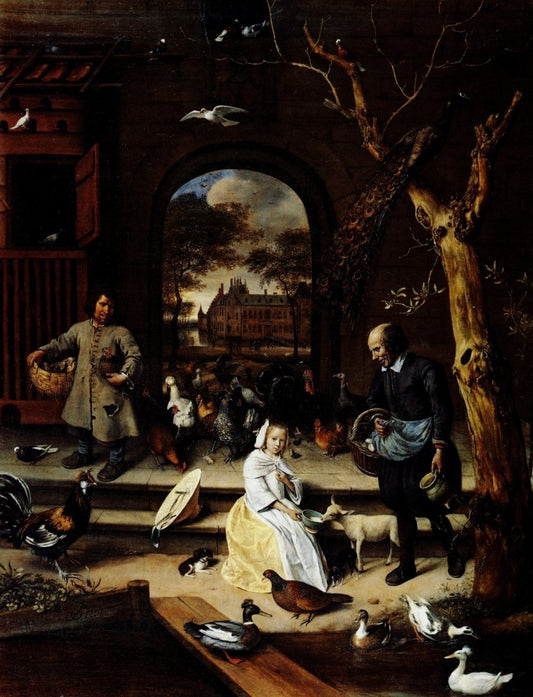
Steen, Jan (1626-1679) - The Poultry Yard 1660
Vendor:Digital Download - 1 imageRegular price £0.80Regular priceUnit price per -

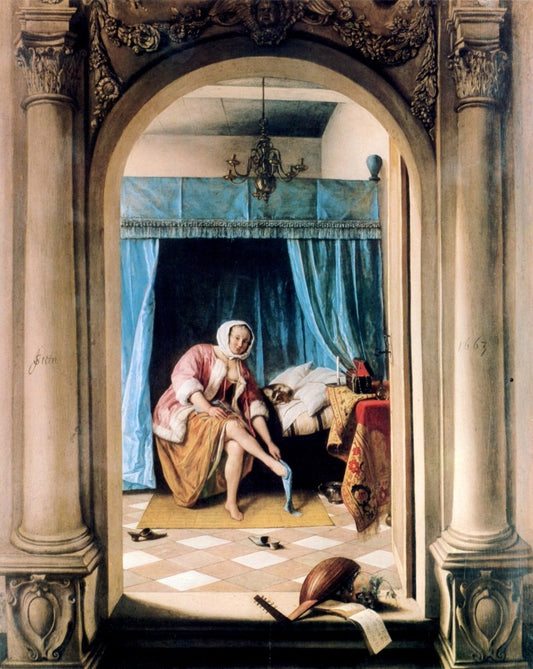
Steen, Jan (1626-1679) - The Morning Toilet 1663
Vendor:Digital Download - 1 imageRegular price £0.80Regular priceUnit price per -

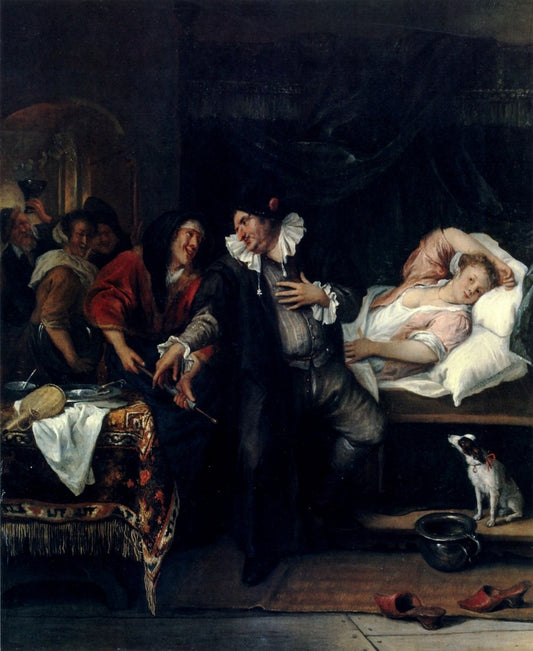
Steen, Jan (1626-1679) - The Doctor's Visit c.1665-70
Vendor:Digital Download - 1 imageRegular price £0.80Regular priceUnit price per -

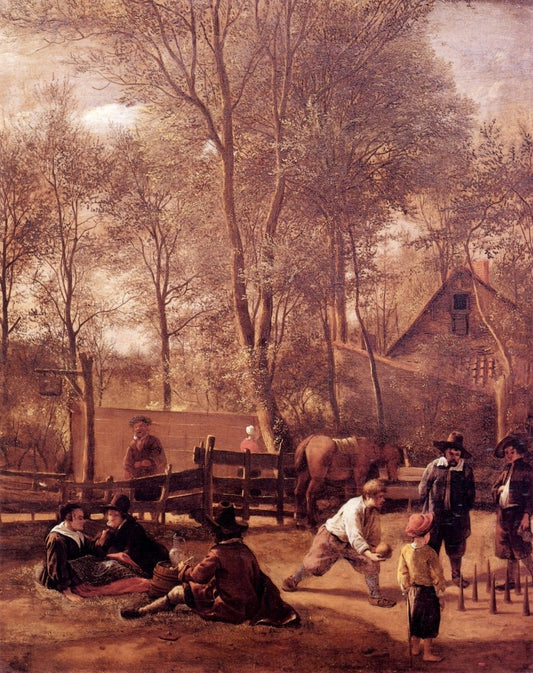
Steen, Jan (1626-1679) - Skittle Players outside an Inn c.1660
Vendor:Digital Download - 1 imageRegular price £0.80Regular priceUnit price per -

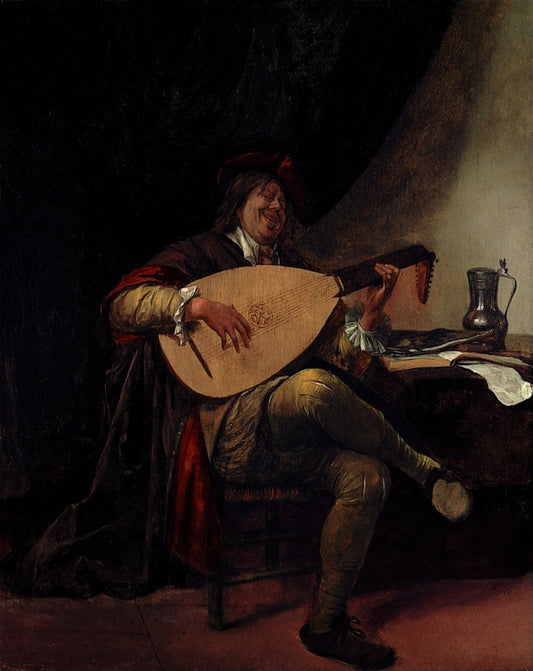
Steen, Jan (1626-1679) - Self-portrait playing the Lute c1663-65
Vendor:Digital Download - 1 imageRegular price £0.80Regular priceUnit price per


Latest Picture Trove Blog Posts
View all-

William Morris’s Strawberry Thief: The Story Behind a Classic Arts and Crafts Pattern
Few William Morris designs are as instantly recognisable as Strawberry Thief. With its richly patterned foliage, small red strawberries and watchful birds hidden among curling leaves, it has become one of the most loved designs of the Arts and Crafts movement.
William Morris’s Strawberry Thief: The Story Behind a Classic Arts and Crafts Pattern
Few William Morris designs are as instantly recognisable as Strawberry Thief. With its richly patterned foliage, small red strawberries and watchful birds hidden among curling leaves, it has become one of the most loved designs of the Arts and Crafts movement.
-

Glasgow and the Mackintosh Style
We recently took ourselves off to Scotland, and on our travels, we popped into the Mackintosh Tea Rooms in Glasgow for a bit of a nose around and a spot of lunch.
Glasgow and the Mackintosh Style
We recently took ourselves off to Scotland, and on our travels, we popped into the Mackintosh Tea Rooms in Glasgow for a bit of a nose around and a spot of lunch.
-

A Trip to Edinburgh & Glasgow, and Scottish Art
We have just returned from a well-deserved few days' break in Scotland, visiting both Edinburgh and Glasgow, taking in Scottish art and tea rooms!
A Trip to Edinburgh & Glasgow, and Scottish Art
We have just returned from a well-deserved few days' break in Scotland, visiting both Edinburgh and Glasgow, taking in Scottish art and tea rooms!


