

Andrea del Sarto (1486-1531) remains a pivotal figure in the Italian Renaissance, renowned for his technical mastery and serene compositions. Born Andrea d’Agnolo di Francesco di Luca di Paolo del Migliore, he was later nicknamed “del Sarto,” meaning “of the tailor,” after his father’s profession. Del Sarto’s career was primarily centred in Florence, where he developed a style characterised by refined drawing, harmonious colour palettes, and a gentle, balanced approach to composition.
Del Sarto trained under Piero di Cosimo and was influenced by the work of Leonardo da Vinci, Fra Bartolommeo, and Raphael. He soon surpassed many of his contemporaries in the Florentine art scene, earning commissions for frescoes and altarpieces. One of his most significant contributions is the fresco cycle in the Chiostro dello Scalzo in Florence, depicting scenes from the life of St John the Baptist. These monochrome works, executed in grisaille, display his remarkable ability to convey form and emotion with subtlety and restraint.
Another of del Sarto’s masterpieces is the series of frescoes in the convent of San Salvi, particularly the celebrated “Last Supper” (1520-1525). This work, admired for its calm dignity and painterly cohesion, attracted the attention of later artists such as Pontormo and Vasari. Giorgio Vasari, himself a painter and historian, was a pupil of del Sarto and praised his teacher’s technical proficiency in his seminal work, “Lives of the Artists.”
Although del Sarto was sometimes overshadowed by contemporaries like Michelangelo and Raphael, his influence was considerable. He was a key figure in the development of Mannerism, bridging the High Renaissance and the more expressive, stylised art that followed. Del Sarto’s subtle modulation of light and shade, as well as his sensitive rendering of human anatomy, contributed to a sense of realism and grace in his paintings. His works often reflect a contemplative mood, with figures arranged in harmonious groupings and imbued with a gentle melancholy.
Despite his artistic achievements, del Sarto’s career was marked by personal difficulties, including financial troubles and a tumultuous marriage. He died in Florence in 1531, likely a victim of the plague. Today, Andrea del Sarto is appreciated as a master of composition and technique, whose art encapsulates the elegance and introspective beauty of the Florentine Renaissance.
Images to download
-

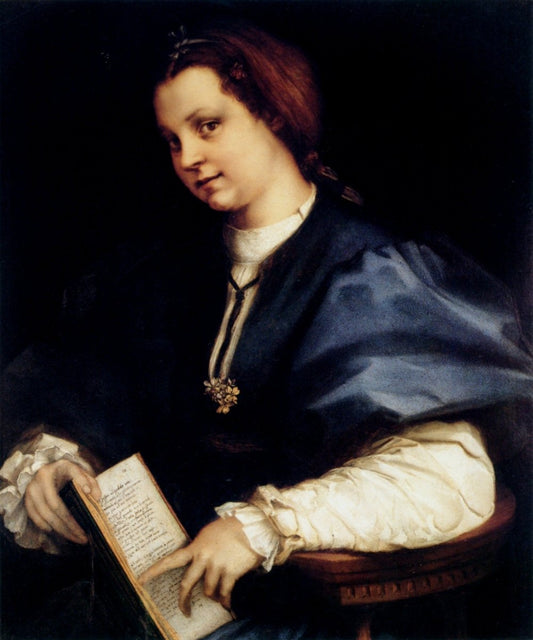
Sarto, Andrea del (1486-1531) - Woman with Petrarchino c.1528
Vendor:Digital Download - 1 imageRegular price £0.80Regular priceUnit price per -

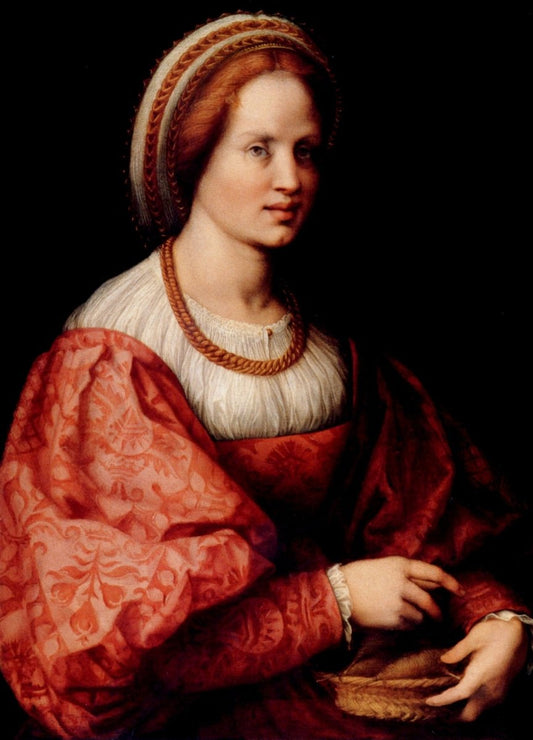
Sarto, Andrea del (1486-1531) - Portrait of a Woman with Spindles c.1514-15
Vendor:Digital Download - 1 imageRegular price £0.80Regular priceUnit price per -

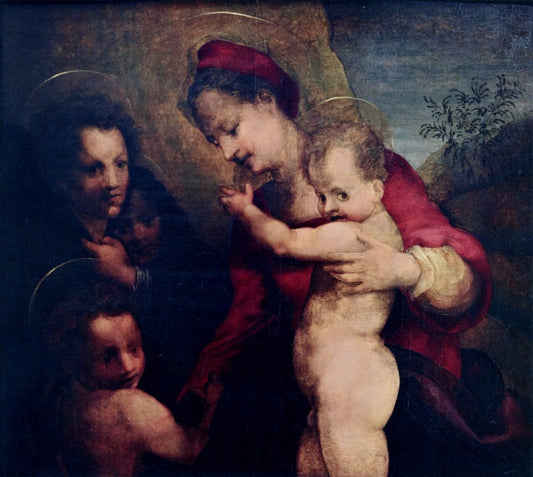
Sarto, Andrea del (1486-1531) - Virgin & Child with John the Baptist & others c.1520
Vendor:Digital Download - 1 imageRegular price £0.80Regular priceUnit price per -

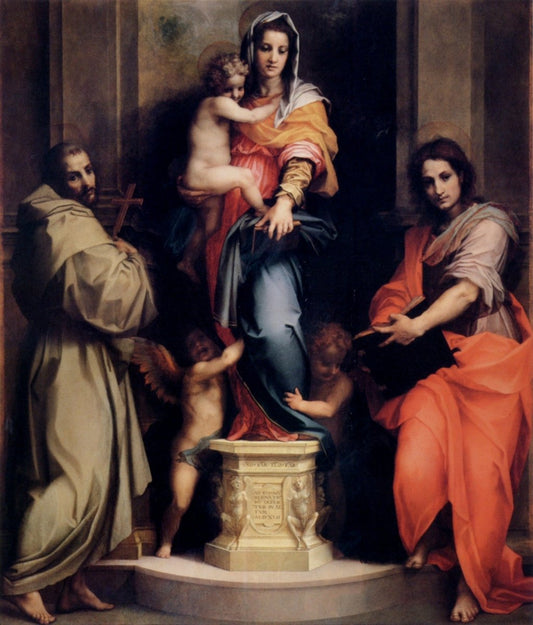
Sarto, Andrea del (1486-1531) - Madonna of the Harpies 1517
Vendor:Digital Download - 1 imageRegular price £0.80Regular priceUnit price per


Latest Picture Trove Blog Posts
View all-

William Morris’s Strawberry Thief: The Story Behind a Classic Arts and Crafts Pattern
Few William Morris designs are as instantly recognisable as Strawberry Thief. With its richly patterned foliage, small red strawberries and watchful birds hidden among curling leaves, it has become one of the most loved designs of the Arts and Crafts movement.
William Morris’s Strawberry Thief: The Story Behind a Classic Arts and Crafts Pattern
Few William Morris designs are as instantly recognisable as Strawberry Thief. With its richly patterned foliage, small red strawberries and watchful birds hidden among curling leaves, it has become one of the most loved designs of the Arts and Crafts movement.
-

Glasgow and the Mackintosh Style
We recently took ourselves off to Scotland, and on our travels, we popped into the Mackintosh Tea Rooms in Glasgow for a bit of a nose around and a spot of lunch.
Glasgow and the Mackintosh Style
We recently took ourselves off to Scotland, and on our travels, we popped into the Mackintosh Tea Rooms in Glasgow for a bit of a nose around and a spot of lunch.
-

A Trip to Edinburgh & Glasgow, and Scottish Art
We have just returned from a well-deserved few days' break in Scotland, visiting both Edinburgh and Glasgow, taking in Scottish art and tea rooms!
A Trip to Edinburgh & Glasgow, and Scottish Art
We have just returned from a well-deserved few days' break in Scotland, visiting both Edinburgh and Glasgow, taking in Scottish art and tea rooms!


