

Henry Constantine Richter (1821-1902) was an English zoological illustrator who produced a very large number of skillful coloured lithographs of birds and mammals, mainly for the scientific books of the renowned English 19th-century ornithologist John Gould.
Many of the original drawings used by Richter as the basis for his coloured lithographs were by Gould's wife, Elizabeth Coxen, produced before her death in 1841.
Richter's reputation was overshadowed by that of his much-celebrated employer. Since it was not customary to acknowledge illustrators alongside authors in the titles of publications, his name was forgotten. But in 1978, his great ability and the extent of his contribution to Gould's work came to light, in the work of the researcher Christine E. Jackson.
Richter was born in Brompton, London in England, on 7 Jun 1821, into an artistic family. His father, Henry James Richter (1772-1857), was a philosopher, painter and engraver who was born in Soho, Middlesex, England to Mary Haigh, the wife of John Augustus Richter, an immigrant from Dresden, Germany, himself an artist and engraver.
Richter's mother, Charlotte Sophia Edson (1793-1862), had married his father on 2 May 1818 in Marylebone, Middlesex, England. He was their first child. His birth was followed by that of his sister Antonia Charlotte (1823-1896) and his brother Charles (b.1827). A half-sister, Henrietta Sophia (1814-1896), had already been born to Henry James Richter's first wife, Elizabeth Smith (1787-1816), whom he had married on 9 July 1808, and lost after eight years' marriage.
Henry James Richter became a well-respected and popular artist - he was a member, and president (1811-1812), of the Associated Artists in Water Colours, exhibiting frequently. He was also elected to membership of the Society of Painters in Oil and Water Colours. Several of his works are owned by the British Museum.
Artistic talent also flourished elsewhere in Richter's family: his half-sister, Henrietta Sophia, became a successful miniature portrait artist and exhibited at the prestigious Royal Academy of Arts in London, 1842–1849.
Richter's work with his coloured lithographs was breaking new ground at the time. The technique was labour-intensive and demanded great skill and attention to minute detail.
John Gould was an experienced taxidermist, using his skill to preserve the skins of birds from his various worldwide expeditions. These skins were used by his artists to guide their illustrations, together with initial sketches made by Gould to indicate his requirements for the exact appearance of the finished images. The London Zoo was opened to the public in 1847 and was a further source of models of birds and animals for Richter's drawings.
Richter's earliest published bird illustrations were three plates in the book Genera of birds (1844-1849) by George Robert Gray. The plates depicted the Indian Barn Owl Strix javanica, the head and claws of two other owls, and a member of the pheasant and partridge family, Clapperton's spurfowl Pternistis clappertoni. His illustrations attracted the favourable attention of ornithologists.
In 1841, Richter was contacted by the zoologist John Gould, who urgently needed an illustrator after the death of his wife, Elizabeth Coxen (1804-1841), because he had committed to producing various parts of his lavish books on certain dates. The Gould-Richter working relationship lasted for forty years, until Gould died in 1881. Richter created about 3,000 lithographic plates and watercolours for Gould. Other illustrators employed by Gould included Edward Lear, William Matthew Hart and Joseph Wolf, although it was Richter who produced the vast majority of the works during Gould's lifetime.
Amongst his best known illustrations are those of the male and female thylacine, from Gould's Mammals of Australia (1845-63), frequently copied since publication. For example, an Australian company, Cascade Brewery, used the image on the label for one of their brands of beer in 1987. Previously, the Tasmanian Government had published a monochromatic reproduction of the same image in 1934 and, earlier still, the author Louisa Anne Meredith also copied it for Tasmanian Friends and Foes (1881).
In his will, John Gould wrote, "I bequeath to my Artist H C Richter a legacy of £100 as a kind remembrance for the purchase of a [mourning] ring or any other article that he may prefer". He seems to have been unconcerned about the impecunious state of his 60-year-old artist, although Richter had contributed so materially to his own prosperity for over four decades.
After Gould's death Richter gained a small amount of work for Gray's Birds of Asia, and he prepared a plate for Sir Richard Owen's Memoirs on the extinct wingless birds of New Zealand (1878-1879 ). Work already completed by him was used in Gould's books that were published posthumously, such as Birds of Asia, but new plates for the books were commissioned from William Hart.
Lacking a regular income after the death of Gould, Richter became dependent upon his sister, Antonia Charlotte, who had married a wealthy Nottinghamshire farmer with property in Ranby, Henry Francis Noble Champion. Antonia Champion had become a widow in 1854, one year after her marriage, and she inherited her husband's London residence in the Lisson Grove area of London. She continued to live there alone with a servant and did not marry again.
When Antonia died in 1896, the house passed to Richter, and he stayed there until his death. The probate administration record states that he died on 16 March 1902, and that administration occurred on 17 April 1902. His estate was valued at just under 840 pounds.
Images to download
-

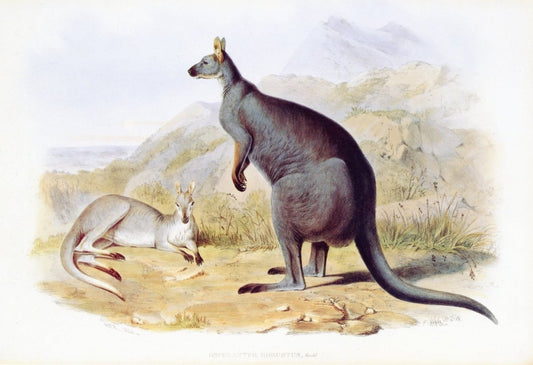
Richter, Henry C (1821-1902) - Wallaroo 1845-63
Vendor:Digital Download - 1 imageRegular price £0.80Regular priceUnit price per -

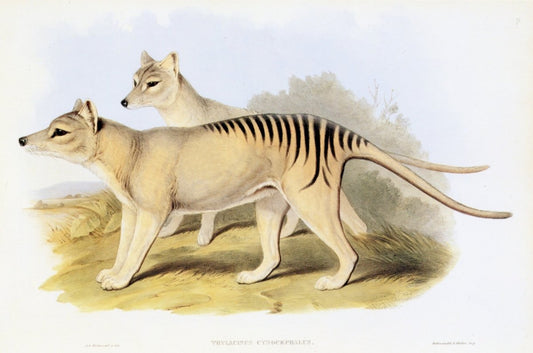
Richter, Henry C (1821-1902) - Thylacine 1845-63
Vendor:Digital Download - 1 imageRegular price £0.80Regular priceUnit price per -

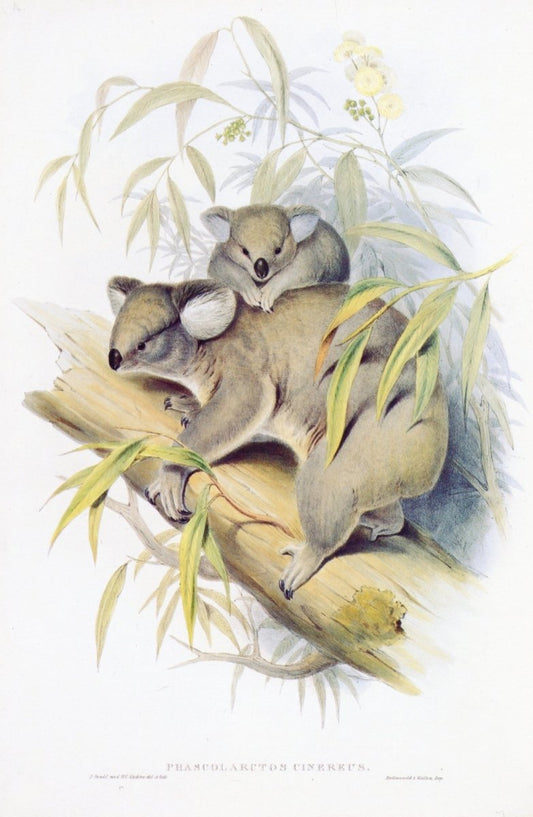
Richter, Henry C (1821-1902) - Koala 1845-63
Vendor:Digital Download - 1 imageRegular price £0.80Regular priceUnit price per -

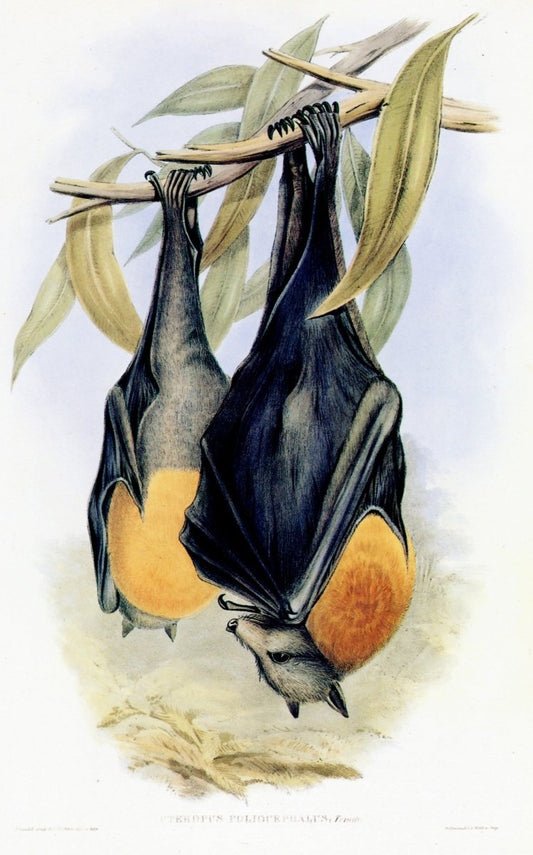
Richter, Henry C (1821-1902) - Grey-headed Flying Fox 1845-63
Vendor:Digital Download - 1 imageRegular price £0.80Regular priceUnit price per -

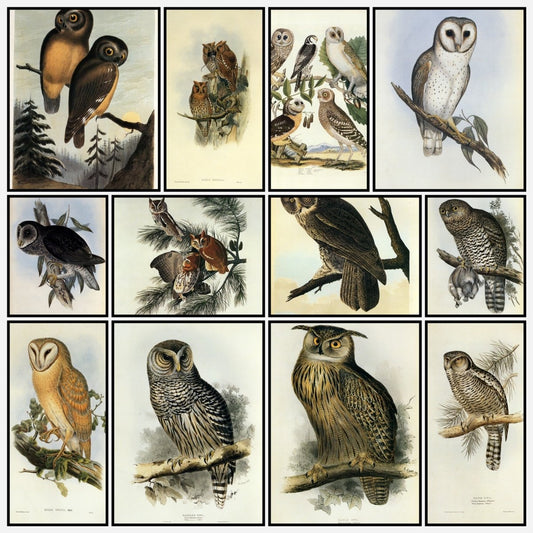
Owls - 40 High Resolution Images
Vendor:Digital Download - 40 imagesRegular price £3.00Regular priceUnit price per -

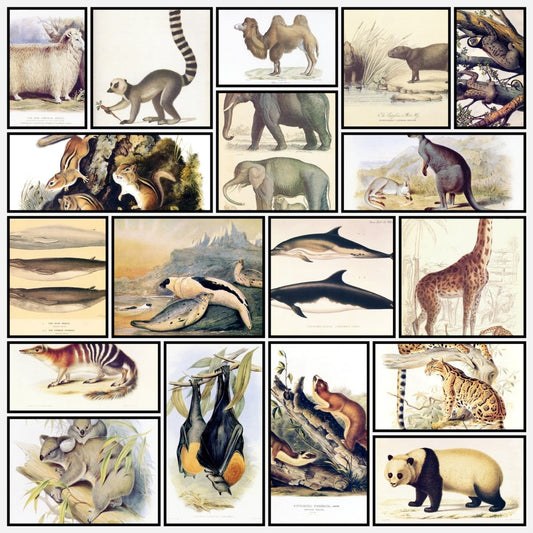
Mammals of the World - 56 High Resolution Images
Vendor:Digital Download - 56 imagesRegular price £4.00Regular priceUnit price per


Latest Picture Trove Blog Posts
View all-

William Morris’s Strawberry Thief: The Story Behind a Classic Arts and Crafts Pattern
Few William Morris designs are as instantly recognisable as Strawberry Thief. With its richly patterned foliage, small red strawberries and watchful birds hidden among curling leaves, it has become one of the most loved designs of the Arts and Crafts movement.
William Morris’s Strawberry Thief: The Story Behind a Classic Arts and Crafts Pattern
Few William Morris designs are as instantly recognisable as Strawberry Thief. With its richly patterned foliage, small red strawberries and watchful birds hidden among curling leaves, it has become one of the most loved designs of the Arts and Crafts movement.
-

Glasgow and the Mackintosh Style
We recently took ourselves off to Scotland, and on our travels, we popped into the Mackintosh Tea Rooms in Glasgow for a bit of a nose around and a spot of lunch.
Glasgow and the Mackintosh Style
We recently took ourselves off to Scotland, and on our travels, we popped into the Mackintosh Tea Rooms in Glasgow for a bit of a nose around and a spot of lunch.
-

A Trip to Edinburgh & Glasgow, and Scottish Art
We have just returned from a well-deserved few days' break in Scotland, visiting both Edinburgh and Glasgow, taking in Scottish art and tea rooms!
A Trip to Edinburgh & Glasgow, and Scottish Art
We have just returned from a well-deserved few days' break in Scotland, visiting both Edinburgh and Glasgow, taking in Scottish art and tea rooms!


