

Jacopo Carucci, known as Pontormo (1494-1556), was a pivotal figure in the development of Italian art during the transition from the High Renaissance to Mannerism. Born in the small Tuscan town of Pontorme, from which he took his name, Pontormo rose to prominence in Florence, becoming one of the most distinctive and innovative painters of the 16th century. His work is characterised by a heightened sense of emotion, dramatic use of colour, and compositions that often defy the harmonious balance so prized by his Renaissance predecessors.
Pontormo began his artistic training at a young age, first under the sculptor Leonardo da Vinci and later with prominent Florentine artists such as Mariotto Albertinelli, Piero di Cosimo, and Andrea del Sarto. The influence of these masters is evident in his early works, yet Pontormo swiftly developed a style that diverged from their naturalism and compositional clarity. Instead, Pontormo embraced a more expressive approach, marked by elongated figures, unusual perspectives, and a vibrant, often jarring palette.
One of his earliest significant commissions was the decoration of the Certosa di Galluzzo near Florence, where he painted a series of frescoes. However, many of these works have not survived. Pontormo’s fame is largely built on his later masterpieces, such as the altarpiece "Joseph in Egypt" (1517-1518) for the church of San Michele Visdomini, and most notably, his celebrated "Deposition from the Cross" (1525-1528), created for the Capponi Chapel in the church of Santa Felicita, Florence.
The "Deposition from the Cross" stands as a hallmark of Mannerist painting. Unlike traditional depictions of the subject, Pontormo eschews clear spatial logic and stable composition. Instead, he arranges his figures in a swirling, almost weightless manner, their bodies elongated and their gestures imbued with palpable emotion. The use of pastel hues—pinks, blues, and greens—enhances the otherworldly quality of the scene, while the absence of the cross itself further emphasises the psychological intensity of the moment.
Pontormo’s style did not always meet with universal approval; his departure from Renaissance conventions was seen by some contemporaries as eccentric or even unsettling. Nevertheless, his work profoundly influenced a generation of artists, including his pupil Agnolo Bronzino. Pontormo’s drawings and paintings reveal a restless imagination and an acute sensitivity to the human condition, qualities that continue to captivate viewers today.
In his later years, Pontormo became increasingly reclusive, devoting himself to religious contemplation and artistic experimentation. His diary, kept during the final decade of his life, provides a rare glimpse into his daily routines and creative anxieties. Pontormo died in Florence in 1556, leaving behind a legacy that bridges the worlds of Renaissance idealism and the expressive dynamism of Mannerism. Today, his works are celebrated for their originality, psychological depth, and enduring beauty.
Images to download
-

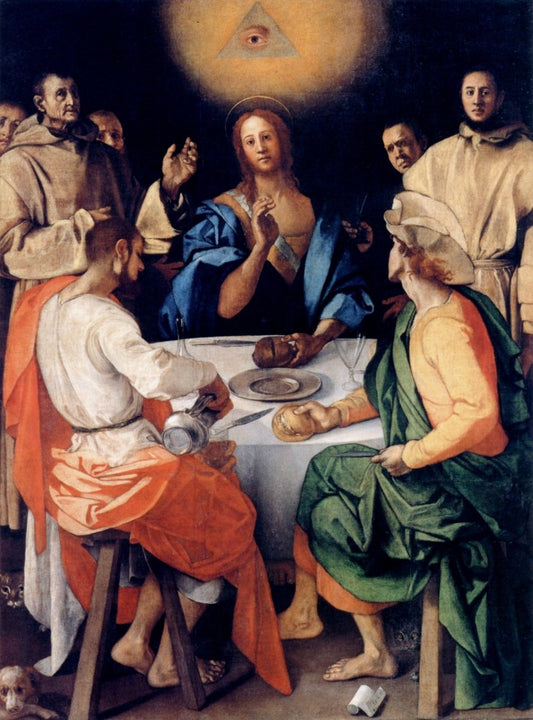
Pontormo, Jacopo (1494-1556) - The Supper at Emmaus 1525
Vendor:Digital Download - 1 imageRegular price £0.80Regular priceUnit price per -

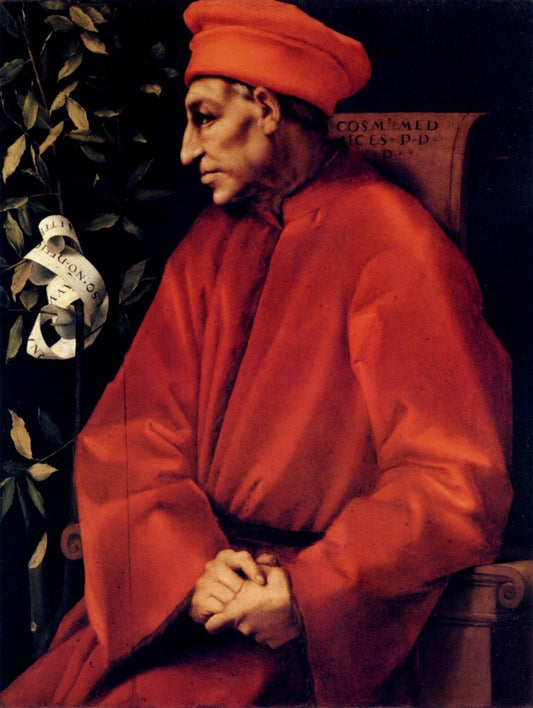
Pontormo, Jacopo (1494-1556) - Portrait of Cosimo the Elder c.1518-19
Vendor:Digital Download - 1 imageRegular price £0.80Regular priceUnit price per -

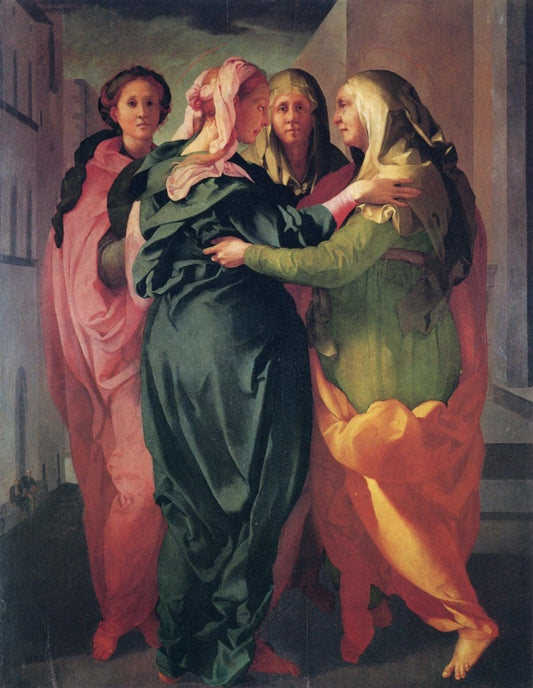
Pontormo, Jacopo (1494-1556) - The Visitation c.1528-30
Vendor:Digital Download - 1 imageRegular price £0.80Regular priceUnit price per -

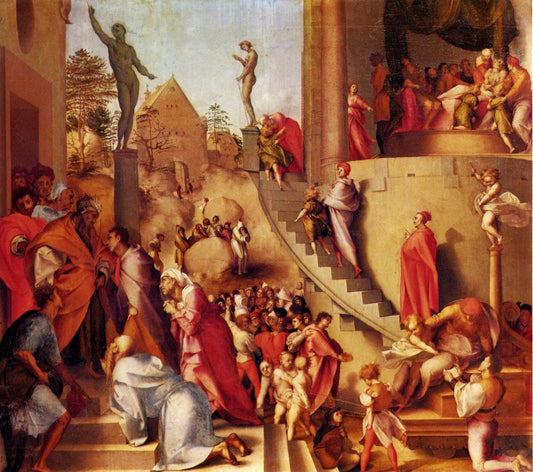
Pontormo, Jacopo (1494-1556) - Joseph in Egypt c.1515
Vendor:Digital Download - 1 imageRegular price £0.80Regular priceUnit price per


Latest Picture Trove Blog Posts
View all-

William Morris’s Strawberry Thief: The Story Behind a Classic Arts and Crafts Pattern
Few William Morris designs are as instantly recognisable as Strawberry Thief. With its richly patterned foliage, small red strawberries and watchful birds hidden among curling leaves, it has become one of the most loved designs of the Arts and Crafts movement.
William Morris’s Strawberry Thief: The Story Behind a Classic Arts and Crafts Pattern
Few William Morris designs are as instantly recognisable as Strawberry Thief. With its richly patterned foliage, small red strawberries and watchful birds hidden among curling leaves, it has become one of the most loved designs of the Arts and Crafts movement.
-

Glasgow and the Mackintosh Style
We recently took ourselves off to Scotland, and on our travels, we popped into the Mackintosh Tea Rooms in Glasgow for a bit of a nose around and a spot of lunch.
Glasgow and the Mackintosh Style
We recently took ourselves off to Scotland, and on our travels, we popped into the Mackintosh Tea Rooms in Glasgow for a bit of a nose around and a spot of lunch.
-

A Trip to Edinburgh & Glasgow, and Scottish Art
We have just returned from a well-deserved few days' break in Scotland, visiting both Edinburgh and Glasgow, taking in Scottish art and tea rooms!
A Trip to Edinburgh & Glasgow, and Scottish Art
We have just returned from a well-deserved few days' break in Scotland, visiting both Edinburgh and Glasgow, taking in Scottish art and tea rooms!


