

Antonio del Pollaiuolo (c.1429/33-1498) was a prominent figure of the Italian Renaissance, renowned for his diverse talents as a painter, sculptor, engraver, and goldsmith. Born in Florence around 1431, he, along with his younger brother Piero, contributed significantly to the development of art in fifteenth-century Italy, particularly by advancing the study of the human figure in motion and anatomical accuracy.
Pollaiuolo’s early training as a goldsmith played a crucial role in shaping his meticulous approach to art. The skills acquired at the goldsmith’s bench are evident in the intricate details and precision found throughout his works, both in metal and on canvas. His surname, Pollaiuolo, derived from the family’s trade in poultry, belies the extraordinary artistry and innovation for which he would become celebrated.
One of Antonio del Pollaiuolo’s most significant contributions was his pioneering work in the depiction of the human body. At a time when artists were striving to achieve greater naturalism, Pollaiuolo distinguished himself through his scientific interest in anatomy. He is reputed to have dissected human corpses to better understand musculature and movement, an approach that was radical for his era. This anatomical expertise is vividly displayed in his renowned engraving, “The Battle of the Nudes” (c.1470). The print, which depicts ten men engaged in combat, is celebrated for its dynamic composition and astonishingly detailed rendering of the human musculature in action. It remains a landmark in the history of printmaking and a testament to Pollaiuolo’s innovative spirit.
Pollaiuolo’s painting also reflects his fascination with movement and the human form. His “Hercules and Antaeus” (c.1475), now housed in the Uffizi Gallery, is a small but powerful panel painting that captures the dramatic embrace and physical exertion of the mythological struggle. The tension in the figures’ muscles and the sense of twisting motion are characteristic of his style.
In addition to his achievements in painting and engraving, Antonio del Pollaiuolo was a highly accomplished sculptor. Among his most significant commissions were the monumental bronze tombs for Popes Sixtus IV and Innocent VIII in St Peter’s Basilica, Rome. These works showcase his technical mastery of bronze casting and his ability to create harmonious and expressive compositions on a large scale.
Throughout his career, Pollaiuolo collaborated closely with his brother Piero, with whom he shared a workshop in Florence. The studio produced a variety of works, including altarpieces, portraits, and decorative objects. While it is sometimes difficult to distinguish between the hands of the two brothers, Antonio is generally credited with the more dramatic and anatomically precise figures, while Piero’s contributions are often seen in the softer and more decorative elements.
Antonio del Pollaiuolo died in Rome in 1498, having left a profound legacy that influenced subsequent generations of artists. His commitment to the study of anatomy, his innovative compositions, and his technical prowess across multiple media have ensured his place among the most important artists of the Italian Renaissance.
Images to download
-

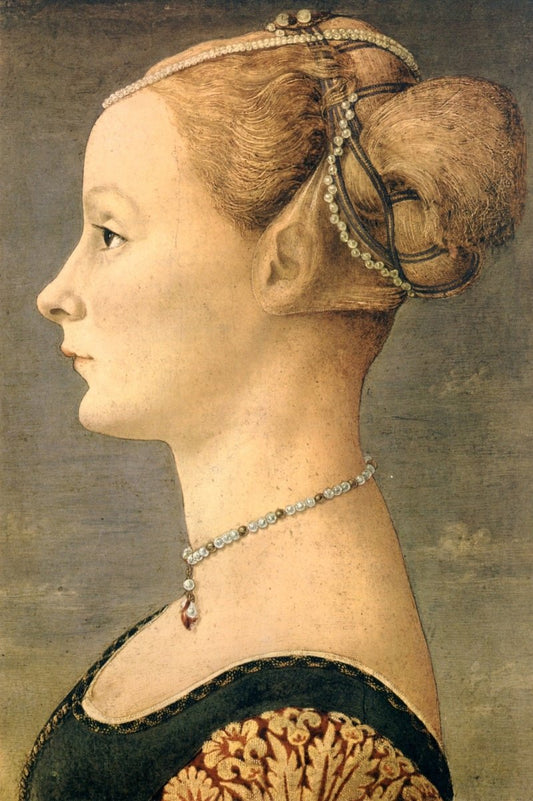
Pollaiuolo, Piero del (c.1443-1496) - Portrait of a Noblewoman c.1475
Vendor:Digital Download - 1 imageRegular price £0.80Regular priceUnit price per -

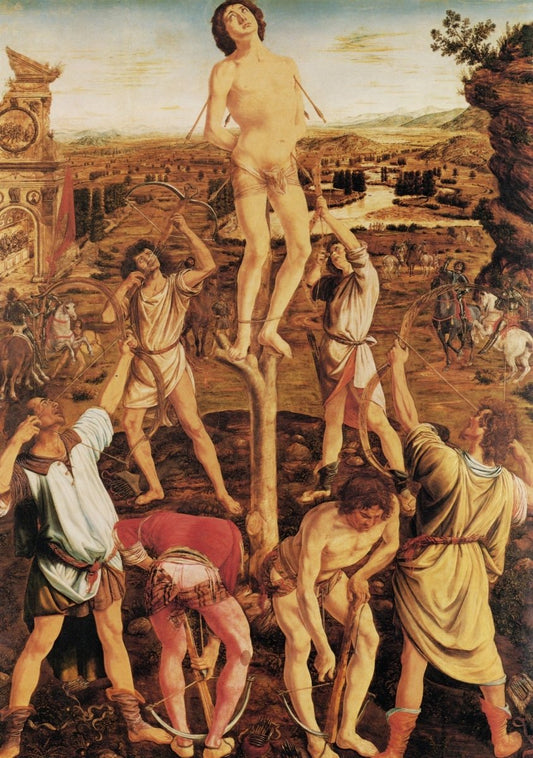
Pollaiuolo, Antonio (1432-98) & Piero (1441-96) - Martyrdom of St. Sebastian c.1475
Vendor:Digital Download - 1 imageRegular price £0.80Regular priceUnit price per


Latest Picture Trove Blog Posts
View all-

William Morris’s Strawberry Thief: The Story Behind a Classic Arts and Crafts Pattern
Few William Morris designs are as instantly recognisable as Strawberry Thief. With its richly patterned foliage, small red strawberries and watchful birds hidden among curling leaves, it has become one of the most loved designs of the Arts and Crafts movement.
William Morris’s Strawberry Thief: The Story Behind a Classic Arts and Crafts Pattern
Few William Morris designs are as instantly recognisable as Strawberry Thief. With its richly patterned foliage, small red strawberries and watchful birds hidden among curling leaves, it has become one of the most loved designs of the Arts and Crafts movement.
-

Glasgow and the Mackintosh Style
We recently took ourselves off to Scotland, and on our travels, we popped into the Mackintosh Tea Rooms in Glasgow for a bit of a nose around and a spot of lunch.
Glasgow and the Mackintosh Style
We recently took ourselves off to Scotland, and on our travels, we popped into the Mackintosh Tea Rooms in Glasgow for a bit of a nose around and a spot of lunch.
-

A Trip to Edinburgh & Glasgow, and Scottish Art
We have just returned from a well-deserved few days' break in Scotland, visiting both Edinburgh and Glasgow, taking in Scottish art and tea rooms!
A Trip to Edinburgh & Glasgow, and Scottish Art
We have just returned from a well-deserved few days' break in Scotland, visiting both Edinburgh and Glasgow, taking in Scottish art and tea rooms!


