

Francis Picabia (1879-1953) remains one of the most enigmatic and restless figures in twentieth-century art.
Born in Paris to a wealthy Franco-Cuban family, Picabia’s privileged background afforded him the liberty to experiment freely, resulting in a career marked by radical stylistic shifts and a persistent challenge to the conventions of art.
Picabia began his artistic training at the École des Beaux-Arts and the École des Arts Décoratifs in Paris, initially producing Impressionist landscapes reminiscent of Alfred Sisley and Camille Pissarro. However, around 1909, Picabia was swept up by the dynamism of the avant-garde, swiftly transitioning through Cubism and Futurism. His early abstract works, notable for their geometric forms and vibrant colours, marked him as a pioneer among the Parisian avant-garde and placed him in close contact with artists such as Marcel Duchamp and Guillaume Apollinaire.
In 1915, Picabia travelled to New York, where he became deeply involved with the Dada movement, a radical anti-art initiative that sought to undermine traditional aesthetics and social norms. In this period, Picabia produced his celebrated “mechanomorphic” works, in which human relationships and emotions were depicted as machine diagrams or technical illustrations, parodying the mechanisation of modern life. These drawings, often laced with humour and irony, exemplified Picabia’s irreverent approach and foreshadowed later developments in conceptual art.
Picabia’s Dadaist phase was characterised by a profound scepticism towards artistic seriousness. He contributed to several Dada publications, including his own review, 391, which became an influential platform for avant-garde ideas. Yet, true to his contrarian spirit, Picabia soon broke with Dada, seeking new modes of expression. During the 1920s, he embarked on a period of figurative painting, producing works that referenced kitsch and popular imagery, often with a sense of parody or pastiche.
Throughout the 1930s and 1940s, Picabia continued to reinvent himself, dabbling in Surrealism and later producing a series of erotic, sometimes controversial, paintings inspired by soft-core pornography. His chameleon-like shifts in style frustrated critics and confounded expectations, but they also reflected his deep commitment to artistic freedom and his refusal to be categorised.
Picabia’s legacy is one of perpetual transformation and playful subversion. Although he was often overshadowed by contemporaries such as Duchamp and Man Ray, his influence has grown over time, particularly among artists drawn to conceptual, multidisciplinary, and anti-establishment practices. His willingness to embrace contradiction and celebrate the provisional nature of art continues to resonate in contemporary discussions about authenticity, originality, and the purpose of artistic creation.
Francis Picabia’s career defies easy summary. He was an iconoclast, a provocateur, and, above all, an artist who prized independence above all else. His work stands as a testament to the power of reinvention and the enduring value of creative risk-taking in the history of modern art.
Images to download
-

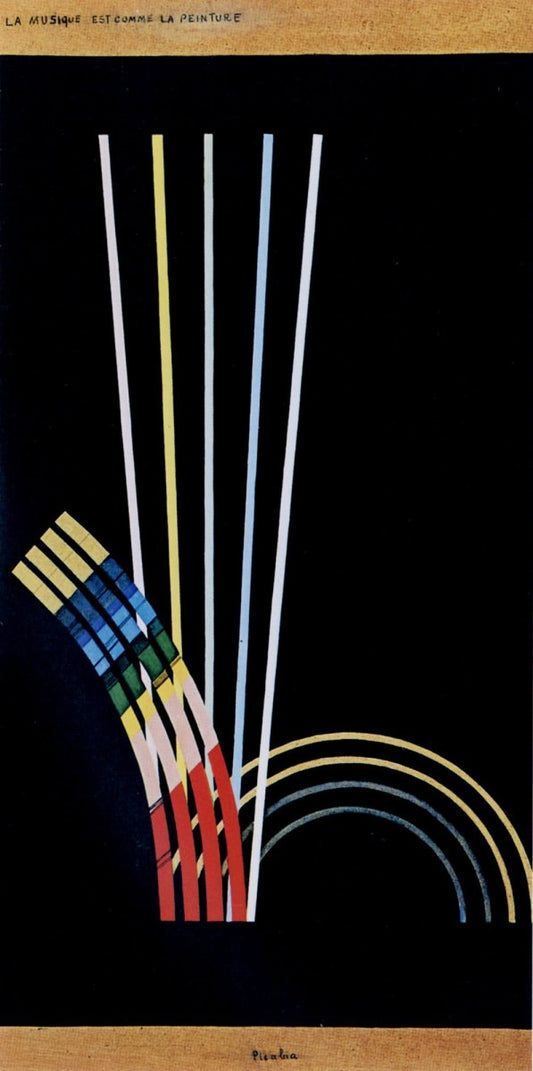
Picabia, Francis (1879-1953) - Music is like Painting 1917
Vendor:Digital Download - 1 imageRegular price £0.80Regular priceUnit price per -


Picabia, Francis (1879-1953) - Udnie 1913
Vendor:Digital Download - 1 imageRegular price £0.80Regular priceUnit price per -


Picabia, Francis (1879-1953) - Physical Culture 1913
Vendor:Digital Download - 1 imageRegular price £0.80Regular priceUnit price per -

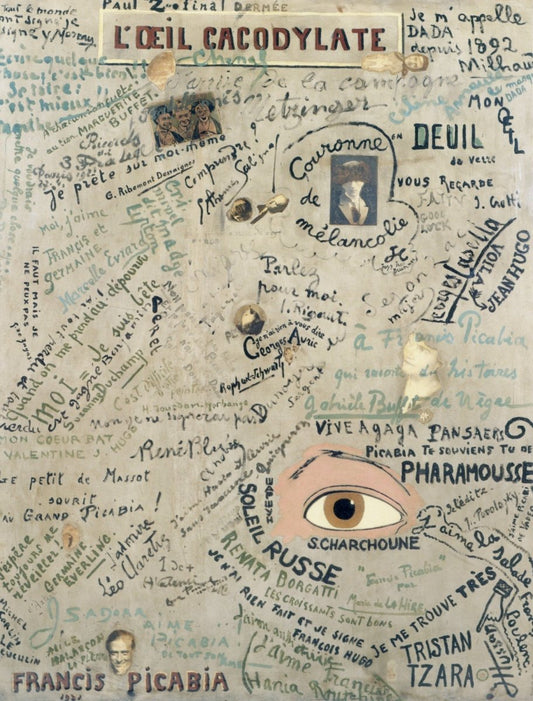
Picabia, Francis (1879-1953) - The Cacodylic Eye 1921
Vendor:Digital Download - 1 imageRegular price £0.80Regular priceUnit price per -


Picabia, Francis (1879-1953) - Adoration of the Calf 1941-2
Vendor:Digital Download - 1 imageRegular price £0.80Regular priceUnit price per -


Picabia, Francis (1879-1953) - The Fig Leaf 1922
Vendor:Digital Download - 1 imageRegular price £0.80Regular priceUnit price per -


Picabia, Francis (1879-1953) - Tahiti 1930
Vendor:Digital Download - 1 imageRegular price £0.80Regular priceUnit price per -


Picabia, Francis (1879-1953) - Dada Movement 1919
Vendor:Digital Download - 1 imageRegular price £0.80Regular priceUnit price per -


Picabia, Francis (1879-1953) - Beware, Painting 1919
Vendor:Digital Download - 1 imageRegular price £0.80Regular priceUnit price per -

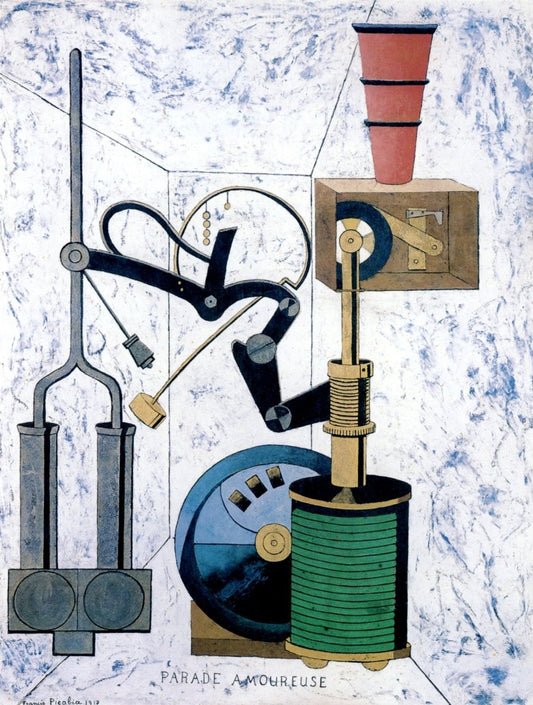
Picabia, Francis (1879-1953) - Amorous Parade 1917
Vendor:Digital Download - 1 imageRegular price £0.80Regular priceUnit price per


Latest Picture Trove Blog Posts
View all-

William Morris’s Strawberry Thief: The Story Behind a Classic Arts and Crafts Pattern
Few William Morris designs are as instantly recognisable as Strawberry Thief. With its richly patterned foliage, small red strawberries and watchful birds hidden among curling leaves, it has become one of the most loved designs of the Arts and Crafts movement.
William Morris’s Strawberry Thief: The Story Behind a Classic Arts and Crafts Pattern
Few William Morris designs are as instantly recognisable as Strawberry Thief. With its richly patterned foliage, small red strawberries and watchful birds hidden among curling leaves, it has become one of the most loved designs of the Arts and Crafts movement.
-

Glasgow and the Mackintosh Style
We recently took ourselves off to Scotland, and on our travels, we popped into the Mackintosh Tea Rooms in Glasgow for a bit of a nose around and a spot of lunch.
Glasgow and the Mackintosh Style
We recently took ourselves off to Scotland, and on our travels, we popped into the Mackintosh Tea Rooms in Glasgow for a bit of a nose around and a spot of lunch.
-

A Trip to Edinburgh & Glasgow, and Scottish Art
We have just returned from a well-deserved few days' break in Scotland, visiting both Edinburgh and Glasgow, taking in Scottish art and tea rooms!
A Trip to Edinburgh & Glasgow, and Scottish Art
We have just returned from a well-deserved few days' break in Scotland, visiting both Edinburgh and Glasgow, taking in Scottish art and tea rooms!


