

Michelangelo Buonarroti (1475-1564), born in Caprese, Italy, remains one of the most celebrated figures of the Italian Renaissance. Renowned for his versatility as a sculptor, painter, architect, and poet, Michelangelo’s genius is perhaps best immortalised through his monumental works in the Vatican, particularly the Sistine Chapel, the Last Judgement, and the Pauline Chapel.
The Sistine Chapel ceiling, painted between 1508 and 1512 under the patronage of Pope Julius II, stands as a crowning achievement of High Renaissance art. Despite Michelangelo’s initial reluctance, as he considered himself primarily a sculptor, the artist transformed the Chapel’s vast vault into a visual masterpiece. The ceiling’s central panels narrate scenes from the Book of Genesis, including the iconic image of the Creation of Adam, where the nearly touching hands of God and man have become emblematic of artistic aspiration and divine inspiration. Michelangelo’s innovative use of foreshortening, his muscular figures, and his masterful control of colour and composition created an unprecedented visual impact, influencing generations of artists.
Three decades later, Michelangelo returned to the Sistine Chapel to paint the Last Judgement on the altar wall, a commission from Pope Paul III. Completed between 1536 and 1541, this vast fresco depicts the Second Coming of Christ and the final judgement of souls. Unlike the ordered harmony of the ceiling, the Last Judgement is characterised by turbulent motion and emotional intensity. Christ, at the centre, is depicted with a powerful, almost stern presence, surrounded by saints and the resurrected dead. The dramatic contrasts of light and shadow, coupled with the expressive anatomy of the figures, reflect the artist’s mature style and his deepening preoccupation with spiritual and existential themes. The fresco was controversial in its time, not least due to the abundant nudity, which later led to censorship and the addition of draperies by subsequent artists.
In the later stages of his career, Michelangelo also contributed to the decoration of the Pauline Chapel, another important papal chapel within the Vatican Palace. Between 1542 and 1550, he painted two large frescoes: The Conversion of Saul and The Crucifixion of St Peter. These works, though less celebrated than the Sistine paintings, reveal Michelangelo’s evolving approach. The figures are rendered with dramatic gestures and intense expressions, set against dark, tumultuous backgrounds. The Pauline Chapel frescoes are marked by a sense of spiritual struggle and introspection, mirroring the artist’s own complex relationship with faith and mortality during his later years.
Michelangelo’s achievements in these Vatican chapels not only transformed the spaces themselves but also set new standards for Western art. His mastery of human anatomy, innovative compositions, and profound engagement with religious themes continue to captivate and inspire. Through the Sistine Chapel, the Last Judgement, and the Pauline Chapel, Michelangelo’s legacy endures as a testament to the enduring power of artistic vision and spiritual inquiry.
Images to download
-

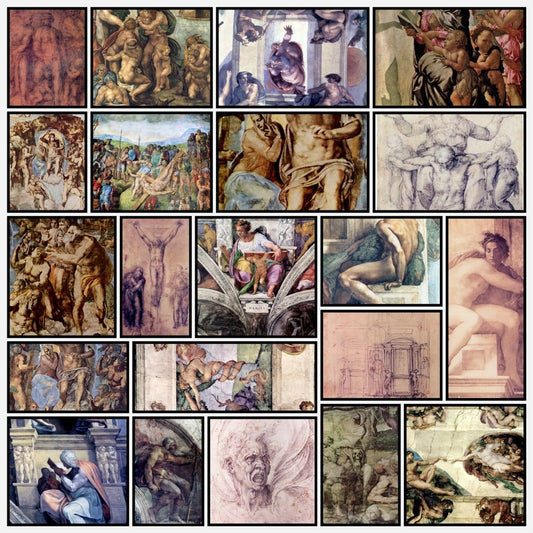
Michelangelo 65 High Resolution Images
Vendor:Digital Download - 65 imagesRegular price £4.00Regular priceUnit price per -

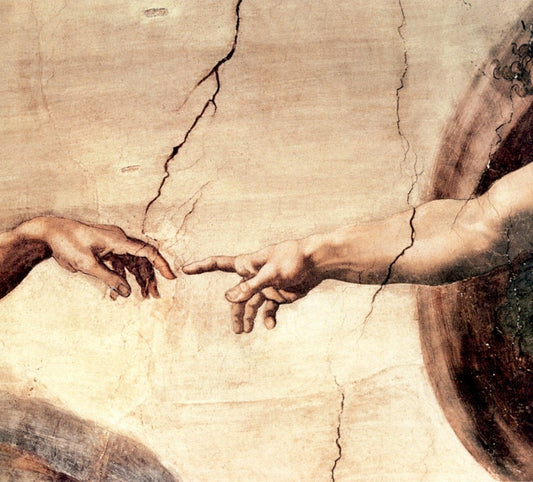
Michelangelo (1475-1564) - Sistine Chapel, Creation of Adam (detail) 1511-12
Vendor:Digital Download - 1 imageRegular price £0.80Regular priceUnit price per -

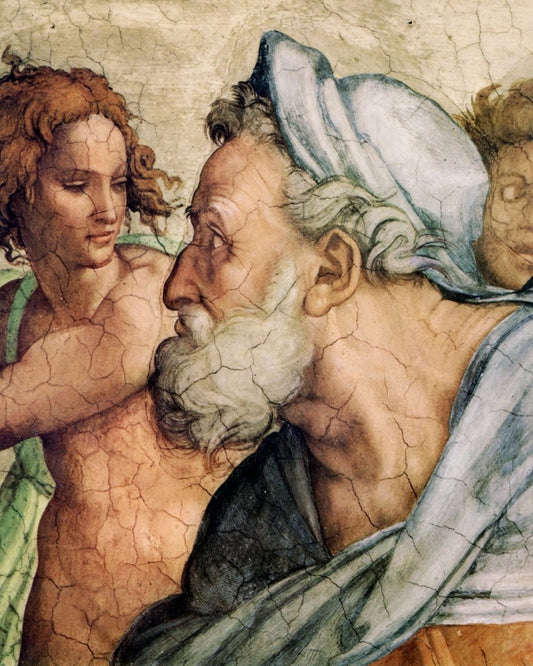
Michelangelo (1475-1564) - Sistine Chapel, Prophet Ezekiel 1508-12
Vendor:Digital Download - 1 imageRegular price £0.80Regular priceUnit price per -

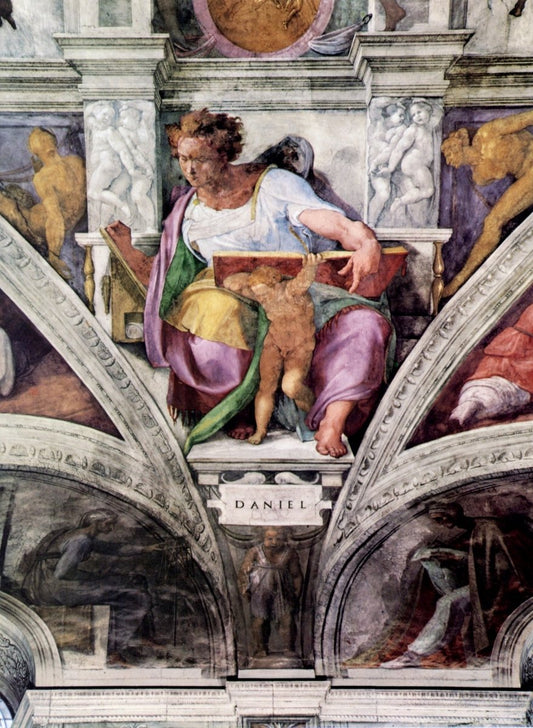
Michelangelo (1475-1564) - Sistine Chapel, Prophet Daniel 1508-12
Vendor:Digital Download - 1 imageRegular price £0.80Regular priceUnit price per


Latest Picture Trove Blog Posts
View all-

William Morris’s Strawberry Thief: The Story Behind a Classic Arts and Crafts Pattern
Few William Morris designs are as instantly recognisable as Strawberry Thief. With its richly patterned foliage, small red strawberries and watchful birds hidden among curling leaves, it has become one of the most loved designs of the Arts and Crafts movement.
William Morris’s Strawberry Thief: The Story Behind a Classic Arts and Crafts Pattern
Few William Morris designs are as instantly recognisable as Strawberry Thief. With its richly patterned foliage, small red strawberries and watchful birds hidden among curling leaves, it has become one of the most loved designs of the Arts and Crafts movement.
-

Glasgow and the Mackintosh Style
We recently took ourselves off to Scotland, and on our travels, we popped into the Mackintosh Tea Rooms in Glasgow for a bit of a nose around and a spot of lunch.
Glasgow and the Mackintosh Style
We recently took ourselves off to Scotland, and on our travels, we popped into the Mackintosh Tea Rooms in Glasgow for a bit of a nose around and a spot of lunch.
-

A Trip to Edinburgh & Glasgow, and Scottish Art
We have just returned from a well-deserved few days' break in Scotland, visiting both Edinburgh and Glasgow, taking in Scottish art and tea rooms!
A Trip to Edinburgh & Glasgow, and Scottish Art
We have just returned from a well-deserved few days' break in Scotland, visiting both Edinburgh and Glasgow, taking in Scottish art and tea rooms!


