

Antonello da Messina (c.1430-1479) stands as one of the most significant and enigmatic figures of the early Italian Renaissance, revered for his innovative approach to portraiture and his pivotal role in bridging Northern European and Italian artistic traditions. Born as Antonio di Giovanni de Antonio in Messina, a thriving port city in Sicily, he became known simply as Antonello da Messina, in recognition of his birthplace.
Little is known of Antonello’s early life and training. Historical records suggest he may have apprenticed in Naples, then under the influence of both Netherlandish and Provençal painters. This cosmopolitan environment likely exposed him to the oil painting techniques developed by artists such as Jan van Eyck and Rogier van der Weyden, which would prove instrumental to his later work. Antonello is often credited with introducing these sophisticated oil painting methods to Italy, thereby revolutionising the practice of painting on the peninsula.
Antonello’s mastery of oil paint allowed him to achieve a level of detail, luminosity, and subtlety previously unseen in Italian art. His portraits are particularly celebrated for their psychological depth and realism. Works such as the famed “Portrait of a Man” c.1475 (possibly a self-portrait) capture sitters with an arresting immediacy, utilising meticulous attention to facial features, expression, and light. The enigmatic half-smile of his subjects, their direct gaze, and the illusionistic rendering of textures all demonstrate his remarkable observational powers and technical skill.
Beyond portraiture, Antonello produced religious works distinguished by their clarity of composition and serene atmosphere. Notable among these is the “Annunciation” (c.1475-1476, Palazzo Abatellis, Palermo), where the Virgin is depicted in a moment of contemplative grace, rendered with crystalline precision and a striking use of light. His “San Cassiano Altarpiece” (c.1475-1476) further exemplifies his ability to infuse sacred subjects with a palpable human presence.
Antonello’s sojourn in Venice in the late 1470s proved especially influential. Venetian artists, including Giovanni Bellini, were profoundly impacted by his techniques and approach to colour and light. In turn, Antonello assimilated Venetian sensibilities, resulting in a harmonious synthesis of Northern and Italian styles. His legacy in Venice is evident in the evolution of Venetian painting, which subsequently placed greater emphasis on oil techniques and naturalistic representation.
Tragically, Antonello da Messina’s life was cut short in 1479, but his influence endured well beyond his years. His works are relatively few, yet each piece is marked by a distinct individuality and technical brilliance. Through his pioneering fusion of Northern oil technique and Italian clarity of form, Antonello da Messina occupies a central place in the history of Western art, remembered as a visionary who transformed the course of Renaissance painting.
Images to download
-

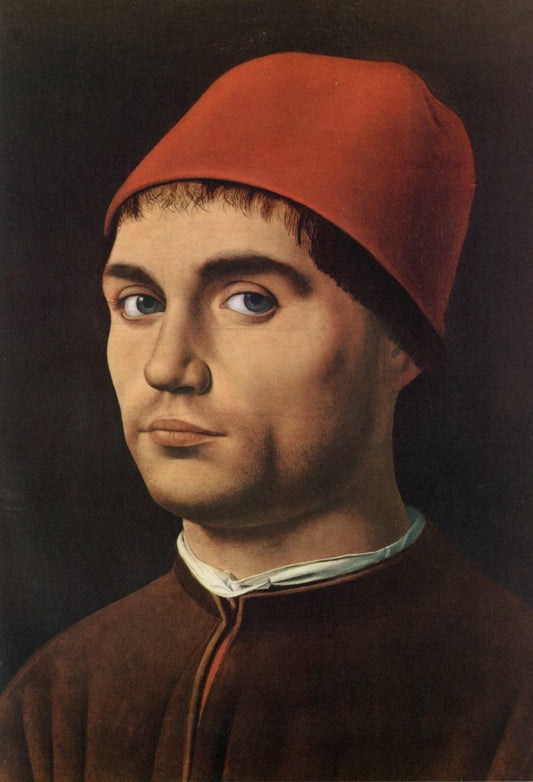
Messina, Antonello da (1430-1479) - Portrait of a Man c.1475
Vendor:Digital Download - 1 imageRegular price £0.80Regular priceUnit price per -

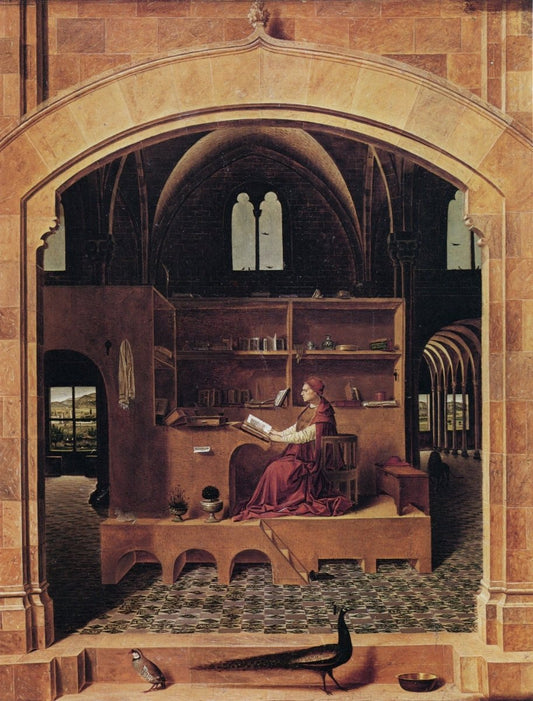
Messina, Antonello da (1430-1479) - St Jerome in his Study 1475
Vendor:Digital Download - 1 imageRegular price £0.80Regular priceUnit price per -

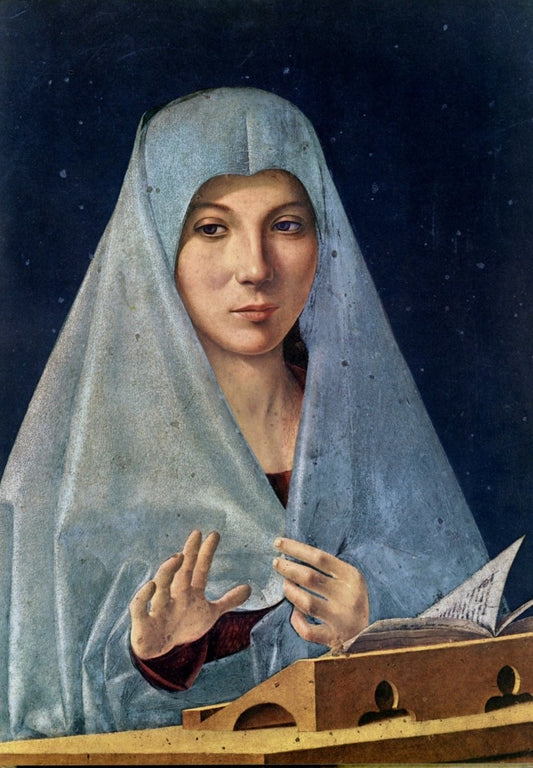
Messina, Antonello da (1430-1479) - Annunciation 1475-6
Vendor:Digital Download - 1 imageRegular price £0.80Regular priceUnit price per


Latest Picture Trove Blog Posts
View all-

William Morris’s Strawberry Thief: The Story Behind a Classic Arts and Crafts Pattern
Few William Morris designs are as instantly recognisable as Strawberry Thief. With its richly patterned foliage, small red strawberries and watchful birds hidden among curling leaves, it has become one of the most loved designs of the Arts and Crafts movement.
William Morris’s Strawberry Thief: The Story Behind a Classic Arts and Crafts Pattern
Few William Morris designs are as instantly recognisable as Strawberry Thief. With its richly patterned foliage, small red strawberries and watchful birds hidden among curling leaves, it has become one of the most loved designs of the Arts and Crafts movement.
-

Glasgow and the Mackintosh Style
We recently took ourselves off to Scotland, and on our travels, we popped into the Mackintosh Tea Rooms in Glasgow for a bit of a nose around and a spot of lunch.
Glasgow and the Mackintosh Style
We recently took ourselves off to Scotland, and on our travels, we popped into the Mackintosh Tea Rooms in Glasgow for a bit of a nose around and a spot of lunch.
-

A Trip to Edinburgh & Glasgow, and Scottish Art
We have just returned from a well-deserved few days' break in Scotland, visiting both Edinburgh and Glasgow, taking in Scottish art and tea rooms!
A Trip to Edinburgh & Glasgow, and Scottish Art
We have just returned from a well-deserved few days' break in Scotland, visiting both Edinburgh and Glasgow, taking in Scottish art and tea rooms!


