

Andrea Mantegna (c.1431-1506) holds a distinguished place among the most influential Italian painters of the Early Renaissance. Born near Padua, in the Republic of Venice, Mantegna’s career spanned a transformative period in European art, and his innovative approaches to perspective, composition, and classical antiquity helped shape the direction of Renaissance painting, both in Italy and beyond.
Mantegna’s artistic journey began at a young age. Orphaned early, he was taken under the wing of Francesco Squarcione, a Paduan painter and teacher renowned for his passion for ancient Roman art and sculpture. Squarcione’s workshop was a melting pot of young talent, and it was here that Mantegna absorbed a deep appreciation for classical forms. This influence would be evident throughout his life’s work. His early paintings already displayed an unusual command of perspective and a sculptural quality in the depiction of figures, setting him apart from his contemporaries.
One of Mantegna’s earliest masterpieces, the frescoes of the Ovetari Chapel in the Church of the Eremitani, Padua, announced his arrival as a major talent. Though many of these were tragically destroyed during World War II, surviving fragments and records demonstrate his innovative use of perspective, particularly in foreshortening, which gave his figures a remarkable sense of three-dimensionality and realism. Mantegna’s study of Roman sculpture is also evident in the solidity and monumentality of his figures, who often appear as if carved from marble.
In 1460, Mantegna was appointed court painter to the Gonzaga family in Mantua, a position he would hold for the rest of his life. This period marked the creation of some of his most celebrated works, including the renowned frescoes of the Camera degli Sposi (the Bridal Chamber) in the Ducal Palace of Mantua. These frescoes are celebrated for their illusionistic architecture and playful use of perspective, most famously in the ‘oculus’ on the ceiling, where cherubs peer down from a painted sky, blurring the boundaries between the real and the imagined.
Mantegna’s style is characterised by a rigorous attention to detail, a love of classical motifs, and a dramatic approach to narrative. His paintings often feature figures with stern, chiselled features, draped in classical robes, set against landscapes or architectural backdrops inspired by ancient Rome. Notable works include ‘The Lamentation over the Dead Christ’, famed for its daring use of foreshortening, and ‘The Triumphs of Caesar’, a monumental series of canvases depicting the glory of ancient Rome, which influenced generations of artists.
Beyond painting, Mantegna was also an accomplished engraver, contributing to the spread of Renaissance ideas throughout Europe. His legacy is reflected in the work of later masters, including Albrecht Dürer and Leonardo da Vinci, who admired his technical skill and intellectual approach to art. Mantegna’s blend of classical learning, innovative perspective, and emotional depth secured his place as one of the pivotal figures of the Italian Renaissance, whose influence endures to this day.
Images to download
-

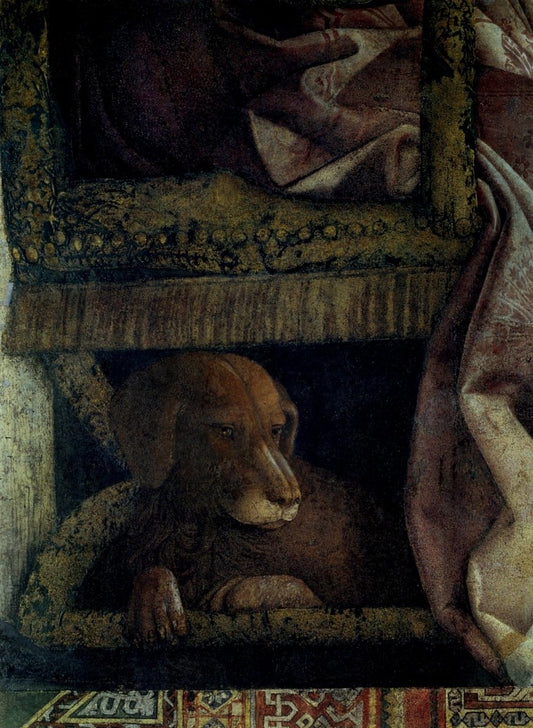
Mantegna, Andrea (1431-1506) - Rubino, the favourite dog of Ludovico II Gonzaga 1465-74
Vendor:Digital Download - 1 imageRegular price £0.80Regular priceUnit price per -

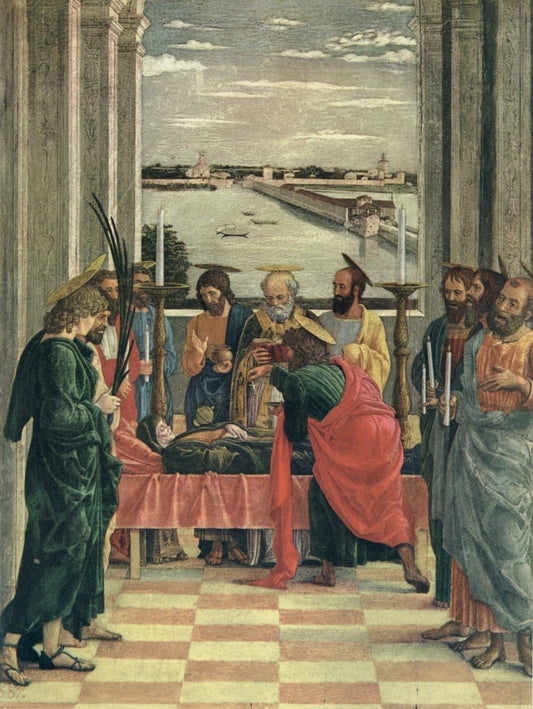
Mantegna, Andrea (1431-1506) - The Death of the Virgin 1462-4
Vendor:Digital Download - 1 imageRegular price £0.80Regular priceUnit price per -

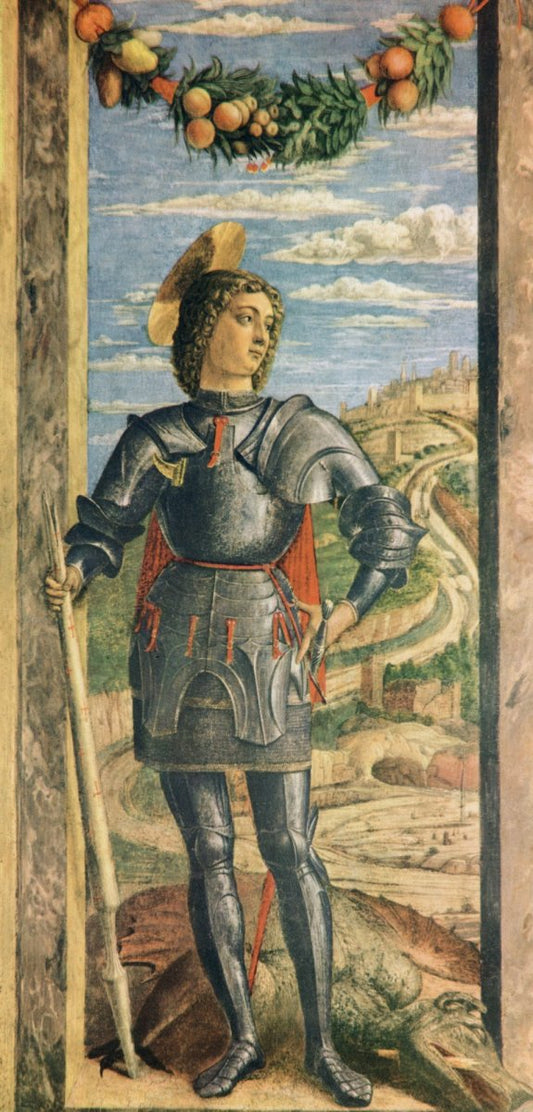
Mantegna, Andrea (1431-1506) - St George c.1460
Vendor:Digital Download - 1 imageRegular price £0.80Regular priceUnit price per -

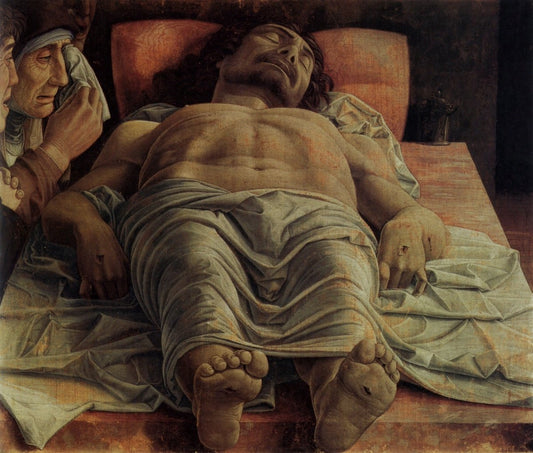
Mantegna, Andrea (1431-1506) - The Entombment c.1480
Vendor:Digital Download - 1 imageRegular price £0.80Regular priceUnit price per -

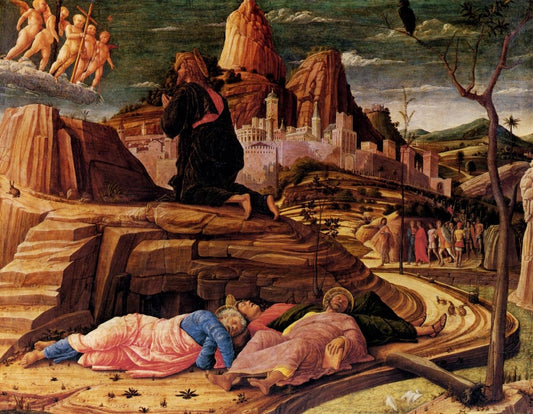
Mantegna, Andrea (1431-1506) - The Agony in the Garden c.1460
Vendor:Digital Download - 1 imageRegular price £0.80Regular priceUnit price per -

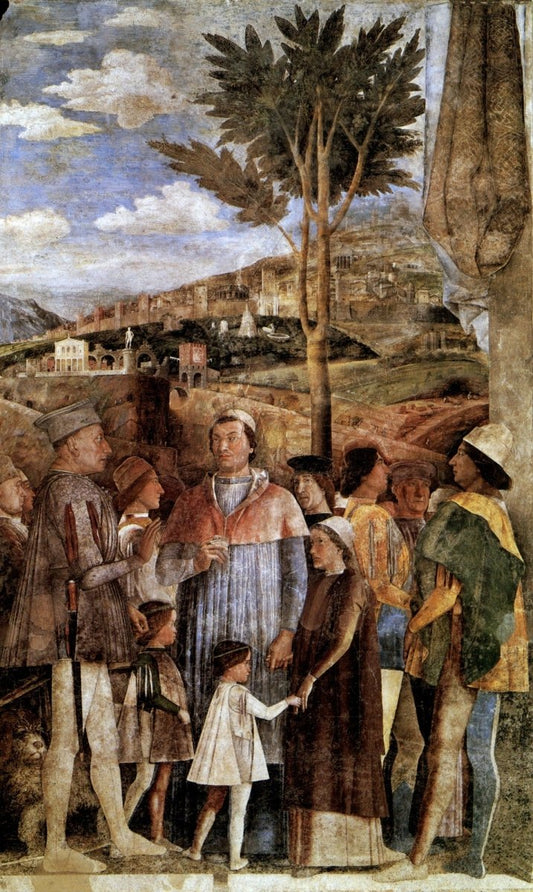
Mantegna, Andrea (1431-1506) - Return from Rome of Cardinal Francesco Gonzaga 1474
Vendor:Digital Download - 1 imageRegular price £0.80Regular priceUnit price per -

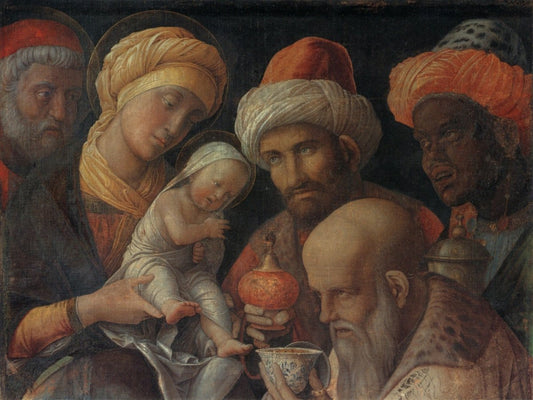
Mantegna, Andrea (1431-1506) - Adoration of the Magi c1495
Vendor:Digital Download - 1 imageRegular price £0.80Regular priceUnit price per


Latest Picture Trove Blog Posts
View all-

William Morris’s Strawberry Thief: The Story Behind a Classic Arts and Crafts Pattern
Few William Morris designs are as instantly recognisable as Strawberry Thief. With its richly patterned foliage, small red strawberries and watchful birds hidden among curling leaves, it has become one of the most loved designs of the Arts and Crafts movement.
William Morris’s Strawberry Thief: The Story Behind a Classic Arts and Crafts Pattern
Few William Morris designs are as instantly recognisable as Strawberry Thief. With its richly patterned foliage, small red strawberries and watchful birds hidden among curling leaves, it has become one of the most loved designs of the Arts and Crafts movement.
-

Glasgow and the Mackintosh Style
We recently took ourselves off to Scotland, and on our travels, we popped into the Mackintosh Tea Rooms in Glasgow for a bit of a nose around and a spot of lunch.
Glasgow and the Mackintosh Style
We recently took ourselves off to Scotland, and on our travels, we popped into the Mackintosh Tea Rooms in Glasgow for a bit of a nose around and a spot of lunch.
-

A Trip to Edinburgh & Glasgow, and Scottish Art
We have just returned from a well-deserved few days' break in Scotland, visiting both Edinburgh and Glasgow, taking in Scottish art and tea rooms!
A Trip to Edinburgh & Glasgow, and Scottish Art
We have just returned from a well-deserved few days' break in Scotland, visiting both Edinburgh and Glasgow, taking in Scottish art and tea rooms!


