

Lorenzo Lotto (c.1480-1556/57) was an Italian painter recognised for his distinctive contributions to the Renaissance, particularly within the Venetian and Northern Italian artistic milieus. Born in Venice, Lotto’s early life is not extensively documented, but it is believed that he trained under Giovanni Bellini, one of the leading figures in Venetian art. Despite his Venetian origins, Lotto spent much of his career working in other regions, such as Bergamo, Treviso, and the Marches, which allowed him to develop a unique style somewhat distinct from that of his Venetian contemporaries.
Lotto’s art is characterised by its psychological depth, expressive use of colour, and innovative compositions. His portraits, in particular, are renowned for their penetrating insight into the sitter’s character, often revealing subtle emotional undertones and an acute sense of individuality. Unlike many of his contemporaries who idealised their subjects, Lotto was unafraid to depict vulnerability, melancholy, or introspection, which lends his works a modern sensibility.
One of Lotto’s most celebrated periods was his time in Bergamo (1513-1525), where he received numerous commissions from the local aristocracy and religious institutions. Among his masterpieces from this era are the altarpieces for the churches of San Bartolomeo and Santo Spirito, as well as a series of remarkable portraits that display his evolving style. These works showcase his skill in rendering intricate details, luxurious fabrics, and convincing interiors, all while maintaining a focus on the psychological presence of his subjects.
Lotto’s religious paintings are equally notable, marked by a contemplative spirituality and vibrant palette. His altarpieces often feature dynamic compositions and innovative iconography, reflecting both his deep faith and his willingness to experiment artistically. The Annunciation (c.1534), housed in the Museo Civico di Villa Colloredo Mels in Recanati, is a prime example of his inventive approach, presenting the Virgin Mary in a moment of startled surprise rather than passive acceptance.
Despite his considerable talent, Lotto struggled to secure powerful patrons in Venice and never achieved the same level of fame as Titian or Giorgione during his lifetime. This marginalisation, however, allowed him a degree of artistic independence. In his later years, he worked primarily in the Marches, where he adopted a more introspective and mystical style. Facing financial difficulties and feeling unappreciated, Lotto eventually joined a religious brotherhood in Loreto, where he spent his final years.
Images to download
-

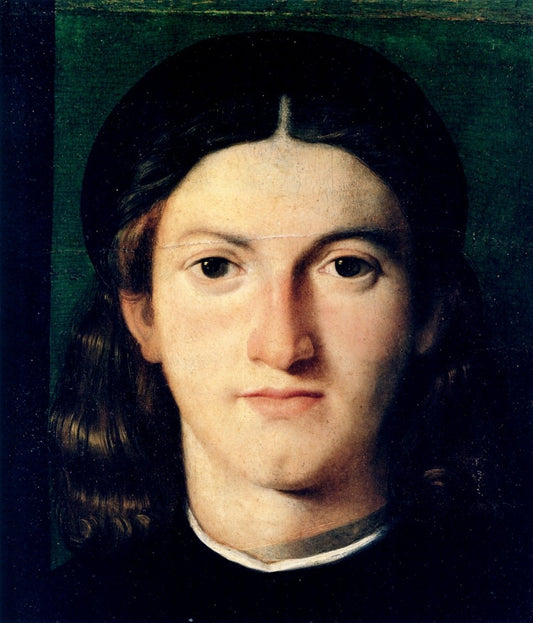
Lotto, Lorenzo (1480-1556) - Portrait of a Young Man c.1505
Vendor:Digital Download - 1 imageRegular price £0.80Regular priceUnit price per -

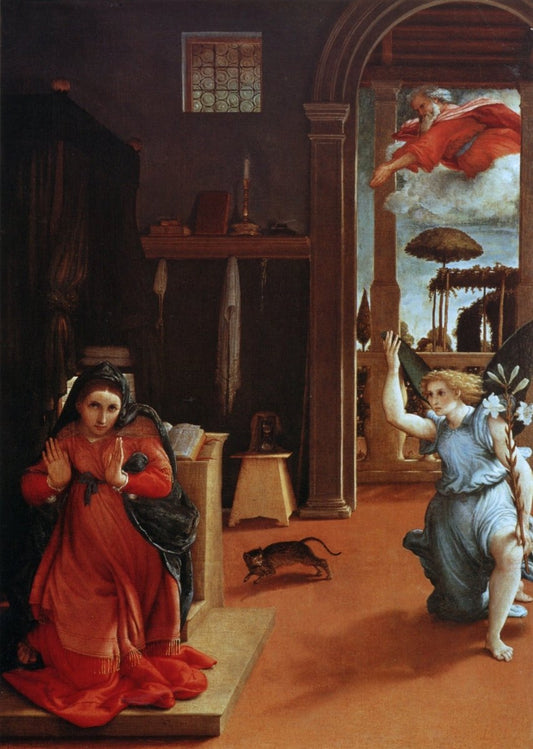
Lotto, Lorenzo (1480-1556) - The Annunciation c.1526
Vendor:Digital Download - 1 imageRegular price £0.80Regular priceUnit price per -

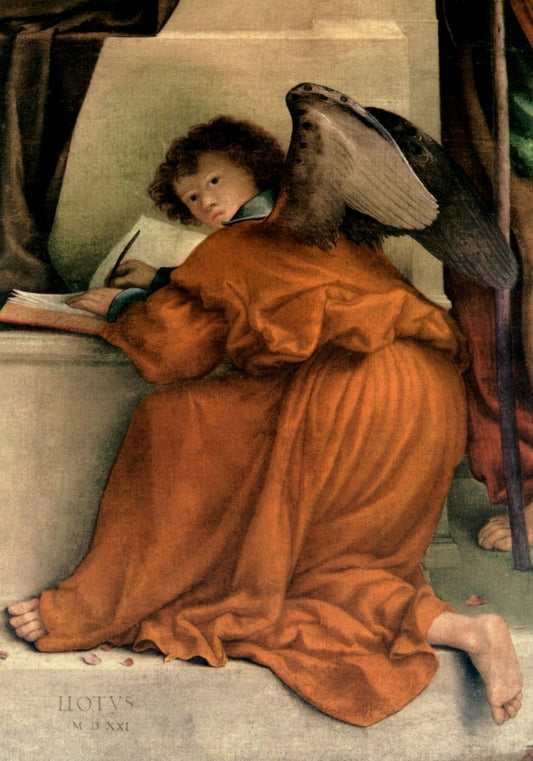
Lotto, Lorenzo (1480-1556) - San Bernardino Altarpiece 1521
Vendor:Digital Download - 1 imageRegular price £0.80Regular priceUnit price per -

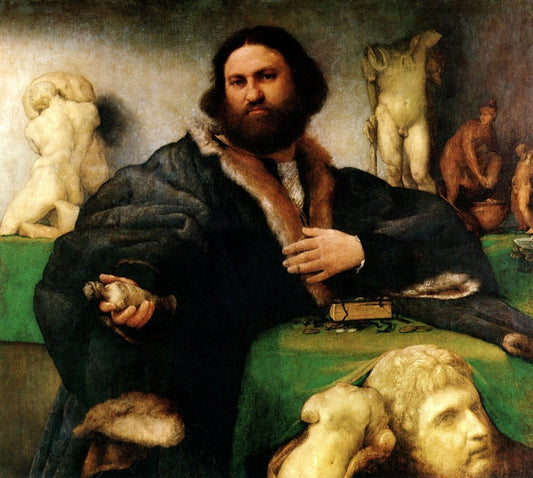
Lotto, Lorenzo (1480-1556) - Portrait of Andrea Odoni 1527
Vendor:Digital Download - 1 imageRegular price £0.80Regular priceUnit price per


Latest Picture Trove Blog Posts
View all-

William Morris’s Strawberry Thief: The Story Behind a Classic Arts and Crafts Pattern
Few William Morris designs are as instantly recognisable as Strawberry Thief. With its richly patterned foliage, small red strawberries and watchful birds hidden among curling leaves, it has become one of the most loved designs of the Arts and Crafts movement.
William Morris’s Strawberry Thief: The Story Behind a Classic Arts and Crafts Pattern
Few William Morris designs are as instantly recognisable as Strawberry Thief. With its richly patterned foliage, small red strawberries and watchful birds hidden among curling leaves, it has become one of the most loved designs of the Arts and Crafts movement.
-

Glasgow and the Mackintosh Style
We recently took ourselves off to Scotland, and on our travels, we popped into the Mackintosh Tea Rooms in Glasgow for a bit of a nose around and a spot of lunch.
Glasgow and the Mackintosh Style
We recently took ourselves off to Scotland, and on our travels, we popped into the Mackintosh Tea Rooms in Glasgow for a bit of a nose around and a spot of lunch.
-

A Trip to Edinburgh & Glasgow, and Scottish Art
We have just returned from a well-deserved few days' break in Scotland, visiting both Edinburgh and Glasgow, taking in Scottish art and tea rooms!
A Trip to Edinburgh & Glasgow, and Scottish Art
We have just returned from a well-deserved few days' break in Scotland, visiting both Edinburgh and Glasgow, taking in Scottish art and tea rooms!


