

Fernand Léger (1881-1955), born in Argentan, Normandy, France, stands as one of the most influential figures in early twentieth-century French art. Renowned for his striking compositions and innovative approach, Léger played a pivotal role in the development of modernism, bridging the gap between Cubism and the burgeoning movements of abstraction and machine-age aesthetics.
Léger’s formative years were marked by his training as an architect’s draughtsman, a discipline that left a lasting imprint on his artistic outlook. This background is evident in his precise, geometric forms and his fascination with structure, which would become hallmarks of his mature style. He moved to Paris in 1900, where he immersed himself in the vibrant art scene, absorbing the influences of Paul Cézanne, the Impressionists, and, later, the Cubists.
Around 1910, Léger became associated with the Cubist movement, exhibiting alongside Georges Braque, Pablo Picasso, and Juan Gris. However, his work diverged from their more analytical approach. While traditional Cubism focused on deconstructing objects into fragmented planes, Léger introduced bold colour, rounded shapes, and a distinctive focus on the mechanical. He described his work as a search for the “plastic value” of forms, aspiring to create a new visual language that could express the dynamism of the modern era.
The First World War had a profound impact on Léger. Serving as a sapper at the front, he was deeply affected by the machinery of war and the camaraderie of the soldiers. This experience intensified his fascination with technology and the industrial world. Upon returning to civilian life, Léger’s art shifted towards what he termed “Tubism”, a style characterised by cylindrical forms, strong contrasts, and the use of primary colours. Works such as “The City” (1919) and “Mechanical Elements” (1920) exemplify his vision of urban life as a symphony of movement, energy, and modernity.
Throughout the 1920s and 1930s, Léger continued to experiment with a variety of media, including film, stage design, and mural painting. He collaborated with architects and designers, reflecting his belief that art should be accessible to all and integrated into everyday life. His murals, in particular, were intended to bring art into public spaces, democratising its appreciation beyond the confines of galleries and museums.
Léger’s influence extended far beyond France. His teaching at the Académie Moderne in Paris attracted students from across Europe and America, spreading his ideas internationally. In the later years of his life, he spent significant time in the United States, where he further developed his large-scale public commissions and inspired a new generation of artists.
Fernand Léger died in 1955, leaving behind a rich legacy. His work, with its bold forms and celebration of the machine age, remains a testament to his optimism about the potential of modernity.
Images to download
-


Fernand Léger 90 High Resolution Images
Vendor:Digital Download - 90 imagesRegular price £6.00Regular priceUnit price per -


Léger, Fernand (1881-1955) - Composition in Red and Blue 1930
Vendor:Digital Download - 1 imageRegular price £0.80Regular priceUnit price per -


Léger, Fernand (1881-1955) - Composition with Hand and Hats 1927
Vendor:Digital Download - 1 imageRegular price £0.80Regular priceUnit price per -


Léger, Fernand (1881-1955) - Discs 1918
Vendor:Digital Download - 1 imageRegular price £0.80Regular priceUnit price per -


Léger, Fernand (1881-1955) - Les Plongeurs Polychromes 1941-42
Vendor:Digital Download - 1 imageRegular price £0.80Regular priceUnit price per -


Léger, Fernand (1881-1955) - Mechanical Elements 1924
Vendor:Digital Download - 1 imageRegular price £0.80Regular priceUnit price per -


Léger, Fernand (1881-1955) - Nudes on red background 1923
Vendor:Digital Download - 1 imageRegular price £0.80Regular priceUnit price per -


Léger, Fernand (1881-1955) - Smoke 1912
Vendor:Digital Download - 1 imageRegular price £0.80Regular priceUnit price per -

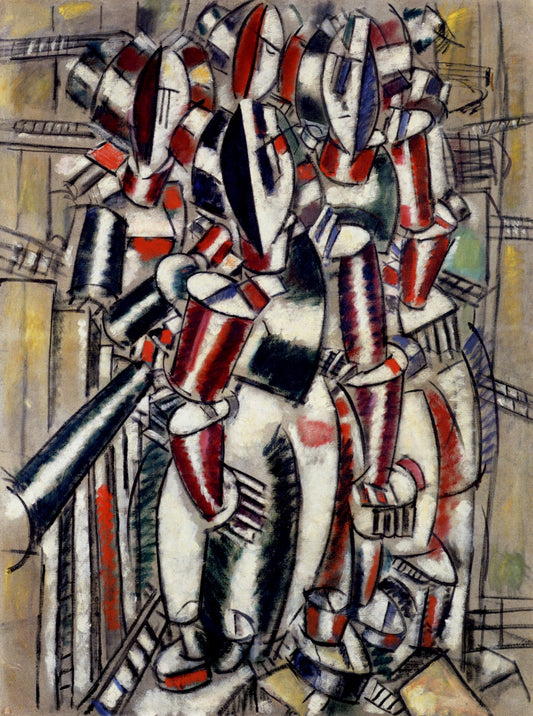
Léger, Fernand (1881-1955) - The Balcony 1914
Vendor:Digital Download - 1 imageRegular price £0.80Regular priceUnit price per -


Léger, Fernand (1881-1955) - Three Musicians 1944
Vendor:Digital Download - 1 imageRegular price £0.80Regular priceUnit price per -


Léger, Fernand (1881-1955) - Two women with flowers 1946-50
Vendor:Digital Download - 1 imageRegular price £0.80Regular priceUnit price per


Latest Picture Trove Blog Posts
View all-

William Morris’s Strawberry Thief: The Story Behind a Classic Arts and Crafts Pattern
Few William Morris designs are as instantly recognisable as Strawberry Thief. With its richly patterned foliage, small red strawberries and watchful birds hidden among curling leaves, it has become one of the most loved designs of the Arts and Crafts movement.
William Morris’s Strawberry Thief: The Story Behind a Classic Arts and Crafts Pattern
Few William Morris designs are as instantly recognisable as Strawberry Thief. With its richly patterned foliage, small red strawberries and watchful birds hidden among curling leaves, it has become one of the most loved designs of the Arts and Crafts movement.
-

Glasgow and the Mackintosh Style
We recently took ourselves off to Scotland, and on our travels, we popped into the Mackintosh Tea Rooms in Glasgow for a bit of a nose around and a spot of lunch.
Glasgow and the Mackintosh Style
We recently took ourselves off to Scotland, and on our travels, we popped into the Mackintosh Tea Rooms in Glasgow for a bit of a nose around and a spot of lunch.
-

A Trip to Edinburgh & Glasgow, and Scottish Art
We have just returned from a well-deserved few days' break in Scotland, visiting both Edinburgh and Glasgow, taking in Scottish art and tea rooms!
A Trip to Edinburgh & Glasgow, and Scottish Art
We have just returned from a well-deserved few days' break in Scotland, visiting both Edinburgh and Glasgow, taking in Scottish art and tea rooms!


