

László Moholy-Nagy (1895-1946) was a Hungarian-born artist, designer, and influential educator, celebrated for his pioneering work in photography, typography, painting, and industrial design. A central figure in the Bauhaus movement, Moholy-Nagy’s innovative approach to art and design profoundly shaped twentieth-century modernism, leaving a legacy that continues to resonate in contemporary visual culture.
Born in Bácsborsód, Hungary, Moholy-Nagy’s early life was marked by the turbulence of World War I, during which he served in the Austro-Hungarian army. Following the war, he turned to art as a form of expression, studying law briefly before pursuing his true calling. Initially self-taught, he was influenced by constructivism and the avant-garde, developing a fascination with technology, light, and new materials that would define his career.
In 1923, Moholy-Nagy was invited by Walter Gropius to join the faculty of the Bauhaus school in Weimar, Germany. His tenure at the Bauhaus was marked by a radical rethinking of artistic practice, advocating for the integration of art, technology, and industry. He led the preliminary course (Vorkurs), where he encouraged students to experiment with materials and processes, fostering a spirit of innovation and collaboration across disciplines.
Moholy-Nagy’s artistic output was characterised by exploration and a relentless curiosity. He made significant contributions to photography, coining the term “New Vision” (Neues Sehen) to describe a modern approach that utilised unusual perspectives, photograms, and the manipulation of light. His photograms, created without a camera by placing objects directly onto photographic paper, remain iconic examples of experimental photography.
In addition to his photographic work, Moholy-Nagy was an accomplished painter and designer, producing striking typographic layouts, stage sets, and industrial designs. His commitment to the social function of art was evident in his belief that design should serve a broader public, bridging aesthetic innovation with everyday life.
The rise of Nazism forced Moholy-Nagy to leave Germany in 1934. After a brief period in London, he emigrated to the United States, where he founded the New Bauhaus in Chicago in 1937. This institution, which later became the Institute of Design, sought to continue the Bauhaus ethos of experimental, interdisciplinary education.
László Moholy-Nagy’s career was cut short by illness, yet his influence endures. His vision of art as a catalyst for social and technological progress, and his embrace of new media, remain central to contemporary creative practice.
Images to download
-

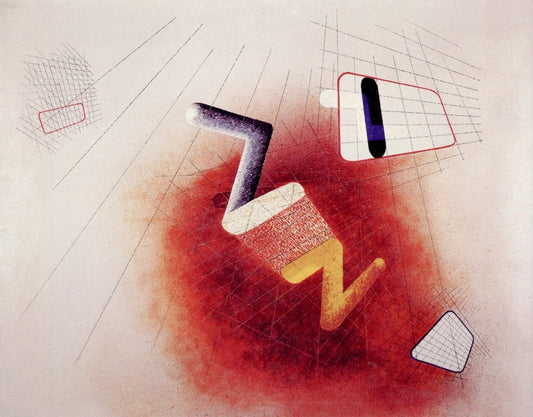
Moholy-Nagy, László (1895-1946) - CHX 1939
Vendor:Digital Download - 1 imageRegular price £0.80Regular priceUnit price per -

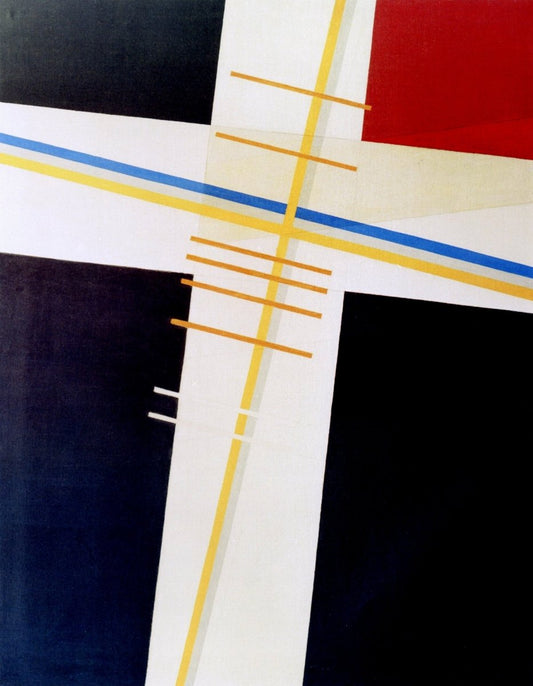
Moholy-Nagy, László (1895-1946) - Am 3 1923
Vendor:Digital Download - 1 imageRegular price £0.80Regular priceUnit price per


Latest Picture Trove Blog Posts
View all-

Glasgow and the Mackintosh Style
We recently took ourselves off to Scotland, and on our travels, we popped into the Mackintosh Tea Rooms in Glasgow for a bit of a nose around and a spot of lunch.
Glasgow and the Mackintosh Style
We recently took ourselves off to Scotland, and on our travels, we popped into the Mackintosh Tea Rooms in Glasgow for a bit of a nose around and a spot of lunch.
-

A Trip to Edinburgh & Glasgow, and Scottish Art
We have just returned from a well-deserved few days' break in Scotland, visiting both Edinburgh and Glasgow, taking in Scottish art and tea rooms!
A Trip to Edinburgh & Glasgow, and Scottish Art
We have just returned from a well-deserved few days' break in Scotland, visiting both Edinburgh and Glasgow, taking in Scottish art and tea rooms!
-

Why Book Illustration Deserves a Spot Beside Fine Art Paintings
Let’s have a proper look at something that’s always irked me: the idea that book illustration is somehow a lesser art form than fine art painting.
Why Book Illustration Deserves a Spot Beside Fine Art Paintings
Let’s have a proper look at something that’s always irked me: the idea that book illustration is somehow a lesser art form than fine art painting.


