

Adélaïde Labille-Guiard (1749-1803) stands as one of the most remarkable female artists of eighteenth-century France, celebrated for her technical prowess, innovative compositions, and her significant role in the advancement of women in the arts. Born in Paris in 1749, Labille-Guiard was introduced to the world of art at a young age, initially studying miniature painting and pastel technique with the respected artist François-Élie Vincent. Her early training provided her with a solid foundation, and she quickly distinguished herself for her meticulous attention to detail and her deft handling of colour and light.
Labille-Guiard’s career was marked by both artistic triumph and social challenge. In an era when women were largely excluded from formal artistic institutions, she overcame significant obstacles to gain recognition. In 1783, she was admitted to the prestigious Académie Royale de Peinture et de Sculpture, one of only four women to be granted membership that year. Her acceptance was a landmark moment, reflecting not only her considerable talent but also her determination to succeed in a male-dominated sphere.
Her work is often noted for its refined elegance and psychological insight, particularly in her portraiture. One of her most famous paintings, “Self-Portrait with Two Pupils” (1785), showcases both her technical mastery and her commitment to supporting other women artists. The composition, featuring herself alongside her students Marie-Gabrielle Capet and Marie-Marguerite Carreaux de Rosemond, boldly celebrated female artistic collaboration and mentorship at a time when such themes were rarely depicted.
Labille-Guiard was also renowned for her pastel portraits and oil paintings, which captured the likenesses and personalities of members of the French aristocracy, including Madame Élisabeth, the sister of King Louis XVI. Her ability to evoke texture and character in her subjects earned her numerous commissions and widespread acclaim.
Despite the upheavals of the French Revolution, Labille-Guiard continued to paint and advocate for greater access for women in the arts. She petitioned for the right of female artists to train from the nude model, a privilege previously reserved for men, understanding that such training was essential for artistic development.
Labille-Guiard died in 1803, leaving behind a legacy of artistic excellence and a path for future generations of women. Her life and work remain a testament to her talent, perseverance, and her pioneering spirit in the face of adversity.
Images to download
-

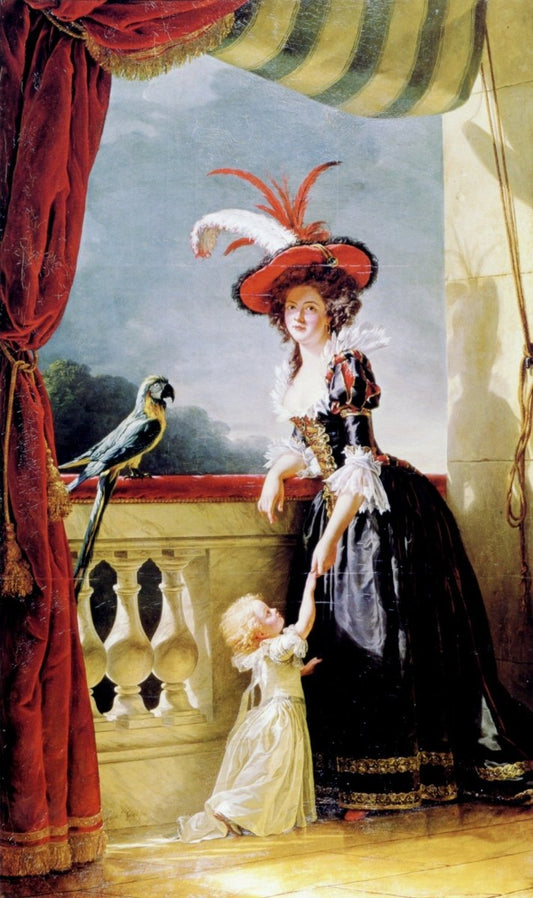
Labille-Guiard, Adélaïde (1749-1803) - Portrait of Louise-Elisabeth de France & Ferdinand 1788
Vendor:Digital Download - 1 imageRegular price £0.80Regular priceUnit price per -

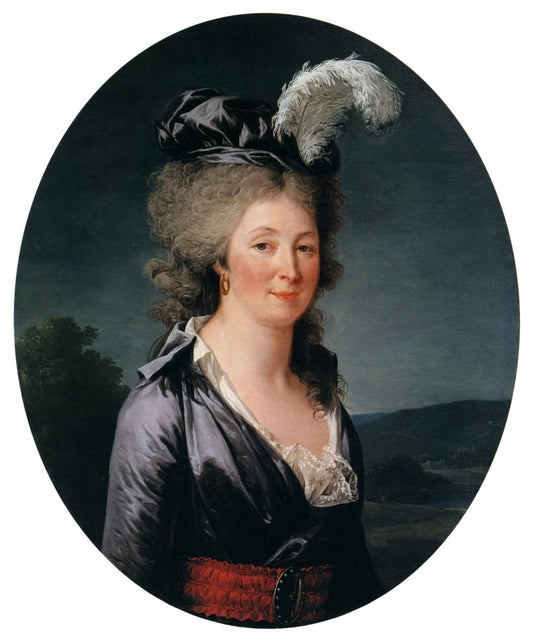
Labille-Guiard, Adélaïde (1749-1803) - Portrait of the Marquise de Lafayette 1790-91
Vendor:Digital Download - 1 imageRegular price £0.80Regular priceUnit price per -

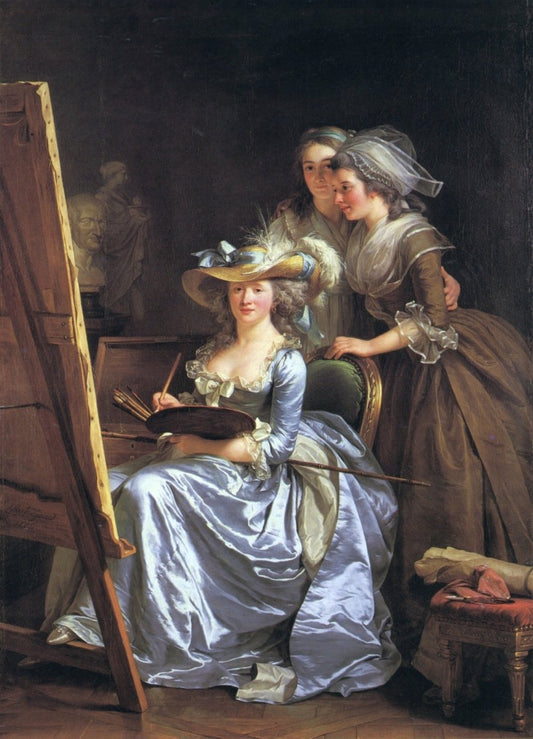
Labille-Guiard, Adélaïde (1749-1803) - Self-Portrait with Two Pupils 1785
Vendor:Digital Download - 1 imageRegular price £0.80Regular priceUnit price per -

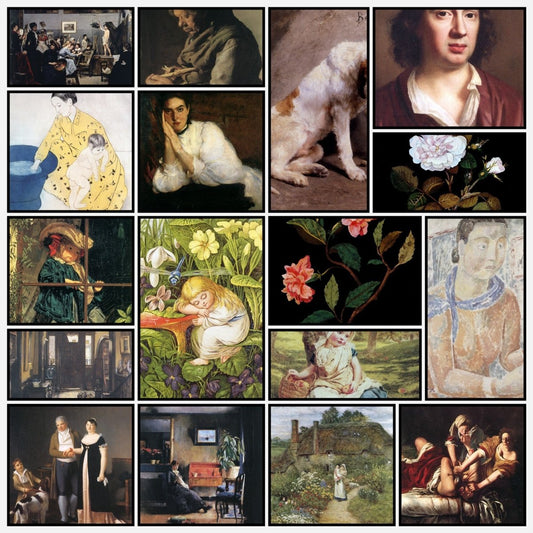
Women Artists - 180 High Resolution Images
Vendor:Digital Download - 180 imagesRegular price £7.00Regular priceUnit price per


Latest Picture Trove Blog Posts
View all-

William Morris’s Strawberry Thief: The Story Behind a Classic Arts and Crafts Pattern
Few William Morris designs are as instantly recognisable as Strawberry Thief. With its richly patterned foliage, small red strawberries and watchful birds hidden among curling leaves, it has become one of the most loved designs of the Arts and Crafts movement.
William Morris’s Strawberry Thief: The Story Behind a Classic Arts and Crafts Pattern
Few William Morris designs are as instantly recognisable as Strawberry Thief. With its richly patterned foliage, small red strawberries and watchful birds hidden among curling leaves, it has become one of the most loved designs of the Arts and Crafts movement.
-

Glasgow and the Mackintosh Style
We recently took ourselves off to Scotland, and on our travels, we popped into the Mackintosh Tea Rooms in Glasgow for a bit of a nose around and a spot of lunch.
Glasgow and the Mackintosh Style
We recently took ourselves off to Scotland, and on our travels, we popped into the Mackintosh Tea Rooms in Glasgow for a bit of a nose around and a spot of lunch.
-

A Trip to Edinburgh & Glasgow, and Scottish Art
We have just returned from a well-deserved few days' break in Scotland, visiting both Edinburgh and Glasgow, taking in Scottish art and tea rooms!
A Trip to Edinburgh & Glasgow, and Scottish Art
We have just returned from a well-deserved few days' break in Scotland, visiting both Edinburgh and Glasgow, taking in Scottish art and tea rooms!


