

Winslow Homer (1836-1910) was an American landscape painter and illustrator, best known for his marine subjects. He is considered one of the foremost painters of 19th-century America and a preeminent figure in American art in general.
Largely self-taught, Homer began his career working as a commercial illustrator. He subsequently took up oil painting and produced major studio works characterised by the weight and density he exploited from the medium. He also worked extensively in watercolour, creating a fluid and prolific oeuvre, primarily chronicling his working vacations.
Homer was born in Boston, Massachusetts, on 24 February 1836, the second of three sons of Charles Savage Homer and Henrietta Maria Benson Homer, both from long lines of New Englanders. His mother was a gifted amateur watercolourist and Homer's first teacher. She and her son had a close relationship throughout their lives. Homer took on many of her traits, including her quiet, strong-willed, terse, sociable nature, her dry sense of humour, and her artistic talent. Homer had a happy childhood, growing up mostly in then-rural Cambridge, Massachusetts. He was an average student, but his art talent was evident in his early years.
Homer's father was a volatile, restless businessman who was always looking to "make a killing." When Homer was 13 years old, Charles gave up the hardware store business to seek a fortune in the California gold rush. When that failed, Charles left his family and went to Europe to raise capital for other get-rich-quick schemes that did not pay off.
After Homer's high school graduation, his father saw a newspaper advertisement and arranged for an apprenticeship. Homer's apprenticeship at the age of 19 to J.H. Bufford, a Boston commercial lithographer, was a formative but "treadmill experience". He worked repetitively on sheet music covers and other commercial work for two years. By 1857, his freelance career was underway after he turned down an offer to join the staff of Harper's Weekly. "From the time I took my nose off that lithographic stone," Homer later stated, "I have had no master, and never shall have any." Homer opened his own studio in Boston.
Homer's career as an illustrator lasted nearly twenty years. He contributed illustrations of Boston life and rural New England life to magazines such as Ballou's Pictorial and Harper's Weekly at a time when the market for illustrations was growing rapidly and fads and fashions were changing quickly. His early works, mostly commercial wood engravings of urban and country social scenes, are characterised by clean outlines, simplified forms, dramatic contrast of light and dark, and lively figure groupings—qualities that remained important throughout his career. His quick success was mostly due to this strong understanding of graphic design and also to the adaptability of his designs to wood engraving.
Before moving to New York City in 1859, Homer lived in Belmont, Massachusetts, with his family. His uncle's Belmont mansion, the 1853 Homer House, was the inspiration for a number of his early illustrations and paintings, including several of his 1860s croquet pictures.
In 1859, he opened a studio in the Tenth Street Studio Building in New York City, the artistic and publishing capital of the United States. Until 1863, he attended classes at the National Academy of Design, and studied briefly with Frederick Rondel, who taught him the basics of painting. In only about a year of self-training, Homer was producing excellent oil work. His mother tried to raise family funds to send him to Europe for further study but instead Harper's sent Homer to the front lines of the American Civil War (1861-1865), where he sketched battle scenes and camp life, the quiet moments as well as the chaotic ones. His initial sketches were of the camp, commanders, and army of the famous Union officer, Major General George B. McClellan, at the banks of the Potomac River in October 1861.
Although the drawings did not get much attention at the time, they mark Homer's expanding skills from illustrator to painter. As with his urban scenes, Homer illustrated women during wartime, and showed the effects of the war on the home front. The war work was dangerous and exhausting. Back at his studio, Homer would regain his strength and re-focus his artistic vision. He set to work on a series of war-related paintings based on his sketches, among them Sharpshooter on Picket Duty (1862), Home, Sweet Home (1863), and Prisoners from the Front (1866). He exhibited paintings of these subjects every year at the National Academy of Design from 1863 to 1866. Home, Sweet Home was shown at the National Academy to particular critical acclaim; it was quickly sold and the artist was consequently elected an Associate Academician, then a full Academician in 1865. During this time, he also continued to sell his illustrations to periodicals such as Our Young Folks and Frank Leslie's Chimney Corner.
After the American Civil War, Homer turned his attention primarily to scenes of childhood and young women, reflecting nostalgia for simpler times, both his own and the nation as a whole.
Homer was also interested in postwar subject matter that conveyed the silent tension between two communities seeking to understand their future. His oil painting A Visit from the Old Mistress (1876) shows an encounter between a group of four freed slaves and their former mistress. The formal equivalence between the standing figures suggests the balance that the nation hoped to find in the difficult years of Reconstruction. Homer composed this painting from sketches he had made while traveling through Virginia.
Before exhibiting at the National Academy of Design, Homer finally travelled to Paris, France, in 1867 where he remained for a year. His most praised early painting, Prisoners from the Front, was on exhibit at the Exposition Universelle in Paris at the same time. He did not study formally but he practiced landscape painting while continuing to work for Harper's, depicting scenes of Parisian life.
Throughout the 1870s, Homer continued painting mostly rural or idyllic scenes of farm life, children playing, and young adults courting, including Country School (1871) and The Morning Bell (1872). In 1875, Homer quit working as a commercial illustrator and vowed to survive on his paintings and watercolours alone. Despite his excellent critical reputation, his finances continued to remain precarious. His popular 1872 painting Snap the Whip was exhibited at the 1876 Centennial Exposition in Philadelphia, Pennsylvania, as was one of his finest and most famous paintings, Breezing Up (1876).
Homer became a member of The Tile Club, a group of artists and writers who met frequently to exchange ideas and organise outings for painting, as well as foster the creation of decorative tiles. For a short time, he designed tiles for fireplaces.
Homer started painting with watercolours on a regular basis in 1873 during a summer stay in Gloucester, Massachusetts. From the beginning, his technique was natural, fluid and confident, demonstrating his innate talent for a difficult medium. His impact would be revolutionary. Here, again, the critics were puzzled at first, "A child with an ink bottle could not have done worse." Another critic said that Homer "made a sudden and desperate plunge into water colour painting". But his watercolours proved popular and enduring, and sold more readily, improving his financial condition considerably. They varied from highly detailed (Blackboard 1877) to broadly impressionistic (Schooner at Sunset 1880). Some watercolours were made as preparatory sketches for oil paintings (as for "Breezing Up") and some as finished works in themselves. Thereafter, he seldom travelled without paper, brushes and water-based paints.
As a result of disappointments with women or from some other emotional turmoil, Homer became reclusive in the late 1870s, no longer enjoying urban social life and living instead in Gloucester. For a while, he even lived in the secluded Eastern Point Lighthouse (with the keeper's family). In re-establishing his love of the sea, Homer found a rich source of themes while closely observing the fishermen, the sea, and the marine weather. After 1880, he rarely featured genteel women at leisure, focusing instead on working women.
Images to download
-

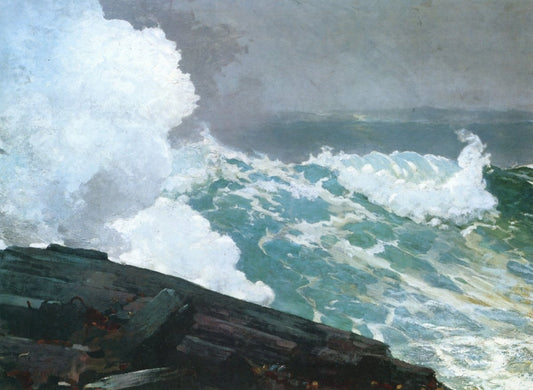
Homer, Winslow (1836-1910) - Northeaster 1895
Vendor:Digital Download - 1 imageRegular price £0.80Regular priceUnit price per -

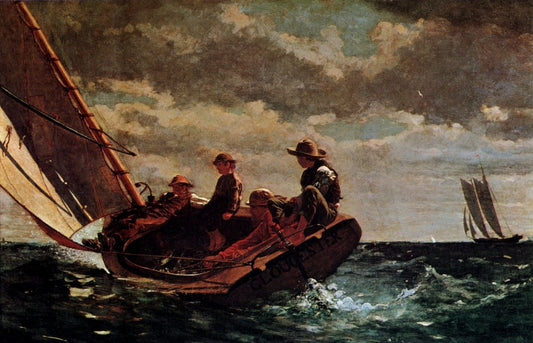
Homer, Winslow (1836-1910) - Breezing up 1876
Vendor:Digital Download - 1 imageRegular price £0.80Regular priceUnit price per -

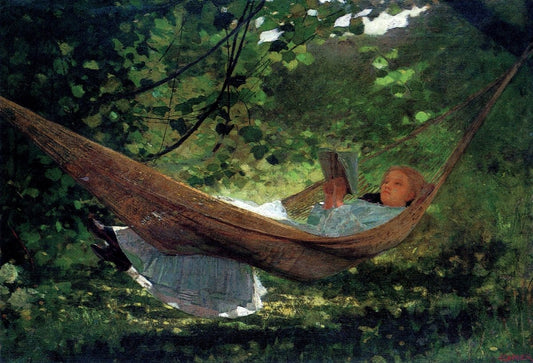
Homer, Winslow (1836-1910) - Sunlight & Shadow 1872
Vendor:Digital Download - 1 imageRegular price £0.80Regular priceUnit price per -

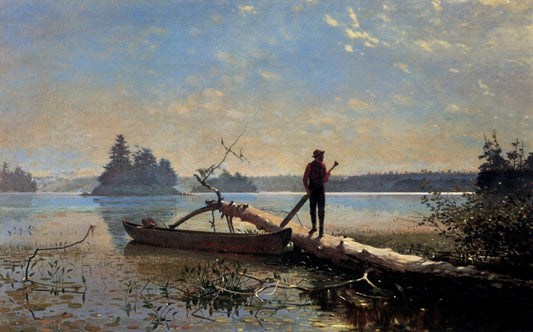
Homer, Winslow (1836-1910) - An Adirondack Lake 1870
Vendor:Digital Download - 1 imageRegular price £0.80Regular priceUnit price per -

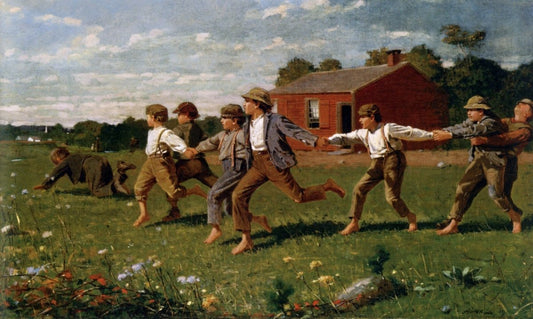
Homer, Winslow (1836-1910) - Snap the Whip 1872
Vendor:Digital Download - 1 imageRegular price £0.80Regular priceUnit price per -

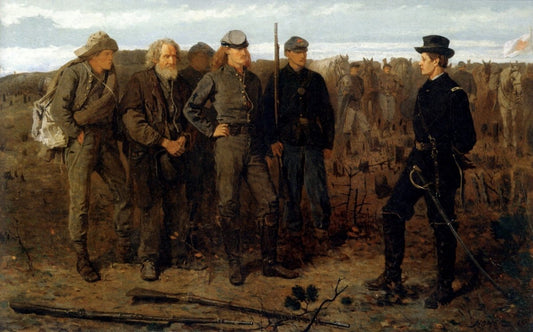
Homer, Winslow (1836-1910) - Prisoners from the Front 1866
Vendor:Digital Download - 1 imageRegular price £0.80Regular priceUnit price per -

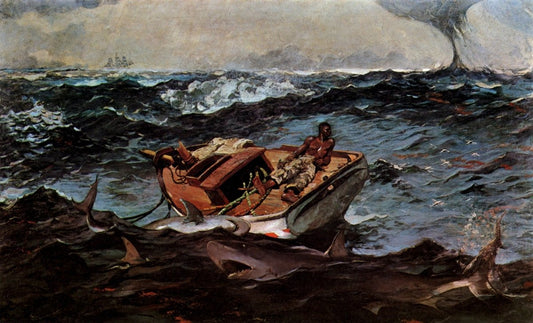
Homer, Winslow (1836-1910) - The Gulf Stream 1899
Vendor:Digital Download - 1 imageRegular price £0.80Regular priceUnit price per -

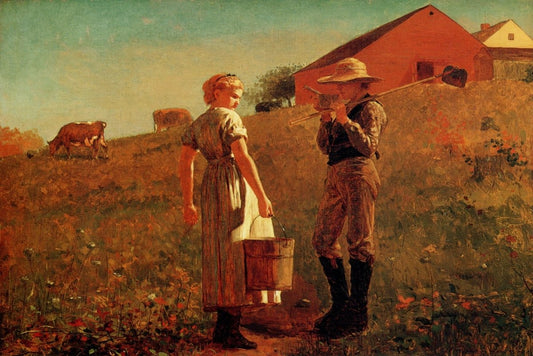
Homer, Winslow (1836-1910) - Gloucester Farm 1874
Vendor:Digital Download - 1 imageRegular price £0.80Regular priceUnit price per


Latest Picture Trove Blog Posts
View all-

William Morris’s Strawberry Thief: The Story Behind a Classic Arts and Crafts Pattern
Few William Morris designs are as instantly recognisable as Strawberry Thief. With its richly patterned foliage, small red strawberries and watchful birds hidden among curling leaves, it has become one of the most loved designs of the Arts and Crafts movement.
William Morris’s Strawberry Thief: The Story Behind a Classic Arts and Crafts Pattern
Few William Morris designs are as instantly recognisable as Strawberry Thief. With its richly patterned foliage, small red strawberries and watchful birds hidden among curling leaves, it has become one of the most loved designs of the Arts and Crafts movement.
-

Glasgow and the Mackintosh Style
We recently took ourselves off to Scotland, and on our travels, we popped into the Mackintosh Tea Rooms in Glasgow for a bit of a nose around and a spot of lunch.
Glasgow and the Mackintosh Style
We recently took ourselves off to Scotland, and on our travels, we popped into the Mackintosh Tea Rooms in Glasgow for a bit of a nose around and a spot of lunch.
-

A Trip to Edinburgh & Glasgow, and Scottish Art
We have just returned from a well-deserved few days' break in Scotland, visiting both Edinburgh and Glasgow, taking in Scottish art and tea rooms!
A Trip to Edinburgh & Glasgow, and Scottish Art
We have just returned from a well-deserved few days' break in Scotland, visiting both Edinburgh and Glasgow, taking in Scottish art and tea rooms!


