

Jacob Grimmer (1526-1590), a prominent Flemish landscape painter of the sixteenth century, is often recognised for his significant role in the evolution of Northern European landscape art. Born in Antwerp around 1526, Grimmer was active during a period of profound artistic change, bridging the late Gothic traditions and the burgeoning Renaissance influences that swept through the Low Countries. Despite the relative scarcity of detailed biographical records, Grimmer’s extant works and his enduring influence on the genre are well documented.
Grimmer’s artistic career was primarily rooted in Antwerp, a city that, during his lifetime, was a vibrant hub of trade, culture, and creativity. He became a master of the Guild of Saint Luke in 1547, which marked his acceptance into the community of professional artists. Grimmer’s style was notably influenced by the earlier generation of Flemish landscape painters, most notably Joachim Patinir and Pieter Bruegel the Elder. However, he developed a distinctive approach that set him apart from his contemporaries.
Jacob Grimmer’s landscapes are characterised by their meticulous attention to detail, naturalistic representation, and subtle atmospheric effects. While the fantastical elements of Patinir’s work lingered in the earlier part of the century, Grimmer favoured more realistic depictions of the Flemish countryside. His paintings often depict expansive vistas, rolling hills, winding rivers, and rural villages, rendered with a keen eye for seasonal changes and the nuances of light. Grimmer’s preference for painting series reflecting the four seasons, such as “The Four Seasons” panels, demonstrates his fascination with the cyclical patterns of nature and rural life.
A significant aspect of Grimmer’s art lies in his ability to balance human activity and natural scenery. His compositions frequently include peasants engaged in agricultural work, children playing, or villagers travelling along country paths. These figures, though small in scale, imbue his landscapes with a sense of everyday life and narrative. In this way, Grimmer’s works can be seen as social documents as much as aesthetic achievements, offering a glimpse into sixteenth-century rural existence in the Low Countries.
The artist’s palette was typically dominated by earthy greens, browns, and blues, contributing to the tranquil and harmonious effect of his scenes. His use of light and shadow further enhanced the sense of depth and realism, inviting viewers to immerse themselves in the depicted environment. Grimmer’s technique was highly influential, and he operated a successful workshop, training artists such as his son Abel Grimmer, who continued the family tradition of landscape painting.
Jacob Grimmer’s legacy is evident not only in his own paintings but also in the work of subsequent generations of Flemish and Dutch landscape artists. His emphasis on observation, naturalism, and the integration of human and natural elements anticipated many developments in seventeenth-century landscape painting. Though perhaps overshadowed by more famous contemporaries, Grimmer’s contribution to the maturation of landscape as an independent and respected genre cannot be overstated. Today, his paintings are held in major collections across Europe, serving as enduring testaments to his skill and vision.
Images to download
-

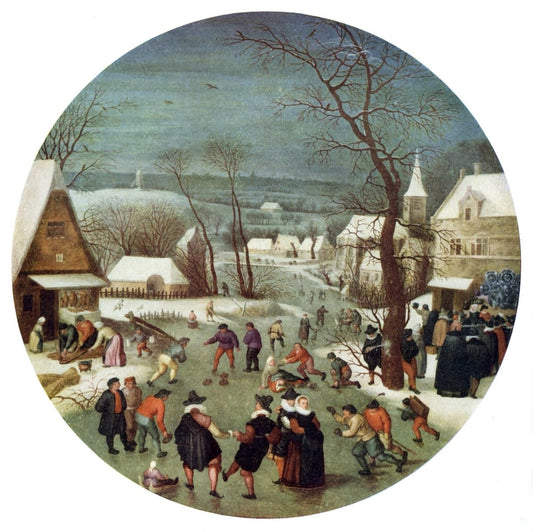
Grimmer, Jacob (1526-1590) - Sports on the Ice
Vendor:Digital Download - 1 imageRegular price £0.80Regular priceUnit price per -


Renaissance Winter Scenes - 50 High Resolution Images
Vendor:Digital Download - 50 imagesRegular price £3.00Regular priceUnit price per


Latest Picture Trove Blog Posts
View all-

William Morris’s Strawberry Thief: The Story Behind a Classic Arts and Crafts Pattern
Few William Morris designs are as instantly recognisable as Strawberry Thief. With its richly patterned foliage, small red strawberries and watchful birds hidden among curling leaves, it has become one of the most loved designs of the Arts and Crafts movement.
William Morris’s Strawberry Thief: The Story Behind a Classic Arts and Crafts Pattern
Few William Morris designs are as instantly recognisable as Strawberry Thief. With its richly patterned foliage, small red strawberries and watchful birds hidden among curling leaves, it has become one of the most loved designs of the Arts and Crafts movement.
-

Glasgow and the Mackintosh Style
We recently took ourselves off to Scotland, and on our travels, we popped into the Mackintosh Tea Rooms in Glasgow for a bit of a nose around and a spot of lunch.
Glasgow and the Mackintosh Style
We recently took ourselves off to Scotland, and on our travels, we popped into the Mackintosh Tea Rooms in Glasgow for a bit of a nose around and a spot of lunch.
-

A Trip to Edinburgh & Glasgow, and Scottish Art
We have just returned from a well-deserved few days' break in Scotland, visiting both Edinburgh and Glasgow, taking in Scottish art and tea rooms!
A Trip to Edinburgh & Glasgow, and Scottish Art
We have just returned from a well-deserved few days' break in Scotland, visiting both Edinburgh and Glasgow, taking in Scottish art and tea rooms!


