

Spencer Gore (1878-1914) was a pivotal figure in the development of early twentieth-century British art, best known for his association with the Camden Town Group and his bold, innovative approach to painting. Born in Epsom, Surrey, in 1878, Gore was educated at Harrow and later studied at the Slade School of Fine Art, where he became contemporaries with the likes of Harold Gilman and Walter Sickert. His involvement with these artists would prove instrumental in shaping his artistic trajectory and cementing his place in British art history.
Gore’s work is often celebrated for its vibrant colour palette, expressive brushwork, and keen observation of everyday life. Much of his subject matter centred on scenes from the urban environment, particularly the streets and interiors of Camden Town in north London. These paintings, imbued with a sense of immediacy and intimacy, reflect Gore’s fascination with the ordinary and his desire to elevate the commonplace through art. His distinctive use of colour, influenced by the Post-Impressionists, marked a departure from the more subdued tones traditionally favoured in British painting of the period.
As a founding member and the first president of the Camden Town Group, Gore played a crucial role in fostering a sense of community and collaboration among artists who sought to challenge the dominant aesthetic conventions of Edwardian Britain. The group’s exhibitions, held between 1911 and 1913, were instrumental in introducing the British public to new artistic ideas and approaches, many of which had been inspired by developments in France. Gore’s leadership and vision were widely respected, and his own works were often highlights of these exhibitions.
Despite his relatively short life - he died of pneumonia in 1914 at the age of just 35 - Gore produced an impressive and influential body of work. His later paintings, particularly those created at Letchworth in Hertfordshire, demonstrate a growing interest in landscape and a continued commitment to experimentation with form and colour. These works are characterised by a strong sense of structure and a vibrant, almost Fauvist, approach to composition.
Today, Spencer Gore is recognised as a key figure in British modernism. His paintings are held in major public collections, including Tate Britain and the Ashmolean Museum, and his legacy endures in the continued appreciation of his innovative, forward-thinking approach to art.
Images to download
-

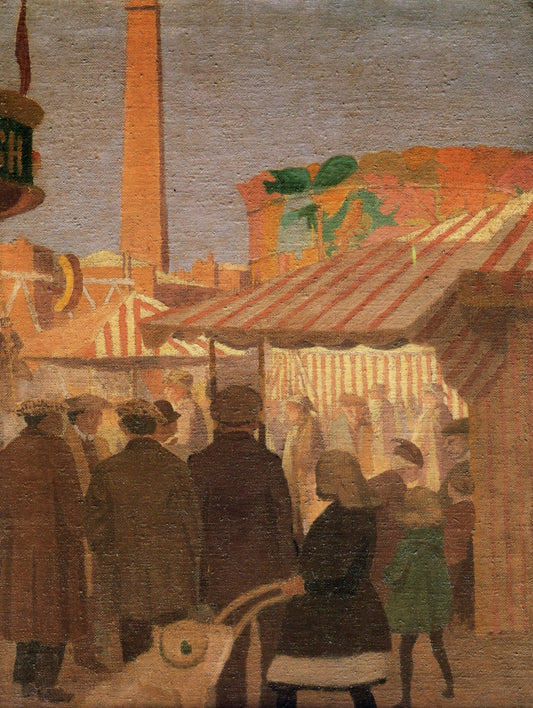
Gore, Spencer Frederick (1878-1914) - Cambrian Road, Richmond 1913-14
Vendor:Digital Download - 1 imageRegular price £0.80Regular priceUnit price per -


Gore, Spencer Frederick (1878-1914) - Crofts Lane, Letchworth 1912
Vendor:Digital Download - 1 imageRegular price £0.80Regular priceUnit price per -


Gore, Spencer Frederick (1878-1914) - Harold Gilman's House, Letchworth 1912
Vendor:Digital Download - 1 imageRegular price £0.80Regular priceUnit price per -

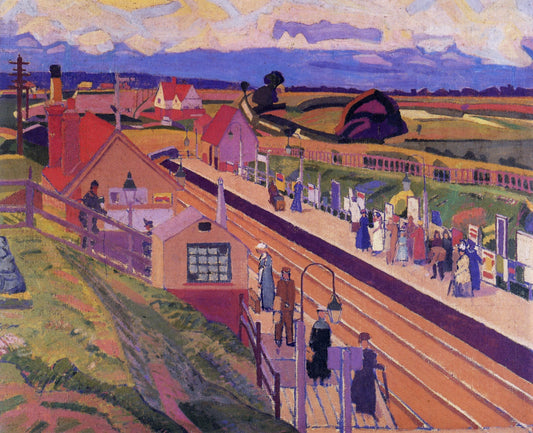
Gore, Spencer Frederick (1878-1914) - Letchworth Station 1912
Vendor:Digital Download - 1 imageRegular price £0.80Regular priceUnit price per -

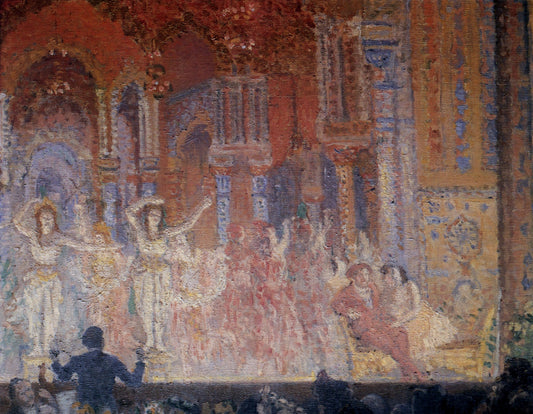
Gore, Spencer Frederick (1878-1914) - Stage Sunrise, the Alhambra c.1908-9
Vendor:Digital Download - 1 imageRegular price £0.80Regular priceUnit price per -


Gore, Spencer Frederick (1878-1914) - Sunset, Letchworth, with a Man and Dog 1912
Vendor:Digital Download - 1 imageRegular price £0.80Regular priceUnit price per -


Gore, Spencer Frederick (1878-1914) - The Alhambra 1908
Vendor:Digital Download - 1 imageRegular price £0.80Regular priceUnit price per -


Gore, Spencer Frederick (1878-1914) - The Cinder Path 1912
Vendor:Digital Download - 1 imageRegular price £0.80Regular priceUnit price per -

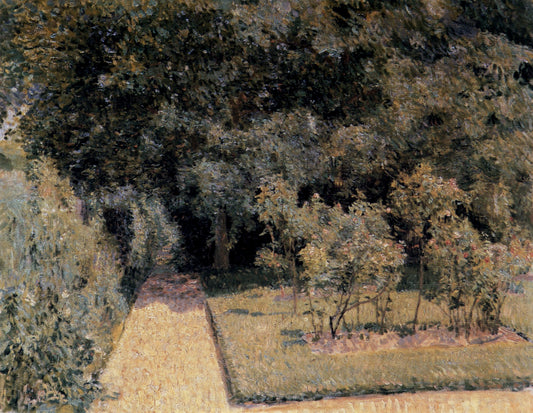
Gore, Spencer Frederick (1878-1914) - The Garden Path c.1910
Vendor:Digital Download - 1 imageRegular price £0.80Regular priceUnit price per -

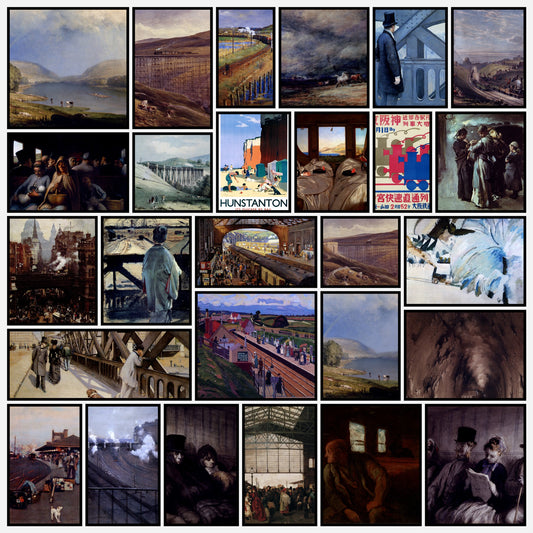
Trains in Art - 105 High Resolution Images
Vendor:Digital Download - 105 imagesRegular price £6.00Regular priceUnit price per


Latest Picture Trove Blog Posts
View all-

William Morris’s Strawberry Thief: The Story Behind a Classic Arts and Crafts Pattern
Few William Morris designs are as instantly recognisable as Strawberry Thief. With its richly patterned foliage, small red strawberries and watchful birds hidden among curling leaves, it has become one of the most loved designs of the Arts and Crafts movement.
William Morris’s Strawberry Thief: The Story Behind a Classic Arts and Crafts Pattern
Few William Morris designs are as instantly recognisable as Strawberry Thief. With its richly patterned foliage, small red strawberries and watchful birds hidden among curling leaves, it has become one of the most loved designs of the Arts and Crafts movement.
-

Glasgow and the Mackintosh Style
We recently took ourselves off to Scotland, and on our travels, we popped into the Mackintosh Tea Rooms in Glasgow for a bit of a nose around and a spot of lunch.
Glasgow and the Mackintosh Style
We recently took ourselves off to Scotland, and on our travels, we popped into the Mackintosh Tea Rooms in Glasgow for a bit of a nose around and a spot of lunch.
-

A Trip to Edinburgh & Glasgow, and Scottish Art
We have just returned from a well-deserved few days' break in Scotland, visiting both Edinburgh and Glasgow, taking in Scottish art and tea rooms!
A Trip to Edinburgh & Glasgow, and Scottish Art
We have just returned from a well-deserved few days' break in Scotland, visiting both Edinburgh and Glasgow, taking in Scottish art and tea rooms!


