

Albert Gleizes (1881-1953) was a pioneering French artist, theoretician, and one of the founding figures of Cubism, a revolutionary artistic movement that emerged in the early 20th century. Born on 8th December 1881 in Paris, Gleizes grew up in an environment steeped in artistic and intellectual stimulation. His father, a successful industrial designer, and his uncle, Léon Comerre, a prominent academic painter, both played influential roles in shaping his early interest in the arts.
Gleizes initially experimented with Impressionism and Post-Impressionism, but his artistic trajectory changed dramatically after 1907, when he encountered the evolving avant-garde scene in Paris. Influenced by the works of Paul Cézanne and his interactions with contemporaries such as Jean Metzinger and Fernand Léger, Gleizes began to develop a new visual language that would soon be recognised as Cubism.
Cubism, as conceived by Gleizes and his peers, sought to break away from conventional perspectives and representations of reality. Instead of portraying subjects from a single viewpoint, Cubist artists depicted forms from multiple angles simultaneously, fragmenting and reassembling them in abstract compositions. Gleizes’ paintings from this period, such as “La Femme aux Phlox” (1910) and “Le Chemin, Paysage à Meudon” (1911), exemplify this approach, with their geometric shapes, flattened spaces, and dynamic sense of rhythm.
In 1912, Gleizes co-authored the seminal treatise “Du ‘Cubisme’” with Jean Metzinger. This publication was instrumental in articulating the theoretical foundations of Cubism, distinguishing the movement from other contemporary trends and helping to disseminate its principles throughout Europe and beyond. Gleizes’ lucid writing and emphasis on the intellectual underpinnings of Cubism contributed significantly to its recognition as a coherent and influential artistic movement.
During the First World War, Gleizes spent time in New York, where he encountered the burgeoning American modernist scene and further developed his ideas. His later works, while still rooted in Cubist principles, increasingly explored themes of harmony, proportion, and the spiritual dimension of art. Gleizes was also a passionate teacher, founding art schools and writing extensively about his theories. He believed that art had the potential to foster social unity and spiritual renewal, ideas that informed both his practice and pedagogy.
Throughout his long career, Gleizes remained committed to innovation and inquiry. His legacy includes not only a substantial body of paintings, drawings, and writings but also a profound influence on subsequent generations of artists. He played a key role in the Section d’Or group, which sought to bring greater mathematical and philosophical rigour to Cubism, and maintained close relationships with leading figures of the European avant-garde.
Albert Gleizes died in 1953, leaving behind a rich artistic and intellectual heritage. Today, his work is celebrated in major museums and collections around the world, and his contributions to Cubism are recognised as central to the development of modern art. Gleizes’ vision, blending rigorous analysis with creative freedom, continues to inspire artists and scholars alike.
Images to download
-


Gleizes, Albert (1881-1953) - Portrait of the Editor Figuiere 1913
Vendor:Digital Download - 1 imageRegular price £0.80Regular priceUnit price per -


Gleizes, Albert (1881-1953) - Landscape at Meudon 1911
Vendor:Digital Download - 1 imageRegular price £0.80Regular priceUnit price per -

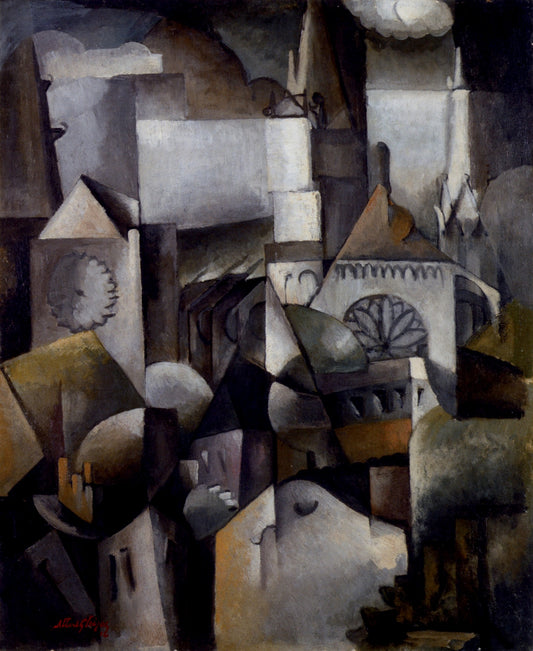
Gleizes, Albert (1881-1953) - The Cathedral of Chartres 1912
Vendor:Digital Download - 1 imageRegular price £0.80Regular priceUnit price per -

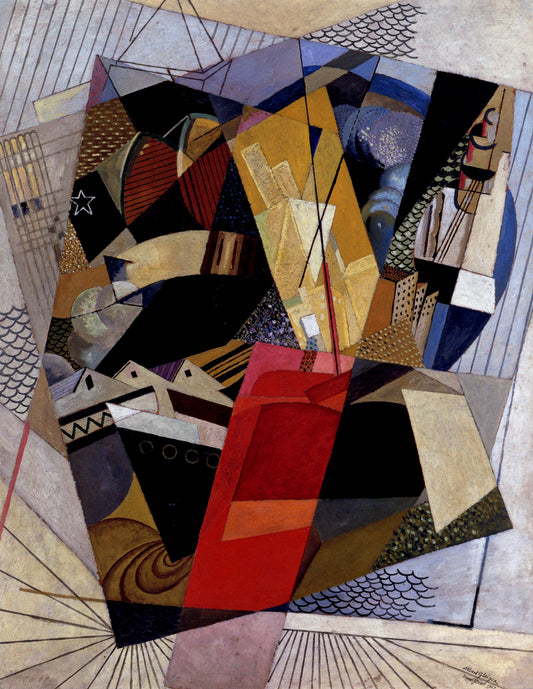
Gleizes, Albert (1881-1953) - In the Port 1917
Vendor:Digital Download - 1 imageRegular price £0.80Regular priceUnit price per -


Gleizes, Albert (1881-1953) - The Bathers 1912
Vendor:Digital Download - 1 imageRegular price £0.80Regular priceUnit price per -


Gleizes, Albert (1881-1953) - Portrait of Jacques Nayral 1911
Vendor:Digital Download - 1 imageRegular price £0.80Regular priceUnit price per


Latest Picture Trove Blog Posts
View all-

William Morris’s Strawberry Thief: The Story Behind a Classic Arts and Crafts Pattern
Few William Morris designs are as instantly recognisable as Strawberry Thief. With its richly patterned foliage, small red strawberries and watchful birds hidden among curling leaves, it has become one of the most loved designs of the Arts and Crafts movement.
William Morris’s Strawberry Thief: The Story Behind a Classic Arts and Crafts Pattern
Few William Morris designs are as instantly recognisable as Strawberry Thief. With its richly patterned foliage, small red strawberries and watchful birds hidden among curling leaves, it has become one of the most loved designs of the Arts and Crafts movement.
-

Glasgow and the Mackintosh Style
We recently took ourselves off to Scotland, and on our travels, we popped into the Mackintosh Tea Rooms in Glasgow for a bit of a nose around and a spot of lunch.
Glasgow and the Mackintosh Style
We recently took ourselves off to Scotland, and on our travels, we popped into the Mackintosh Tea Rooms in Glasgow for a bit of a nose around and a spot of lunch.
-

A Trip to Edinburgh & Glasgow, and Scottish Art
We have just returned from a well-deserved few days' break in Scotland, visiting both Edinburgh and Glasgow, taking in Scottish art and tea rooms!
A Trip to Edinburgh & Glasgow, and Scottish Art
We have just returned from a well-deserved few days' break in Scotland, visiting both Edinburgh and Glasgow, taking in Scottish art and tea rooms!


