

Harold John Wilde Gilman (1876-1919) was a distinguished British painter, celebrated for his distinctive contribution to early twentieth-century art in Britain. Born in Rode, Somerset, Gilman was educated at Tonbridge School before studying at the Slade School of Fine Art in London, where he was influenced by the rigorous draughtsmanship promoted by the school’s academic tradition.
Gilman emerged as a pivotal figure in the transition from Victorian to modern British painting. Early in his career, he was drawn to the realism of artists such as James McNeill Whistler and Walter Sickert. Gilman became closely associated with the Camden Town Group, a progressive collective of artists formed in 1911, whose members sought to depict contemporary urban life with honesty and immediacy. The group was instrumental in promoting Post-Impressionist ideas in Britain, and Gilman’s work soon reflected this influence, notably through his use of bold colour and expressive brushwork.
Gilman’s paintings are often characterised by their vibrant palette, structural compositions, and a keen attention to the subtleties of domestic interiors and everyday scenes. His subject matter ranged from portraits and still lifes to views of London’s streets and interiors, frequently featuring the quiet dignity of working people, including landladies, servants, and market vendors. Gilman’s approach combined a sensitivity to the effects of light and atmosphere with a modern sense of design, resulting in works that are both intimate and robust.
One of Gilman’s most enduring legacies was his role as a teacher and mentor. He was a founding member of the London Group in 1913, another influential collective that provided a platform for avant-garde artists. Through his teaching at the Westminster School of Art, Gilman inspired a new generation of painters, encouraging them to experiment boldly and embrace new artistic movements.
Tragically, Gilman’s life and career were cut short when he died of Spanish influenza in 1919, just a day after his 43rd birthday. Despite his relatively brief career, Gilman’s work left a lasting mark on British art, bridging the gap between nineteenth-century realism and the innovative tendencies of modernism. Today, his paintings are held in major public collections, including the Tate, and continue to be celebrated for their clarity, colour, and insight into early twentieth-century British life.
Images to download
-


Gilman, Harold (1876-1919) - Norwegian Street Scene (Kirikegatan Flekkefjord) 1913
Vendor:Digital Download - 1 imageRegular price £0.80Regular priceUnit price per -


Gilman, Harold (1876-1919) - Leeds Market 1913
Vendor:Digital Download - 1 imageRegular price £0.80Regular priceUnit price per -

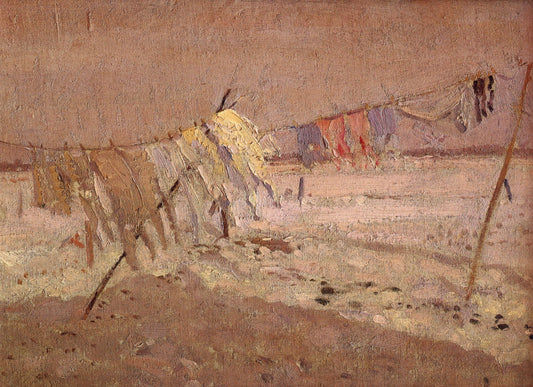
Gilman, Harold (1876-1919) - Washing in the Snow 1909-10
Vendor:Digital Download - 1 imageRegular price £0.80Regular priceUnit price per -


Gilman, Harold (1876-1919) - The Model, Reclining Nude 1911-12
Vendor:Digital Download - 1 imageRegular price £0.80Regular priceUnit price per -


Gilman, Harold (1876-1919) - The Cafe Royal 1912
Vendor:Digital Download - 1 imageRegular price £0.80Regular priceUnit price per -


Gilman, Harold (1876-1919) - Tea in the Bedsitter 1916
Vendor:Digital Download - 1 imageRegular price £0.80Regular priceUnit price per -


Gilman, Harold (1876-1919) - An Eating House 1913-14
Vendor:Digital Download - 1 imageRegular price £0.80Regular priceUnit price per


Latest Picture Trove Blog Posts
View all-

William Morris’s Strawberry Thief: The Story Behind a Classic Arts and Crafts Pattern
Few William Morris designs are as instantly recognisable as Strawberry Thief. With its richly patterned foliage, small red strawberries and watchful birds hidden among curling leaves, it has become one of the most loved designs of the Arts and Crafts movement.
William Morris’s Strawberry Thief: The Story Behind a Classic Arts and Crafts Pattern
Few William Morris designs are as instantly recognisable as Strawberry Thief. With its richly patterned foliage, small red strawberries and watchful birds hidden among curling leaves, it has become one of the most loved designs of the Arts and Crafts movement.
-

Glasgow and the Mackintosh Style
We recently took ourselves off to Scotland, and on our travels, we popped into the Mackintosh Tea Rooms in Glasgow for a bit of a nose around and a spot of lunch.
Glasgow and the Mackintosh Style
We recently took ourselves off to Scotland, and on our travels, we popped into the Mackintosh Tea Rooms in Glasgow for a bit of a nose around and a spot of lunch.
-

A Trip to Edinburgh & Glasgow, and Scottish Art
We have just returned from a well-deserved few days' break in Scotland, visiting both Edinburgh and Glasgow, taking in Scottish art and tea rooms!
A Trip to Edinburgh & Glasgow, and Scottish Art
We have just returned from a well-deserved few days' break in Scotland, visiting both Edinburgh and Glasgow, taking in Scottish art and tea rooms!


