

Domenico Ghirlandaio (1448-1494), born Domenico di Tommaso Curradi di Doffo Bigordi in Florence in 1448, stands as one of the foremost painters of the Italian Renaissance. Renowned for his clarity of composition and narrative skill, Ghirlandaio’s works epitomise the elegance and realism that characterised Florentine art during the latter half of the fifteenth century.
Ghirlandaio’s artistic journey began in his father’s goldsmith workshop, a background that may have influenced his remarkable attention to detail. He soon gravitated towards painting, apprenticing with Alessio Baldovinetti, a master known for his delicate handling of colour and light. This training set the stage for Ghirlandaio’s own distinctive style, marked by lucid storytelling and naturalistic representation of figures.
Florence, in the throes of the Renaissance, was a vibrant hub for artists and intellectuals. Ghirlandaio flourished within this environment, receiving numerous prestigious commissions from religious institutions and wealthy patrons. Among his earliest significant projects was the fresco cycle in the Sassetti Chapel of Santa Trinità, Florence, completed in the 1480s. These frescoes, depicting scenes from the life of Saint Francis, are celebrated for their elegant figures, contemporary Florentine settings, and inclusion of portraits of prominent citizens, merging sacred narrative with civic pride.
Perhaps Ghirlandaio’s most acclaimed achievement is the fresco cycle in the Tornabuoni Chapel of Santa Maria Novella, completed in the late 1480s. Spanning the life of the Virgin Mary and John the Baptist, these frescoes exemplify Ghirlandaio’s mastery of composition, his ability to orchestrate large, complex scenes, and his keen observation of human character. The inclusion of his patrons and members of the Florentine elite within these religious narratives also reflects the period’s intertwining of art, religion, and social status.
Ghirlandaio’s style is distinguished by its clarity, harmonious colour palette, and precise depiction of architectural and decorative details. His figures are rendered with dignity and poise, exuding a sense of calm gravitas. While his contemporaries such as Botticelli and Leonardo da Vinci explored new approaches to perspective and emotional expression, Ghirlandaio excelled in the art of visual storytelling, creating works that are both accessible and deeply human.
Not limited to frescoes, Ghirlandaio also produced notable panel paintings and altarpieces, including the renowned “Adoration of the Magi” and “The Last Supper” at the convent of San Marco. His ability to convey narrative, emotion, and setting in these works attests to his versatility and enduring appeal.
A testament to his influence is Ghirlandaio’s role as a teacher. Among his workshop’s apprentices was none other than Michelangelo Buonarroti, who would go on to become one of the most celebrated artists in history. Through his teaching and prolific output, Ghirlandaio helped shape the course of Renaissance art, bridging the traditions of the past with the innovations of the future.
Domenico Ghirlandaio died in 1494, leaving a legacy of luminous, finely crafted works that continue to captivate viewers. His paintings offer a vivid window into the world of Renaissance Florence, blending artistic mastery with acute observation of the society in which he lived.
Images to download
-

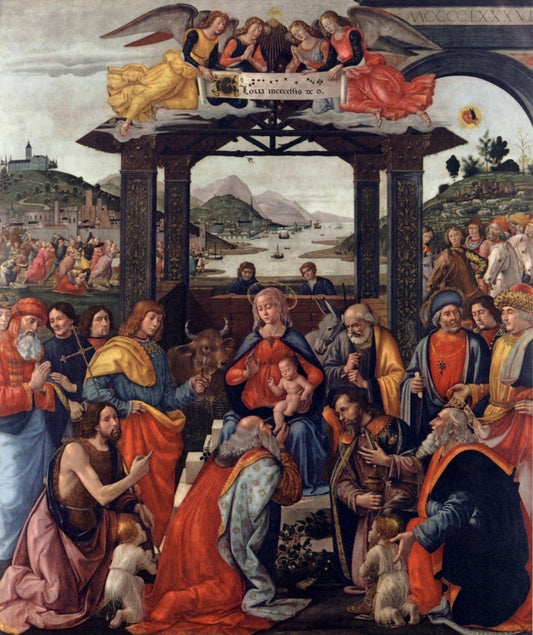
Ghirlandaio, Domenico (1449-1494) - Adoration of the Magi 1485-88
Vendor:Digital Download - 1 imageRegular price £0.80Regular priceUnit price per -

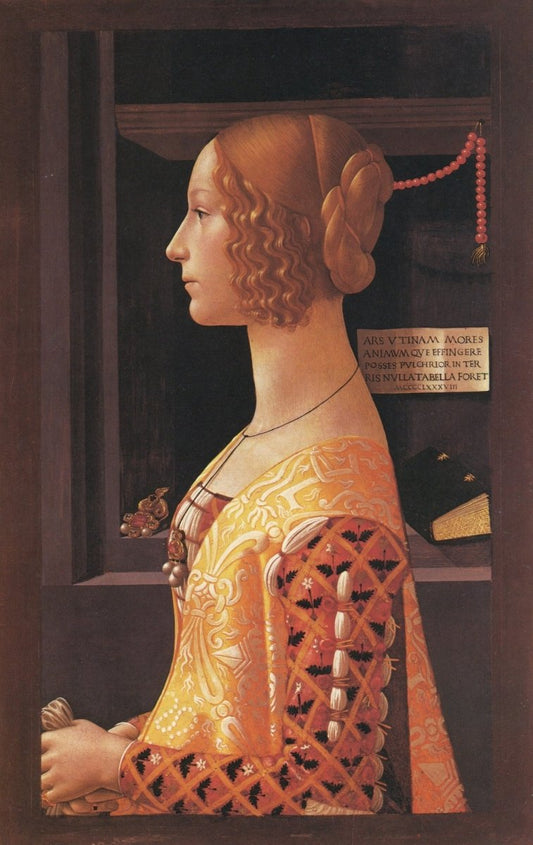
Ghirlandaio, Domenico (1449-1494) - Giovanna Tornabuoni 1488
Vendor:Digital Download - 1 imageRegular price £0.80Regular priceUnit price per


Latest Picture Trove Blog Posts
View all-

William Morris’s Strawberry Thief: The Story Behind a Classic Arts and Crafts Pattern
Few William Morris designs are as instantly recognisable as Strawberry Thief. With its richly patterned foliage, small red strawberries and watchful birds hidden among curling leaves, it has become one of the most loved designs of the Arts and Crafts movement.
William Morris’s Strawberry Thief: The Story Behind a Classic Arts and Crafts Pattern
Few William Morris designs are as instantly recognisable as Strawberry Thief. With its richly patterned foliage, small red strawberries and watchful birds hidden among curling leaves, it has become one of the most loved designs of the Arts and Crafts movement.
-

Glasgow and the Mackintosh Style
We recently took ourselves off to Scotland, and on our travels, we popped into the Mackintosh Tea Rooms in Glasgow for a bit of a nose around and a spot of lunch.
Glasgow and the Mackintosh Style
We recently took ourselves off to Scotland, and on our travels, we popped into the Mackintosh Tea Rooms in Glasgow for a bit of a nose around and a spot of lunch.
-

A Trip to Edinburgh & Glasgow, and Scottish Art
We have just returned from a well-deserved few days' break in Scotland, visiting both Edinburgh and Glasgow, taking in Scottish art and tea rooms!
A Trip to Edinburgh & Glasgow, and Scottish Art
We have just returned from a well-deserved few days' break in Scotland, visiting both Edinburgh and Glasgow, taking in Scottish art and tea rooms!


