

Jean-Leon Gerome (1824-1904) stands as one of the most celebrated French painters and sculptors of the nineteenth century, renowned for his technical precision and evocative imagery. Associated with the Academic art tradition, Gérôme’s work bridges the gap between classicism and the emerging modernity of his era, offering a fascinating insight into the tastes and sensibilities of the time.
Born in Vesoul, France, Gérôme moved to Paris in 1840 to pursue his artistic ambitions, enrolling at the prestigious École des Beaux-Arts. He studied under Paul Delaroche, who encouraged his meticulous attention to detail, a hallmark that would become central to Gérôme’s style. Early in his career, Gérôme’s painting “The Cock Fight” won a third-place medal at the Salon of 1847, establishing him as a promising young artist.
Gérôme’s work is characterised by a remarkable realism, achieved through his masterful draughtsmanship and vibrant use of colour. He was deeply influenced by his travels to the Middle East and North Africa, and these experiences are reflected in his orientalist paintings, which capture scenes of daily life, historical events, and exotic landscapes. Notable examples include “The Snake Charmer”, “Prayer in the Mosque”, and “The Slave Market”. These works, while popular in their day, are now often critically examined for their romanticised and sometimes stereotypical depictions of Eastern cultures.
In addition to his orientalist subjects, Gérôme produced a wide array of historical and mythological scenes, such as “Pollice verso” and “Phryne before the Areopagus”. His paintings are meticulously composed, often featuring complex architectural backgrounds and finely rendered figures. Gérôme was also a respected sculptor, producing notable works like the bronze statue of “Bellona” and “Tanagra”. His approach to sculpture mirrored his painting style, precise, detailed, and rooted in classical tradition.
Throughout his career, Gérôme was a prominent figure in the French art establishment. He became a professor at the École des Beaux-Arts and taught a generation of younger artists, influencing the trajectory of academic painting well into the twentieth century. Despite the rise of Impressionism and other modern movements, Gérôme remained steadfast in his commitment to academic principles, often vocally critical of newer styles.
Jean-Léon Gérôme’s legacy is complex. Admired for his technical brilliance and storytelling, he is both celebrated and critiqued for his role in promoting academic art and for his orientalist imagery. His works remain widely exhibited and studied, offering an enduring testament to the skill and vision of one of France’s great nineteenth-century artists.
Images to download
-


Gérôme, Jean-Léon (1824-1904) - Optician's Sign 1902
Vendor:Digital Download - 1 imageRegular price £0.80Regular priceUnit price per -

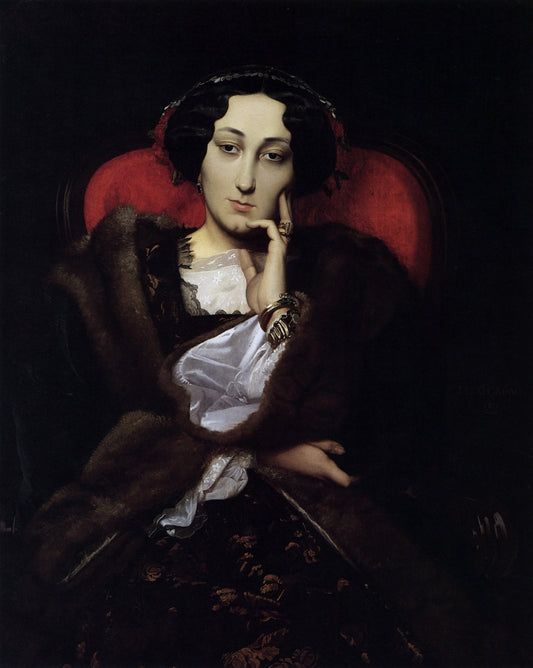
Gérôme, Jean-Léon (1824-1904) - Portrait of a Lady 1851
Vendor:Digital Download - 1 imageRegular price £0.80Regular priceUnit price per -


Gérôme, Jean-Léon (1824-1904) - Belle of Nelson old fashion whiskey c.1882
Vendor:Digital Download - 1 imageRegular price £0.80Regular priceUnit price per -


Gérôme, Jean-Léon (1824-1904) - The Carpet Merchant of Cairo 1869
Vendor:Digital Download - 1 imageRegular price £0.80Regular priceUnit price per -


Gérôme, Jean-Léon (1824-1904) - For Sale, Slaves at Cairo c.1871
Vendor:Digital Download - 1 imageRegular price £0.80Regular priceUnit price per -


Gérôme, Jean-Léon (1824-1904) - Young Greeks Encouraging Cocks to Fight 1846
Vendor:Digital Download - 1 imageRegular price £0.80Regular priceUnit price per -


Gérôme, Jean-Léon (1824-1904) - Diogenes 1860
Vendor:Digital Download - 1 imageRegular price £0.80Regular priceUnit price per -


Gérôme, Jean-Léon (1824-1904) - The Duel after the Masquerade 1857-8
Vendor:Digital Download - 1 imageRegular price £0.80Regular priceUnit price per


Latest Picture Trove Blog Posts
View all-

William Morris’s Strawberry Thief: The Story Behind a Classic Arts and Crafts Pattern
Few William Morris designs are as instantly recognisable as Strawberry Thief. With its richly patterned foliage, small red strawberries and watchful birds hidden among curling leaves, it has become one of the most loved designs of the Arts and Crafts movement.
William Morris’s Strawberry Thief: The Story Behind a Classic Arts and Crafts Pattern
Few William Morris designs are as instantly recognisable as Strawberry Thief. With its richly patterned foliage, small red strawberries and watchful birds hidden among curling leaves, it has become one of the most loved designs of the Arts and Crafts movement.
-

Glasgow and the Mackintosh Style
We recently took ourselves off to Scotland, and on our travels, we popped into the Mackintosh Tea Rooms in Glasgow for a bit of a nose around and a spot of lunch.
Glasgow and the Mackintosh Style
We recently took ourselves off to Scotland, and on our travels, we popped into the Mackintosh Tea Rooms in Glasgow for a bit of a nose around and a spot of lunch.
-

A Trip to Edinburgh & Glasgow, and Scottish Art
We have just returned from a well-deserved few days' break in Scotland, visiting both Edinburgh and Glasgow, taking in Scottish art and tea rooms!
A Trip to Edinburgh & Glasgow, and Scottish Art
We have just returned from a well-deserved few days' break in Scotland, visiting both Edinburgh and Glasgow, taking in Scottish art and tea rooms!


