

Daniel Gardner (1750-1805) was a notable British portrait painter whose innovative techniques and distinctive style earned him a place among the leading artists of late eighteenth-century England. Born in Kendal, Westmorland, Gardner demonstrated artistic talent from an early age. He studied under the tutelage of George Romney, a prominent portraitist, and later attended the Royal Academy Schools in London, where he refined his skills and developed his unique approach to portraiture.
Gardner is particularly renowned for his mastery of pastels and his pioneering use of the “stump technique,” a method involving the blending of pigments with a rolled piece of paper or leather. This approach allowed him to achieve soft, delicate transitions of tone and texture, lending his portraits a luminous, ethereal quality. His works often combined gouache, watercolour, and pastel on paper, resulting in a vibrancy and immediacy that distinguished them from the more formal oil paintings of his contemporaries.
Throughout his career, Gardner attracted a fashionable clientele from the aristocracy and upper middle classes. His sitters included members of the British nobility, intellectuals, and figures from the artistic and theatrical worlds. Among his most celebrated portraits are those of prominent society figures such as Georgiana, Duchess of Devonshire, and her sister Lady Duncannon. Gardner had a talent for capturing not only the likeness of his subjects but also their personalities, often portraying them in informal poses and with a sense of intimacy that was unusual for the period.
Gardner’s style was marked by a freshness and informality that reflected the changing tastes of late Georgian society. He often depicted his sitters in fashionable attire and natural settings, eschewing the grandiose backgrounds and rigid poses favoured by earlier portraitists. This approach brought a sense of modernity to his work, aligning him with the emerging trends in British art during the late eighteenth century.
Despite his success and popularity during his lifetime, Gardner’s reputation declined in the years following his death, overshadowed by more prominent contemporaries such as Thomas Gainsborough and Sir Joshua Reynolds. However, his portraits have experienced a revival in appreciation among modern scholars and collectors, who recognise the technical brilliance and psychological depth of his work. Today, Daniel Gardner is remembered as an innovative artist whose contributions enriched the development of British portraiture in a period of significant artistic transition.
Images to download
-

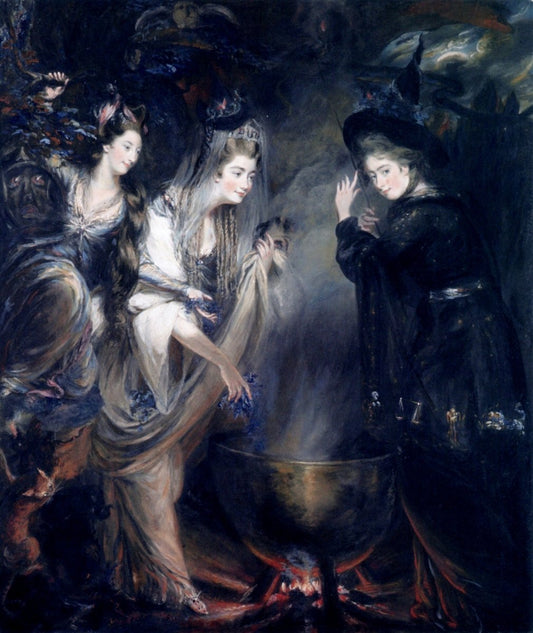
Gardner, Daniel (1750-1805) - The Three Witches from Macbeth 1775
Vendor:Digital Download - 1 imageRegular price £0.80Regular priceUnit price per

Latest Picture Trove Blog Posts
View all-

William Morris’s Strawberry Thief: The Story Behind a Classic Arts and Crafts Pattern
Few William Morris designs are as instantly recognisable as Strawberry Thief. With its richly patterned foliage, small red strawberries and watchful birds hidden among curling leaves, it has become one of the most loved designs of the Arts and Crafts movement.
William Morris’s Strawberry Thief: The Story Behind a Classic Arts and Crafts Pattern
Few William Morris designs are as instantly recognisable as Strawberry Thief. With its richly patterned foliage, small red strawberries and watchful birds hidden among curling leaves, it has become one of the most loved designs of the Arts and Crafts movement.
-

Glasgow and the Mackintosh Style
We recently took ourselves off to Scotland, and on our travels, we popped into the Mackintosh Tea Rooms in Glasgow for a bit of a nose around and a spot of lunch.
Glasgow and the Mackintosh Style
We recently took ourselves off to Scotland, and on our travels, we popped into the Mackintosh Tea Rooms in Glasgow for a bit of a nose around and a spot of lunch.
-

A Trip to Edinburgh & Glasgow, and Scottish Art
We have just returned from a well-deserved few days' break in Scotland, visiting both Edinburgh and Glasgow, taking in Scottish art and tea rooms!
A Trip to Edinburgh & Glasgow, and Scottish Art
We have just returned from a well-deserved few days' break in Scotland, visiting both Edinburgh and Glasgow, taking in Scottish art and tea rooms!


