

Elizabeth Forbes (1859-1912) was a prominent British painter and a leading figure in the late nineteenth-century Newlyn School, a colony of artists based in Cornwall. Born in Kingston, Ontario, Canada, Forbes moved to London as a child, where she later trained at the South Kensington Art Schools. She furthered her artistic education in Munich and Paris, absorbing continental influences that would shape her distinctive style.
Forbes is celebrated for her evocative depictions of rural life, often focusing on women and children in everyday settings. Her work is characterised by sensitivity, careful observation, and a keen interest in narrative. One of her most notable paintings, "School is Out" (1889), captures children tumbling out of a Cornish schoolhouse, their joy and energy rendered with warmth and affection. This painting exemplifies Forbes’s ability to blend realism with a subtle poetic quality, a hallmark of the Newlyn School’s approach.
In 1889, Elizabeth Forbes married fellow artist Stanhope Forbes, who was a key founder of the Newlyn School. Together, they became central figures in the artistic community of Newlyn, attracting other artists and fostering a spirit of collaboration. The couple established the Forbes School of Painting in 1899, which provided instruction and inspiration to many aspiring artists, especially women, at a time when their opportunities were limited.
Forbes’s technique evolved throughout her career. While she initially worked mainly in watercolours, she increasingly turned to oils, mastering both mediums. Her palette was often bright and fresh, reflecting the natural light and vibrant colours of the Cornish landscape. Forbes had a particular talent for capturing the textures of fabric and the nuances of facial expression, lending her figures a sense of individuality and inner life.
In addition to genre scenes and portraits, Forbes illustrated books and contributed to periodicals, further broadening her artistic reach. Her illustrations for children’s books, such as "King Arthur’s Wood" (1904), display a whimsical touch and a strong sense of design.
Despite her relatively short life - she died at the age of fifty-three - Elizabeth Forbes left a significant legacy. Her work is held in major British collections, including Tate and Penlee House Gallery. Forbes played a crucial role in elevating the status of women artists in Britain and remains admired for her technical skill, empathetic vision, and contribution to the flourishing of the Newlyn School.
Images to download
-

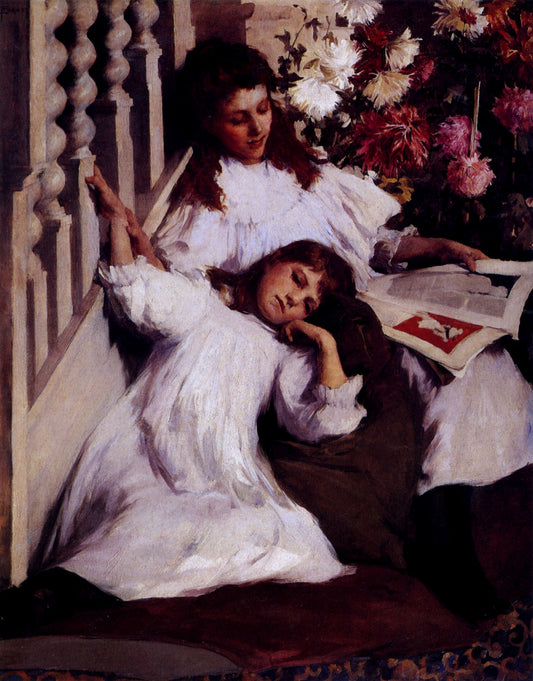
Forbes, Elizabeth (1859-1912) - A Fairy Story 1896
Vendor:Digital Download - 1 imageRegular price £0.80Regular priceUnit price per -

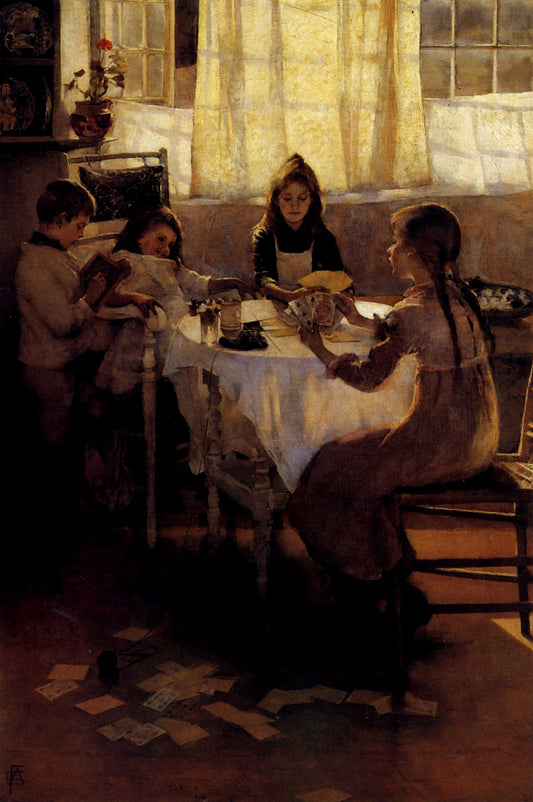
Forbes, Elizabeth (1859-1912) - A Game of Old Maid 1891
Vendor:Digital Download - 1 imageRegular price £0.80Regular priceUnit price per -

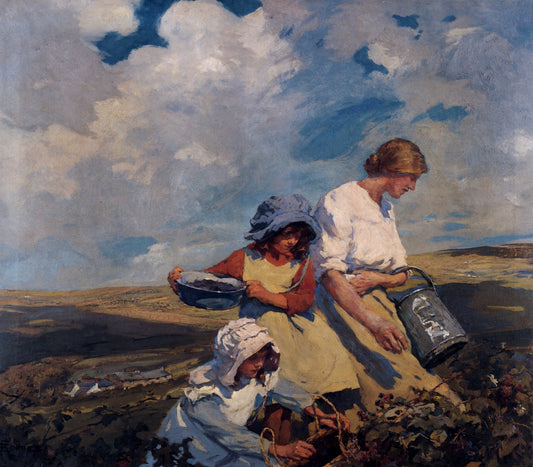
Forbes, Elizabeth (1859-1912) - Blackberry Gatherers 1912
Vendor:Digital Download - 1 imageRegular price £0.80Regular priceUnit price per -


Forbes, Elizabeth (1859-1912) - School is Out 1889
Vendor:Digital Download - 1 imageRegular price £0.80Regular priceUnit price per -

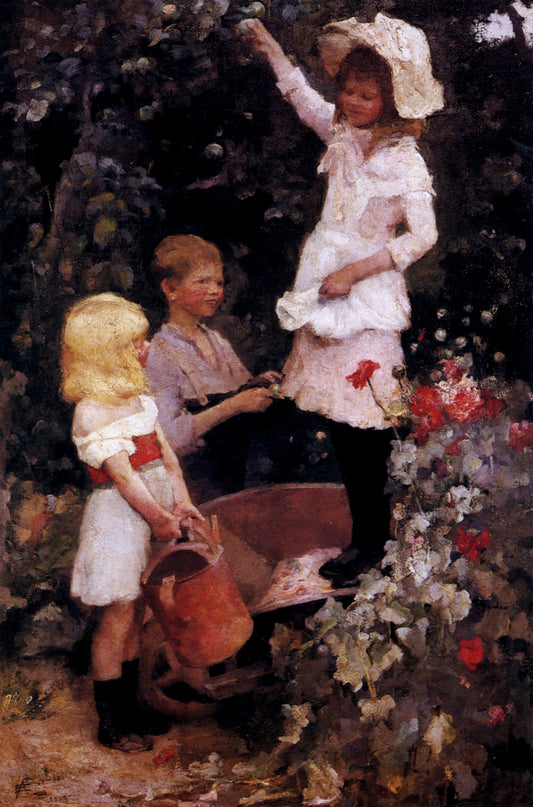
Forbes, Elizabeth (1859-1912) - The Apple Pickers 1883
Vendor:Digital Download - 1 imageRegular price £0.80Regular priceUnit price per -


Forbes, Elizabeth (1859-1912) - The Edge of the Wood 1894
Vendor:Digital Download - 1 imageRegular price £0.80Regular priceUnit price per -


Forbes, Elizabeth (1859-1912) - The Minuet 1892
Vendor:Digital Download - 1 imageRegular price £0.80Regular priceUnit price per -


Women Artists - 180 High Resolution Images
Vendor:Digital Download - 180 imagesRegular price £8.00Regular priceUnit price per


Latest Picture Trove Blog Posts
View all-

William Morris’s Strawberry Thief: The Story Behind a Classic Arts and Crafts Pattern
Few William Morris designs are as instantly recognisable as Strawberry Thief. With its richly patterned foliage, small red strawberries and watchful birds hidden among curling leaves, it has become one of the most loved designs of the Arts and Crafts movement.
William Morris’s Strawberry Thief: The Story Behind a Classic Arts and Crafts Pattern
Few William Morris designs are as instantly recognisable as Strawberry Thief. With its richly patterned foliage, small red strawberries and watchful birds hidden among curling leaves, it has become one of the most loved designs of the Arts and Crafts movement.
-

Glasgow and the Mackintosh Style
We recently took ourselves off to Scotland, and on our travels, we popped into the Mackintosh Tea Rooms in Glasgow for a bit of a nose around and a spot of lunch.
Glasgow and the Mackintosh Style
We recently took ourselves off to Scotland, and on our travels, we popped into the Mackintosh Tea Rooms in Glasgow for a bit of a nose around and a spot of lunch.
-

A Trip to Edinburgh & Glasgow, and Scottish Art
We have just returned from a well-deserved few days' break in Scotland, visiting both Edinburgh and Glasgow, taking in Scottish art and tea rooms!
A Trip to Edinburgh & Glasgow, and Scottish Art
We have just returned from a well-deserved few days' break in Scotland, visiting both Edinburgh and Glasgow, taking in Scottish art and tea rooms!


