

Alexandra Exter (Алекса́ндра Алекса́ндровна Эксте́р) (1882-1949), sometimes Ekster, was a pioneering figure in early twentieth-century avant-garde art, celebrated for her dynamic contributions to painting, stage design, and the development of abstract art. Born in Białystok, then part of the Russian Empire (now Poland), Exter’s multicultural background and cosmopolitan lifestyle played a significant role in shaping her artistic vision, which bridged Eastern European modernism and the vibrant currents of Western European avant-garde movements.
Exter began her artistic education in Kiev, where she became involved with a circle of progressive artists and intellectuals. She later studied in Paris, a hub for the artistic innovations of the time, and regularly exhibited at the Salon des Indépendants and the Salon d’Automne. In Paris, she forged connections with key figures of Cubism and Futurism, including Pablo Picasso, Georges Braque, and Fernand Léger. These influences are evident in her work, particularly in her use of fragmented forms, bold colour contrasts, and a sense of dynamic movement.
Returning to Russia, Exter became a leading light in the Moscow and St Petersburg avant-garde scenes. She was closely associated with the Russian Cubo-Futurists and the Suprematist movement, collaborating with artists such as Kazimir Malevich and Alexander Archipenko. Her paintings from this period showcase a synthesis of Cubist structure and Futurist dynamism, often exploring the interplay between geometric abstraction and the vibrant energy of modern life.
Exter’s creative pursuits extended beyond painting. She was a trailblazer in stage and costume design, working with some of the era’s most innovative theatre directors. Her designs for Alexander Tairov’s Kamerny Theatre in Moscow are particularly renowned, marked by their bold use of colour, striking geometric forms, and a sense of spatial experimentation that mirrored her canvases. She also taught at the VKhUTEMAS, the influential art and technical school in Moscow, fostering a new generation of artists and designers.
In the 1920s, Exter emigrated to France, settling in Paris, where she continued to explore abstraction and design. Her later works often blended painting with collage and applied arts, reflecting her belief in the unity of artistic disciplines. Today, Alexandra Exter is recognised as a vital link between Russian and Western European modernism, her legacy evident in the ongoing dialogue between art, design, and performance.
Images to download
-

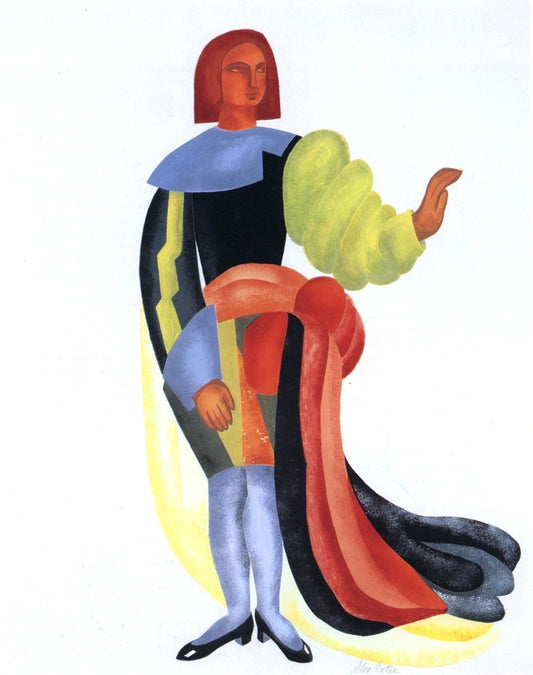
Exter, Alexandra (1882-1949) - Costume Design for Les Equivoques d'Amour c.1933
Vendor:Digital Download - 1 imageRegular price £0.80Regular priceUnit price per -

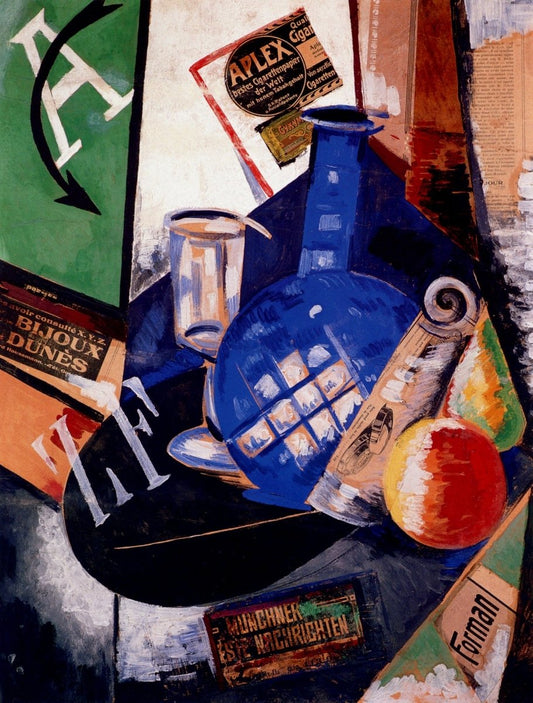
Exter, Alexandra (1882-1949) - Still life 1913
Vendor:Digital Download - 1 imageRegular price £0.80Regular priceUnit price per -


Women Artists - 180 High Resolution Images
Vendor:Digital Download - 180 imagesRegular price £8.00Regular priceUnit price per


Latest Picture Trove Blog Posts
View all-

William Morris’s Strawberry Thief: The Story Behind a Classic Arts and Crafts Pattern
Few William Morris designs are as instantly recognisable as Strawberry Thief. With its richly patterned foliage, small red strawberries and watchful birds hidden among curling leaves, it has become one of the most loved designs of the Arts and Crafts movement.
William Morris’s Strawberry Thief: The Story Behind a Classic Arts and Crafts Pattern
Few William Morris designs are as instantly recognisable as Strawberry Thief. With its richly patterned foliage, small red strawberries and watchful birds hidden among curling leaves, it has become one of the most loved designs of the Arts and Crafts movement.
-

Glasgow and the Mackintosh Style
We recently took ourselves off to Scotland, and on our travels, we popped into the Mackintosh Tea Rooms in Glasgow for a bit of a nose around and a spot of lunch.
Glasgow and the Mackintosh Style
We recently took ourselves off to Scotland, and on our travels, we popped into the Mackintosh Tea Rooms in Glasgow for a bit of a nose around and a spot of lunch.
-

A Trip to Edinburgh & Glasgow, and Scottish Art
We have just returned from a well-deserved few days' break in Scotland, visiting both Edinburgh and Glasgow, taking in Scottish art and tea rooms!
A Trip to Edinburgh & Glasgow, and Scottish Art
We have just returned from a well-deserved few days' break in Scotland, visiting both Edinburgh and Glasgow, taking in Scottish art and tea rooms!


