

Theo van Doesburg (1883-1931), born Christian Emil Marie Küpper in Utrecht, the Netherlands, was a pivotal figure in the development of modern art and design in the early twentieth century. He is best known as a founder and leader of the De Stijl movement, an influential artistic collective that sought to create a universal visual language through abstraction and simplicity. Van Doesburg’s work spanned painting, architecture, typography, and theory, reflecting his belief in the synthesis of the arts.
Originally trained as a painter, Van Doesburg was deeply influenced by the work of Piet Mondrian, though the two would later diverge in their artistic philosophies. In 1917, Van Doesburg co-founded the magazine De Stijl, which became the mouthpiece for the movement’s ideals. The movement advocated for a reduction to the essentials of form and colour, favouring straight lines, rectangular forms, and primary colours, often combined with black, white, and grey. Van Doesburg’s theoretical writings in the magazine helped to articulate and spread these ideas across Europe.
Unlike Mondrian, who insisted on using only horizontal and vertical lines, Van Doesburg introduced the concept of the diagonal, which he termed “Elementarism”. He believed that the use of diagonal lines introduced a new dynamism and vitality to compositions, challenging the static harmony of earlier De Stijl works. This innovation marked a significant departure within the movement and reflected Van Doesburg’s restless experimentation and desire for progress.
Van Doesburg was not only a painter but also an architect and designer. He collaborated with architects such as J.J.P. Oud and Gerrit Rietveld, contributing to projects that embodied De Stijl principles in three dimensions. His architectural designs, though few were realised, were characterised by a rigorous geometry and an integration of art and architecture. Van Doesburg also applied De Stijl’s principles to interior design, stained glass, and typography, demonstrating the movement’s applicability to all aspects of life.
His international influence grew as he travelled and lectured widely, notably in Germany and France. In the 1920s, Van Doesburg settled in Paris, where he interacted with artists of the Bauhaus and Constructivist circles, further enriching his ideas. He continued to publish, paint, and teach until his untimely death in 1931. Theo van Doesburg’s legacy endures in the fields of abstract art, modern architecture, and graphic design, his vision for the unity of art and life still resonant today.
Images to download
-

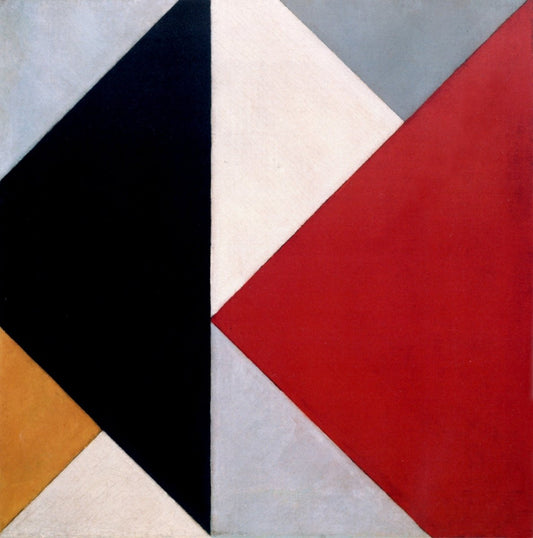
Doesburg, Theo van (1883-1931) - Counter-Composition XIII 1925-6
Vendor:Digital Download - 1 imageRegular price £0.80Regular priceUnit price per -

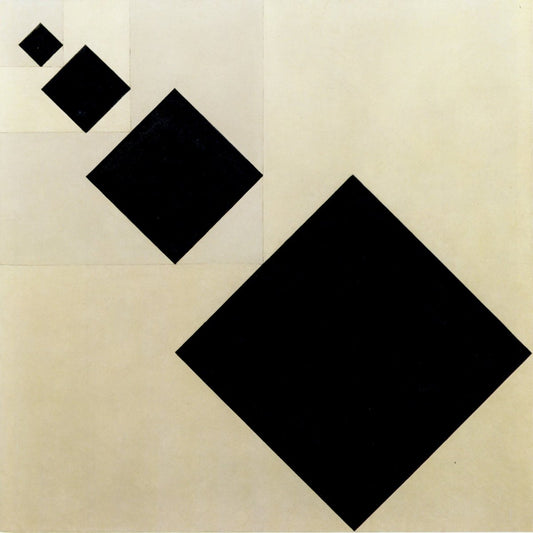
Doesburg, Theo van (1883-1931) - Arithmetic Composition 1930
Vendor:Digital Download - 1 imageRegular price £0.80Regular priceUnit price per -

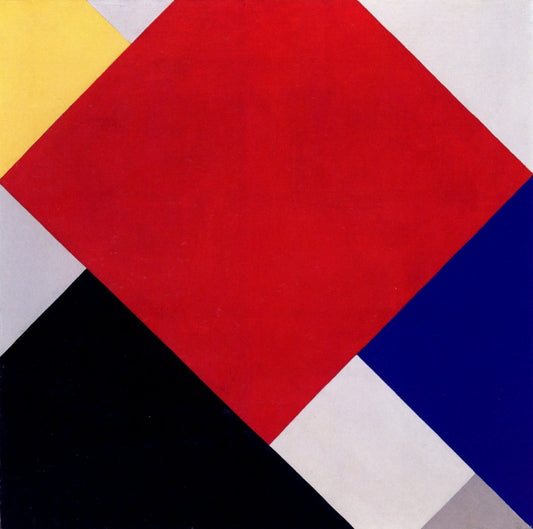
Doesburg, Theo van (1883-1931) - Counter-Composition V 1924
Vendor:Digital Download - 1 imageRegular price £0.80Regular priceUnit price per -

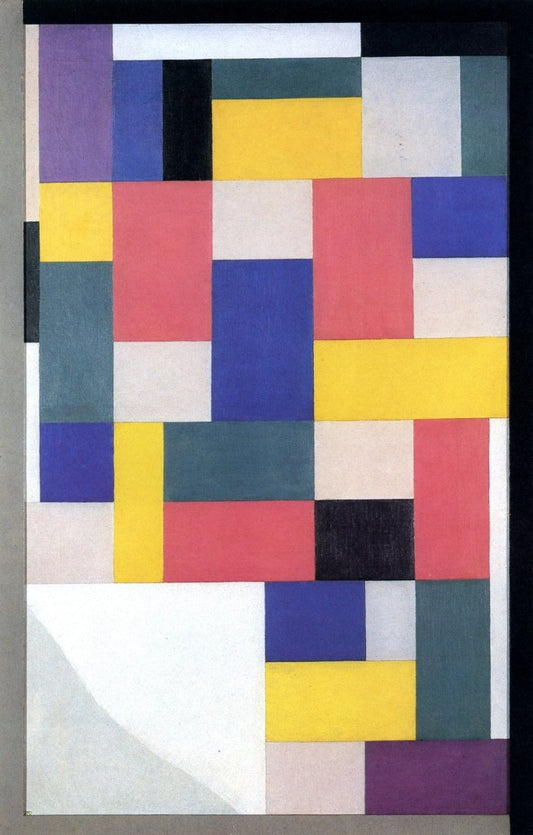
Doesburg, Theo van (1883-1931) - Composition 1920
Vendor:Digital Download - 1 imageRegular price £0.80Regular priceUnit price per


Latest Picture Trove Blog Posts
View all-

William Morris’s Strawberry Thief: The Story Behind a Classic Arts and Crafts Pattern
Few William Morris designs are as instantly recognisable as Strawberry Thief. With its richly patterned foliage, small red strawberries and watchful birds hidden among curling leaves, it has become one of the most loved designs of the Arts and Crafts movement.
William Morris’s Strawberry Thief: The Story Behind a Classic Arts and Crafts Pattern
Few William Morris designs are as instantly recognisable as Strawberry Thief. With its richly patterned foliage, small red strawberries and watchful birds hidden among curling leaves, it has become one of the most loved designs of the Arts and Crafts movement.
-

Glasgow and the Mackintosh Style
We recently took ourselves off to Scotland, and on our travels, we popped into the Mackintosh Tea Rooms in Glasgow for a bit of a nose around and a spot of lunch.
Glasgow and the Mackintosh Style
We recently took ourselves off to Scotland, and on our travels, we popped into the Mackintosh Tea Rooms in Glasgow for a bit of a nose around and a spot of lunch.
-

A Trip to Edinburgh & Glasgow, and Scottish Art
We have just returned from a well-deserved few days' break in Scotland, visiting both Edinburgh and Glasgow, taking in Scottish art and tea rooms!
A Trip to Edinburgh & Glasgow, and Scottish Art
We have just returned from a well-deserved few days' break in Scotland, visiting both Edinburgh and Glasgow, taking in Scottish art and tea rooms!


